
The search for stable green pigments has historically been fraught with challenges, largely due to the toxicity or chemical instability of early compounds. Ancient civilizations utilized natural earth pigments like Green Earth (terre verte), while the Middle Ages saw the widespread use of Verdigris , a copper acetate complex that possessed a vivid hue but famously turned brown when exposed to certain atmospheric conditions. The 18th century introduced Scheele’s Green and later Emerald Green (copper arsenite), which were brilliant but highly toxic, eventually leading to their abandonment due to severe health hazards. Modern pigment technology has successfully replaced these dangerous heavy-metal compounds with robust, safe alternatives. These include highly stable organic compounds like Chlorinated and Brominated Phthalocyanine greens, alongside chemically inert inorganic pigments such as Chromium and Cobalt based mixed metal oxides. Today, these modern greens deliver exceptional lightfastness, heat stability, and chemical resistance, making them indispensable across automotive finishes, architectural paints, plastics, and high-temperature ceramic glazes.
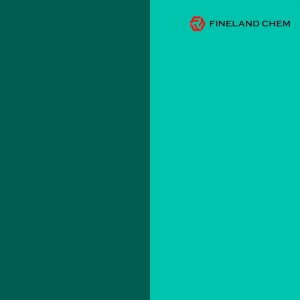
Pigment Green 7
Colour Description: Blueish-green.
Transparency/Opacity: Transparent.
Pigment Green 7 is a highly chlorinated derivative of Copper Phthalocyanine . It is one of the most commercially significant organic green pigments available. It features an intense blueish-green shade with exceptionally high tinting strength and outstanding lightfastness. Unlike many older green pigments, PG 7 is chemically inert and highly resistant to heat, solvents, and fading. These remarkable properties make it a universal standard in the formulation of high-quality printing inks, industrial coatings, and engineering plastics where durable, vibrant green hues are required.
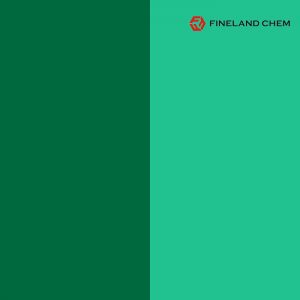
Pigment Green 36
Colour Description: Yellowish-green.
Transparency/Opacity: Transparent.
Pigment Green 36 is a brominated and chlorinated Copper Phthalocyanine pigment. By replacing some chlorine atoms with bromine, the crystal lattice shifts to provide a distinct yellowish-green shade that is much purer and warmer than PG 7. This pigment retains all the exceptional properties of the phthalocyanine family, including excellent lightfastness, thermal stability, and chemical resistance. It is predominantly utilized in high-end automotive finishes, industrial paints, and premium plastics where a clean, fresh, yellow-toned green is necessary.
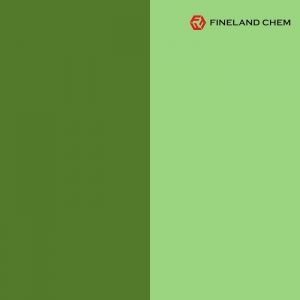
Pigment Green 17
Colour Description: Olive green / Dull green.
Transparency/Opacity: Opaque.
Pigment Green 17 is an inorganic pigment chemically composed of Chromium (III) oxide. It is characterized by its completely opaque, muted olive green shade and exceptionally high hiding power. This pigment provides supreme resistance to light, weather, high temperatures, and chemicals, including both acids and alkalis. It is also entirely non-toxic. Due to these characteristics, it is extensively utilized in architectural coatings, camouflage paints, concrete and cement pigmentation, and high-temperature ceramics.
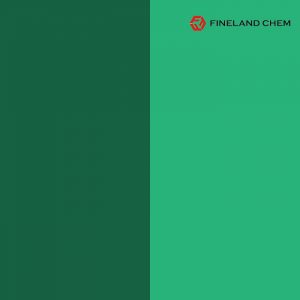
Pigment Green 26
Colour Description: Deep bluish-green / Turquoise.
Transparency/Opacity: Opaque.
Pigment Green 26 is an inorganic mixed metal oxide pigment , consisting of cobalt chromite. It produces a deep, opaque bluish-green to turquoise shade. Its chemical structure ensures outstanding resistance to extreme heat, weathering, UV radiation, and aggressive chemicals. Because of this exceptional stability, it is frequently used in the manufacturing of high-temperature ceramic glazes, porcelain enamels, and heavy-duty industrial coatings intended for highly corrosive environments.
Pigment Green 50
Colour Description: Light turquoise / Blue-green.
Transparency/Opacity: Opaque.
Pigment Green 50 is an inorganic mixed metal oxide pigment , chemically comprised of cobalt titanate. It provides a bright, light, opaque turquoise or blue-green shade. Like other mixed metal oxide pigments, it exhibits exceptional chemical inertness, high heat resistance, and superior weather durability. It is widely applied in exterior architectural paints, high-performance industrial coatings, outdoor plastics, and high-temperature engineering materials, where long-term color retention under harsh climatic conditions is a critical requirement.