
Different applications require different pigment characteristics. Particle size, heat resistance, dispersion performance, and color strength all influence the final performance of iron oxide pigments.
The main categories include:
Standard iron oxide pigments are widely used inorganic pigments designed for general industrial applications.
These pigments provide a balanced combination of:
Standard iron oxide pigments typically provide temperature resistance up to 100°C, making them suitable for conventional applications where extreme heat exposure is not required.
Standard iron oxide pigments are commonly used in:
Recommended Products Placement:
Iron Oxide Yellow / Red / Orange / Brown / Black / Blue / Green
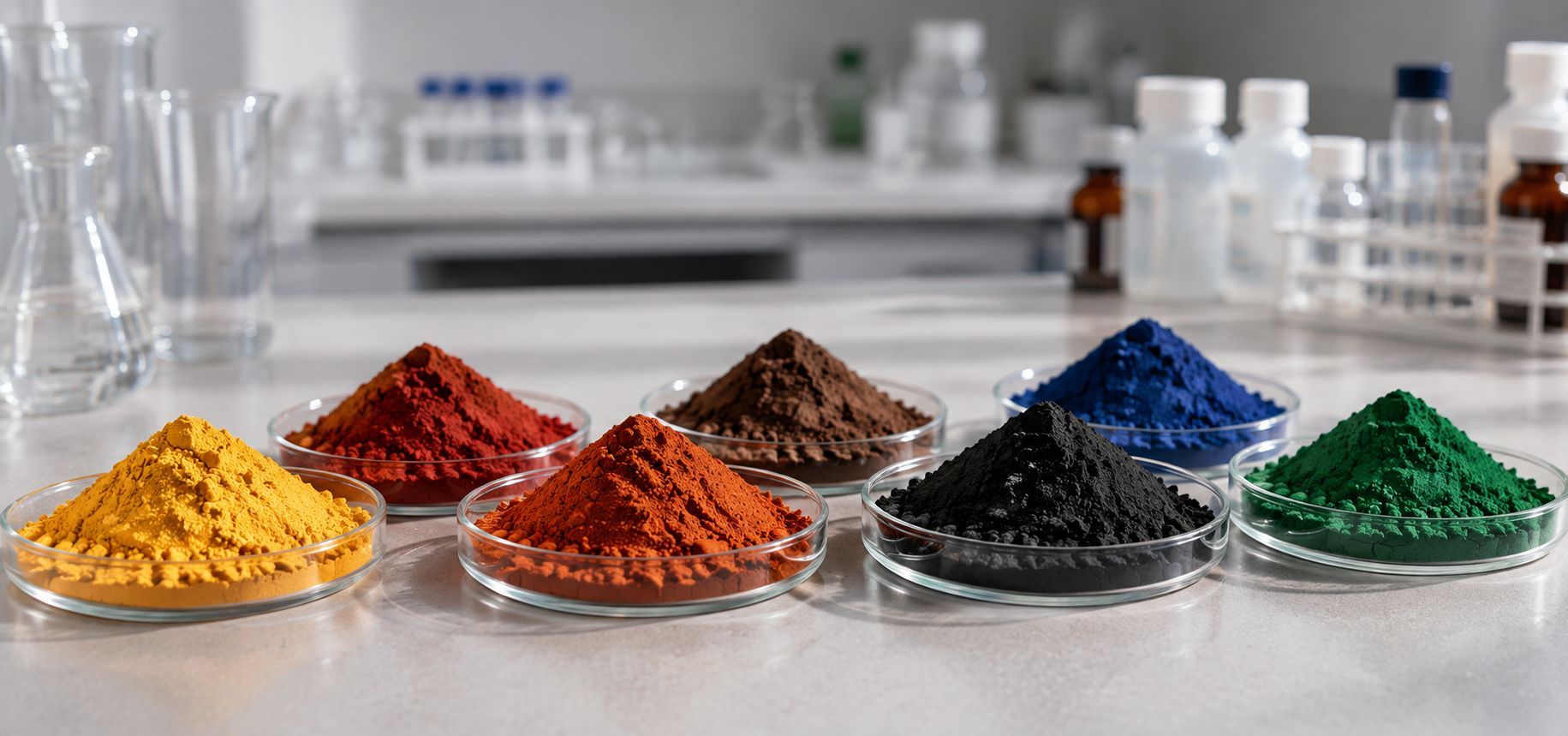
Micronized iron oxide pigments are produced with finer particle size compared with standard grades, providing improved fineness, dispersion performance, and surface appearance.
The smaller particle size allows these pigments to achieve:
Micronized iron oxide pigments maintain temperature resistance up to approximately 100°C, similar to standard grades, but provide advantages in applications where pigment fineness and appearance quality are more critical.
Micronized iron oxide pigments are commonly selected for:
The choice between standard and micronized iron oxide pigments depends mainly on the required surface quality, dispersion requirements, and final appearance.
Recommended Products Placement:

High temperature resistant iron oxide pigments are specially developed for applications requiring improved thermal stability.
Compared with conventional iron oxide pigments, these grades maintain color stability under higher processing temperatures and can withstand temperatures up to 300°C.
They are designed for applications where standard iron oxide pigments may experience:
High temperature resistant iron oxide pigments are suitable for:
These pigments are especially valuable when manufacturing processes involve elevated temperatures or when the final product operates in demanding thermal environments.
Recommended Products Placement:
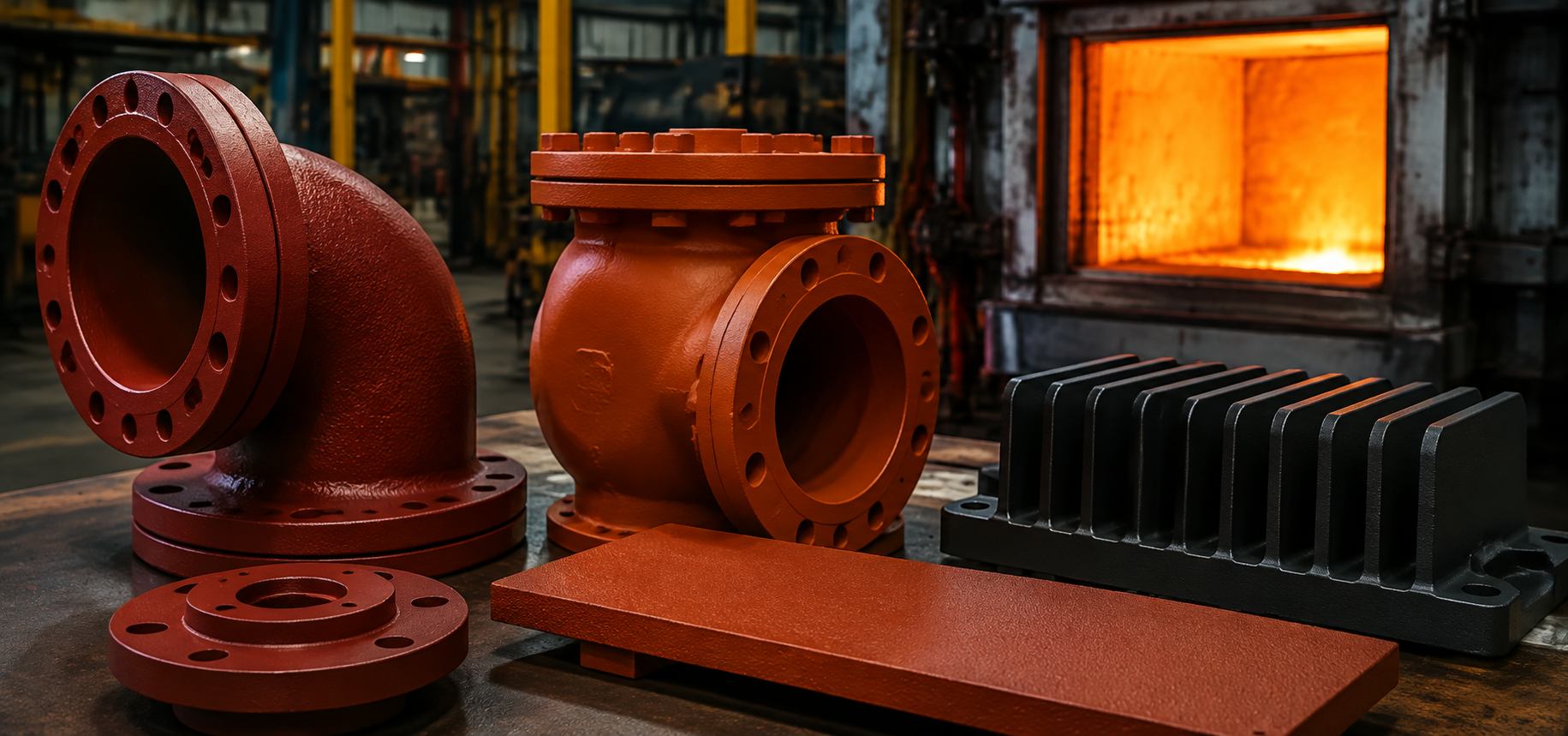
Iron oxide pigments are available in a broad range of inorganic colors, including:
Iron oxide yellow provides bright yellow shades with excellent opacity and weather resistance. It is commonly used in coatings, concrete, and construction materials.
Iron oxide red is one of the most widely used inorganic pigments due to its excellent durability, chemical stability, and strong coloring ability.
Iron oxide orange provides warm orange shades by combining the characteristics of yellow and red iron oxide pigments.
Iron oxide brown pigments are commonly produced through controlled combinations of iron oxide compounds to achieve stable brown shades.
Iron oxide black provides deep black shades and excellent UV resistance, making it suitable for coatings, plastics, and construction applications.
Special iron oxide-based blue and green pigments are used for specific industrial applications requiring unique inorganic colors.
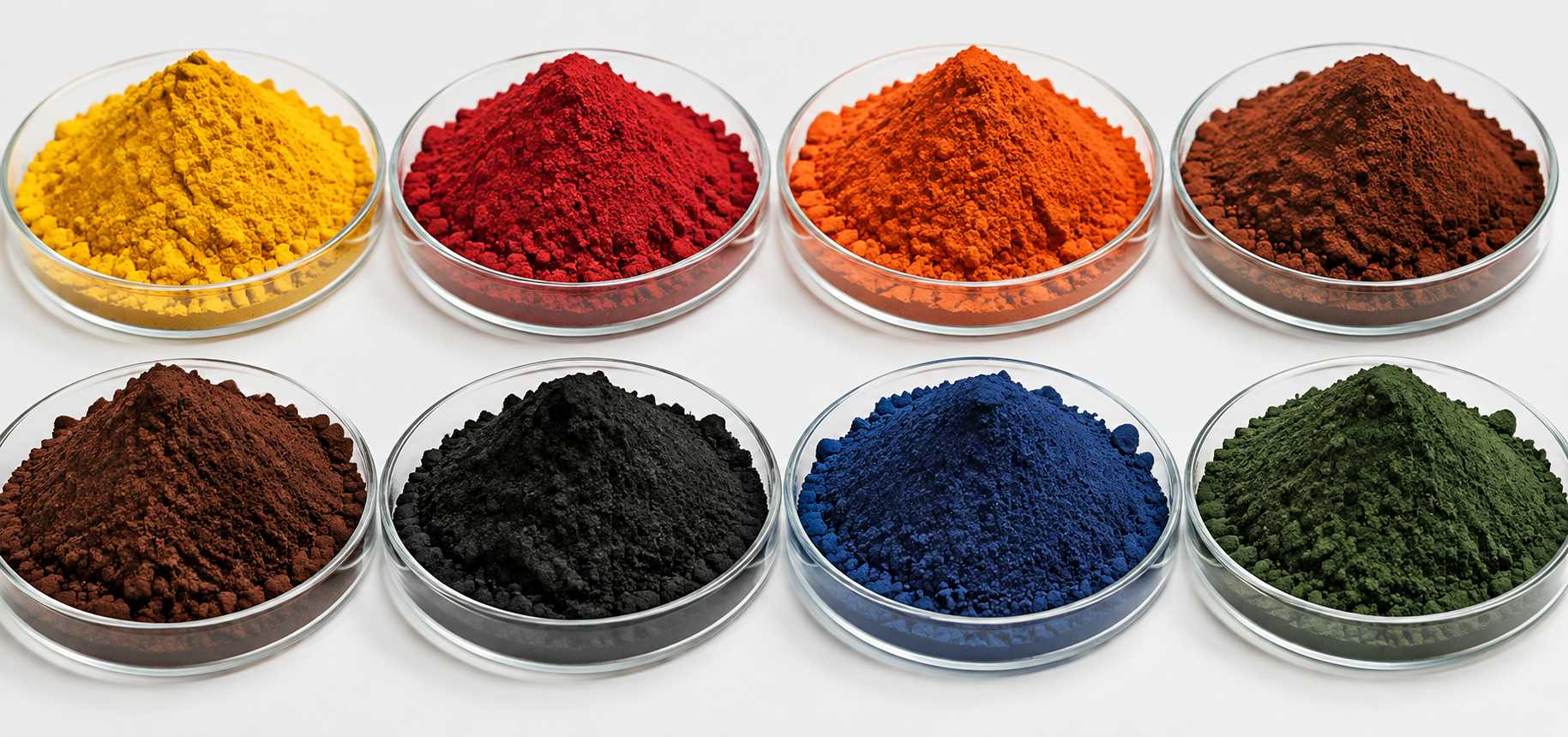
Iron oxide pigments are inorganic pigments composed mainly of iron oxide compounds. They are widely recognized for their excellent chemical stability, durability, UV resistance, and ability to provide long-lasting colors in various industrial applications.
The most common iron oxide pigments are based on different iron oxide structures, including:
The unique crystal structures and particle characteristics of iron oxide compounds determine their final color, opacity, magnetic properties, and application performance.
For more information about iron oxide chemistry, refer to: Iron Oxide
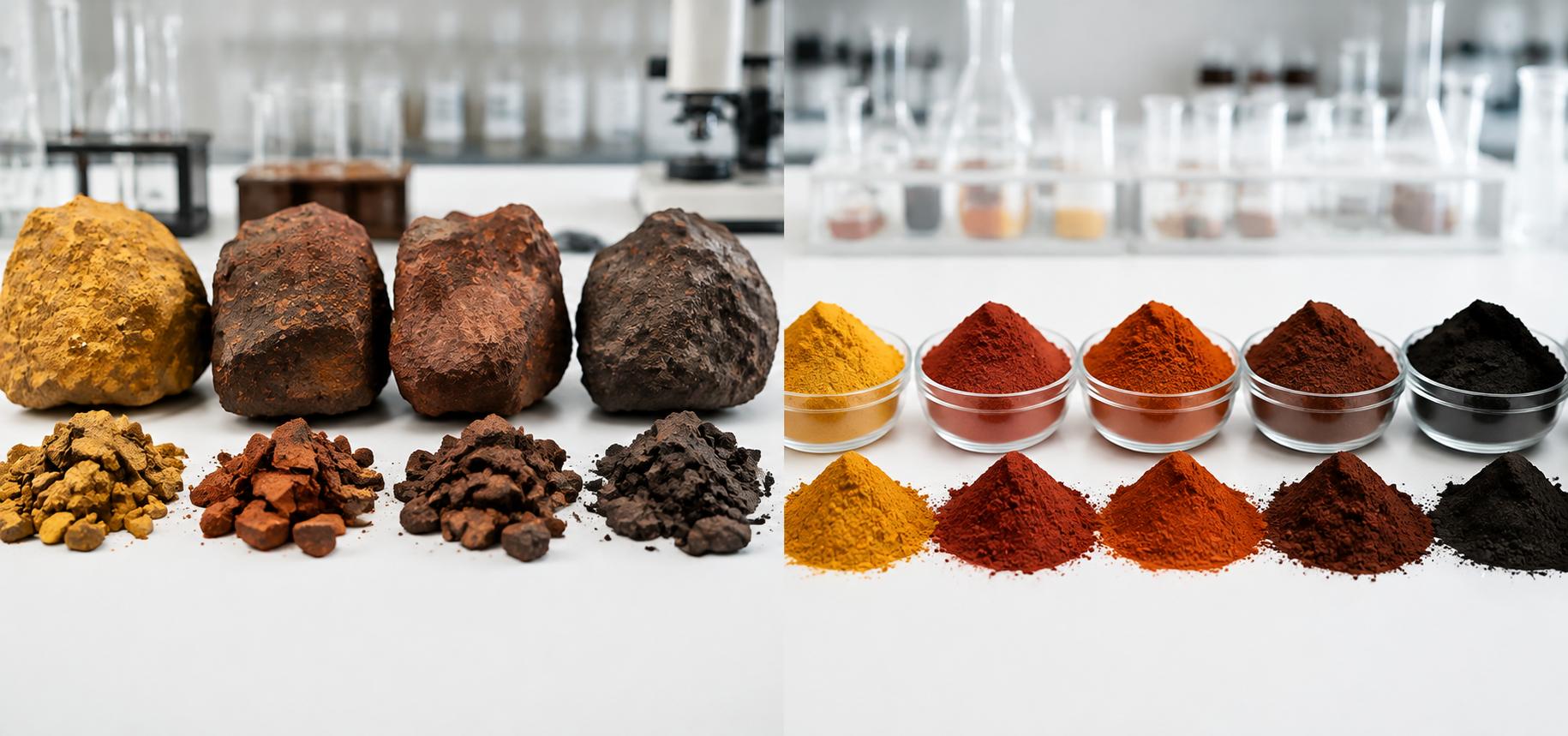
Iron oxide pigments can generally be classified into natural and synthetic types.
Natural iron oxide pigments are obtained from naturally occurring mineral sources containing iron compounds.
They have been used for thousands of years as coloring materials in construction, art, and decorative applications.
Natural iron oxide pigments usually contain:
Because of their natural origin, color consistency and purity may vary depending on the mineral source.
Synthetic iron oxide pigments are manufactured through controlled chemical processes to achieve more consistent:
Compared with natural pigments, synthetic iron oxides generally provide better batch consistency and more predictable performance, making them widely used in modern industrial applications.
Today, most industrial applications requiring stable color performance rely on synthetic iron oxide pigments.
One of the key advantages of iron oxide pigments is their outstanding resistance to outdoor environmental conditions.
They maintain stable color performance when exposed to:
This makes them particularly suitable for architectural coatings, construction materials, and outdoor products.
The weather resistance of pigments is closely related to their inorganic structure and chemical stability.
Iron oxide pigments demonstrate excellent resistance to many chemicals and environmental factors.
Their stable inorganic composition allows them to perform well in applications exposed to:
This is one reason iron oxide pigments are widely used in concrete coloring and building materials.
Long-term color stability is an important requirement for outdoor applications.
Iron oxide pigments generally provide excellent resistance to ultraviolet radiation and maintain their appearance over extended periods.
Compared with many organic pigments, inorganic iron oxide pigments typically offer superior durability in outdoor environments.
More information about ultraviolet radiation:
Temperature resistance is an important factor when selecting iron oxide pigments.
Different grades provide different levels of thermal performance:
| Type | Temperature Resistance | Main Feature |
|---|---|---|
| Standard Iron Oxide Pigments | Up to 100°C | General industrial applications |
| Micronized Iron Oxide Pigments | Up to 100°C | Finer particles and improved appearance |
| High Temperature Resistant Iron Oxide Pigments | Up to 300°C | Improved thermal stability |
The required temperature resistance depends on both processing conditions and final application environment.
Particle size is one of the most important factors affecting pigment behavior.
Smaller particle sizes generally provide:
Larger particles may provide:
Therefore, choosing between standard and micronized iron oxide pigments depends on the desired balance between appearance, dispersion, and application requirements.
Particle size is commonly evaluated through analytical methods such as laser diffraction.
More information: Particle Size
Iron oxide pigments are widely used in construction due to their durability and compatibility with cement-based materials.
Typical applications include:
Their excellent weather resistance allows construction products to maintain stable appearance for long periods.
Iron oxide pigments are commonly used in architectural and industrial coatings because of their:
Applications include:
Iron oxide pigments can be incorporated into various polymer systems where stable inorganic coloring is required.
Applications include:
When selecting pigments for plastics, manufacturers should consider processing temperature, polymer compatibility, and dispersion performance.
Additional applications include:
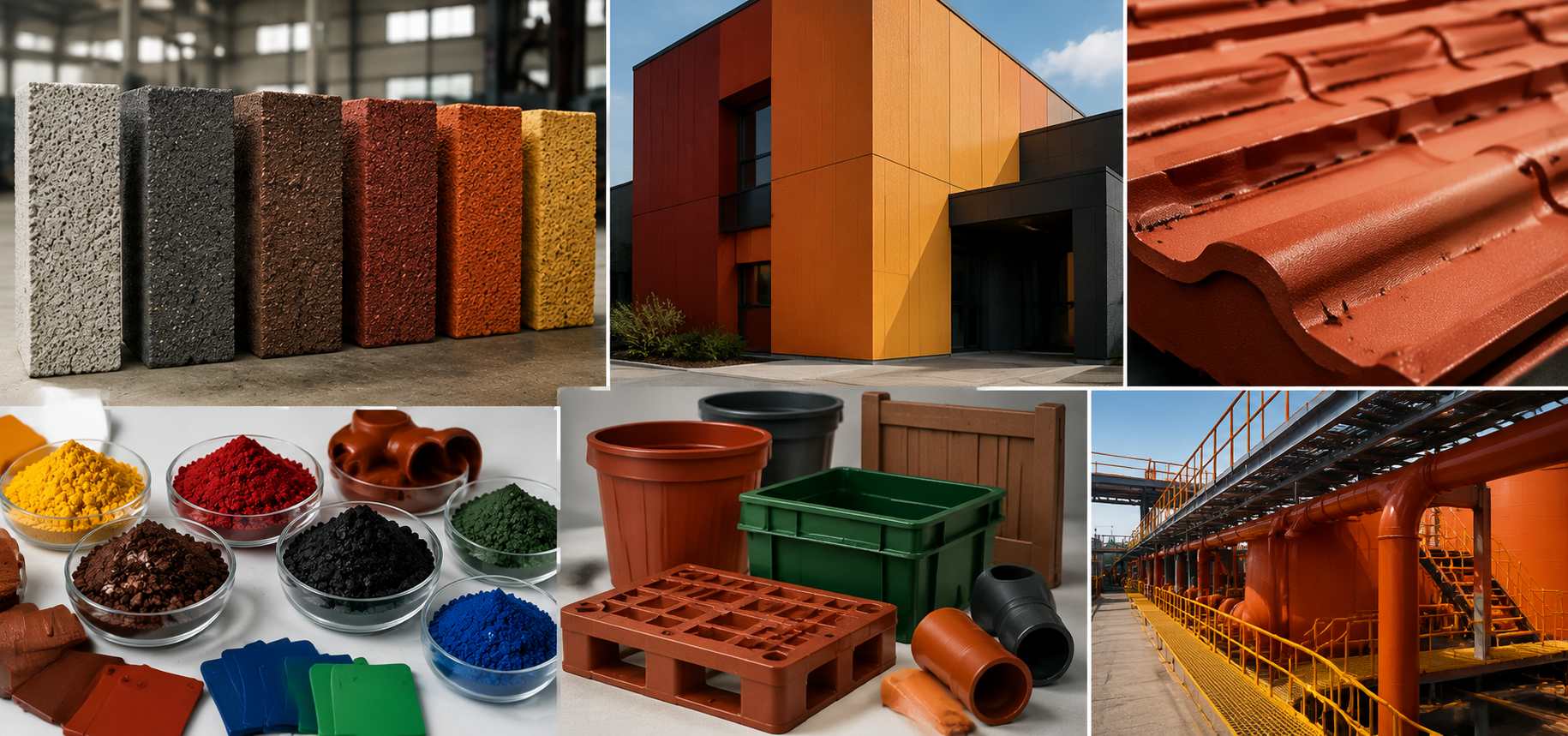
Choosing the correct iron oxide pigment depends on several technical factors.
The operating temperature determines whether standard grades are sufficient or whether high-temperature resistant pigments are required.
Different applications require different levels of:
For premium coatings and decorative applications, micronized iron oxide pigments may provide improved surface smoothness and appearance.
Pigment selection should consider the manufacturing process, including:
Modern manufacturers increasingly consider:
when selecting pigment suppliers.
Iron oxide pigments are commonly available in yellow, orange, red, brown, black, blue, and green shades. Different colors are achieved through variations in iron oxide composition, crystal structure, and manufacturing processes.
The main difference is particle size. Micronized iron oxide pigments have finer particles, which can provide improved dispersion, smoother appearance, and better color uniformity.
Yes. Iron oxide pigments are widely used in outdoor applications because of their excellent weather resistance, UV stability, and long-term durability.
High temperature resistant iron oxide pigments are designed for applications requiring improved thermal stability and can typically withstand temperatures up to approximately 300°C.
Yes. Iron oxide pigments are classified as inorganic pigments and are valued for their chemical stability and durability.
More information: Inorganic Pigments