
Blue pigments are insoluble colorants that create blue coloration by remaining as finely dispersed particles within a material. Compared with dyes, pigments generally provide better color stability, durability, and resistance to light, heat, and chemicals.
Many industrial blue pigments are based on phthalocyanine chemistry, which is widely recognized for its brilliant blue shades and excellent overall performance in industrial applications.

Blue pigments are available in different chemical compositions and shade variations to meet diverse industrial requirements.
Organic blue pigments are commonly selected for their bright color appearance, high color strength, and excellent dispersion in coatings, plastics, and printing inks. Other blue pigment technologies are available for applications requiring specific durability or processing characteristics.
Selecting the appropriate pigment depends on the desired shade, processing conditions, and end-use performance requirements.

Blue pigments are widely used in industrial applications where stable color performance and long-term durability are required.
Common applications include:
Different applications may require different levels of heat resistance, lightfastness, dispersion performance, and weather durability.

Selecting a blue pigment involves evaluating both color characteristics and application requirements.
Important factors include:
Considering these factors helps ensure reliable performance throughout production and long-term use.

Although many blue pigments appear similar in color, their performance may differ due to differences in chemical composition, particle characteristics, and manufacturing processes.
Performance variations may include:
Selecting the right pigment according to application requirements helps achieve consistent and reliable color performance.
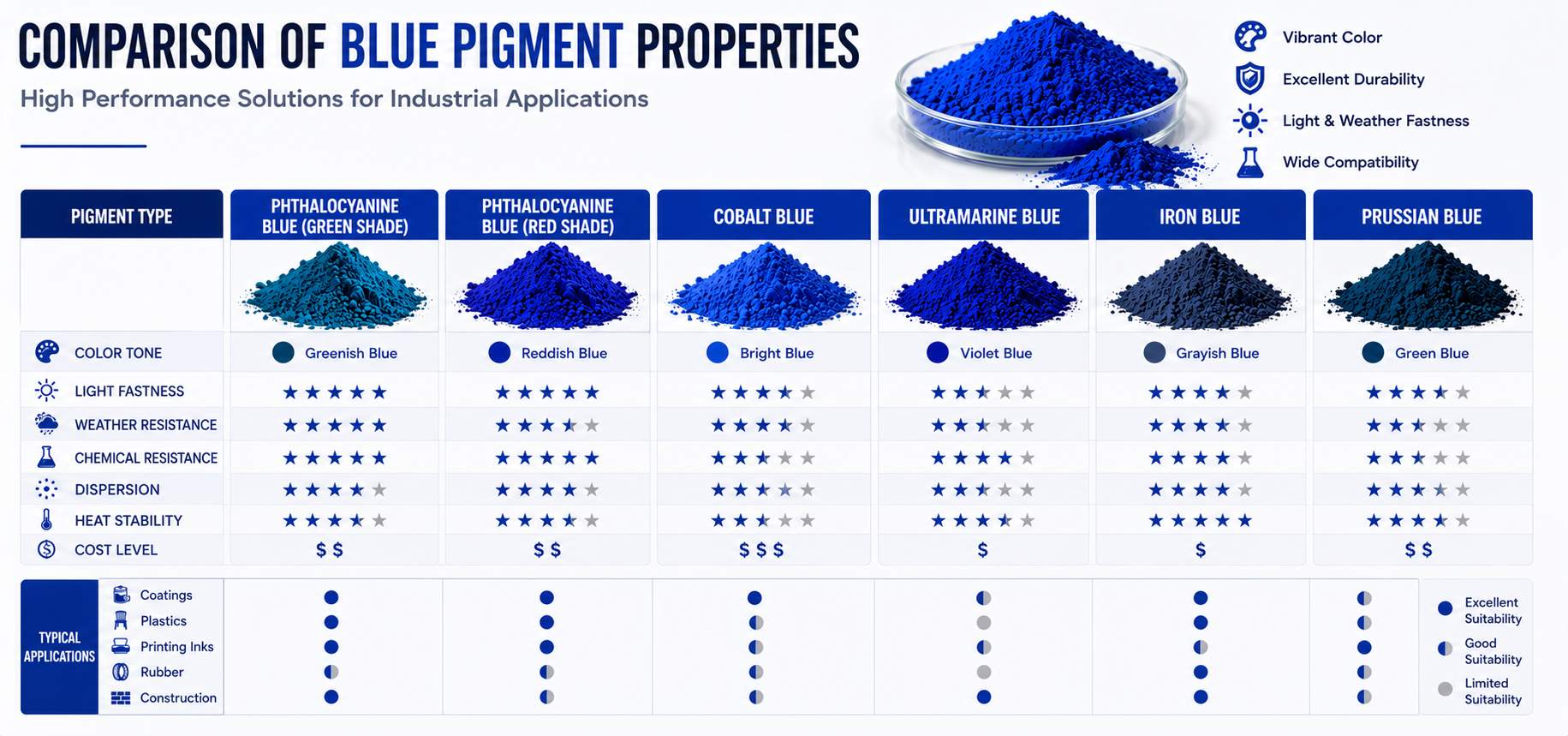
Reliable pigment selection is supported by comprehensive technical information and application guidance.
Supporting documentation may include:
Additional technical information can be provided according to specific application and regulatory requirements.
