
Solvent dyes for wooden paint are colorants designed to dissolve completely in compatible coating systems, providing transparent and vibrant coloration while preserving the natural appearance of wood grain.
Unlike pigments, which create opacity and hiding power, solvent dyes penetrate transparent and semi-transparent wood coatings, allowing the texture and grain pattern of the wood to remain visible. This makes them particularly suitable for furniture coatings, decorative wood finishes, flooring coatings, and wood stains.
Due to their high transparency and strong tinting strength, solvent dyes are widely used in modern wood finishing systems where aesthetics and color clarity are important.
For readers interested in the science behind colorants, see:
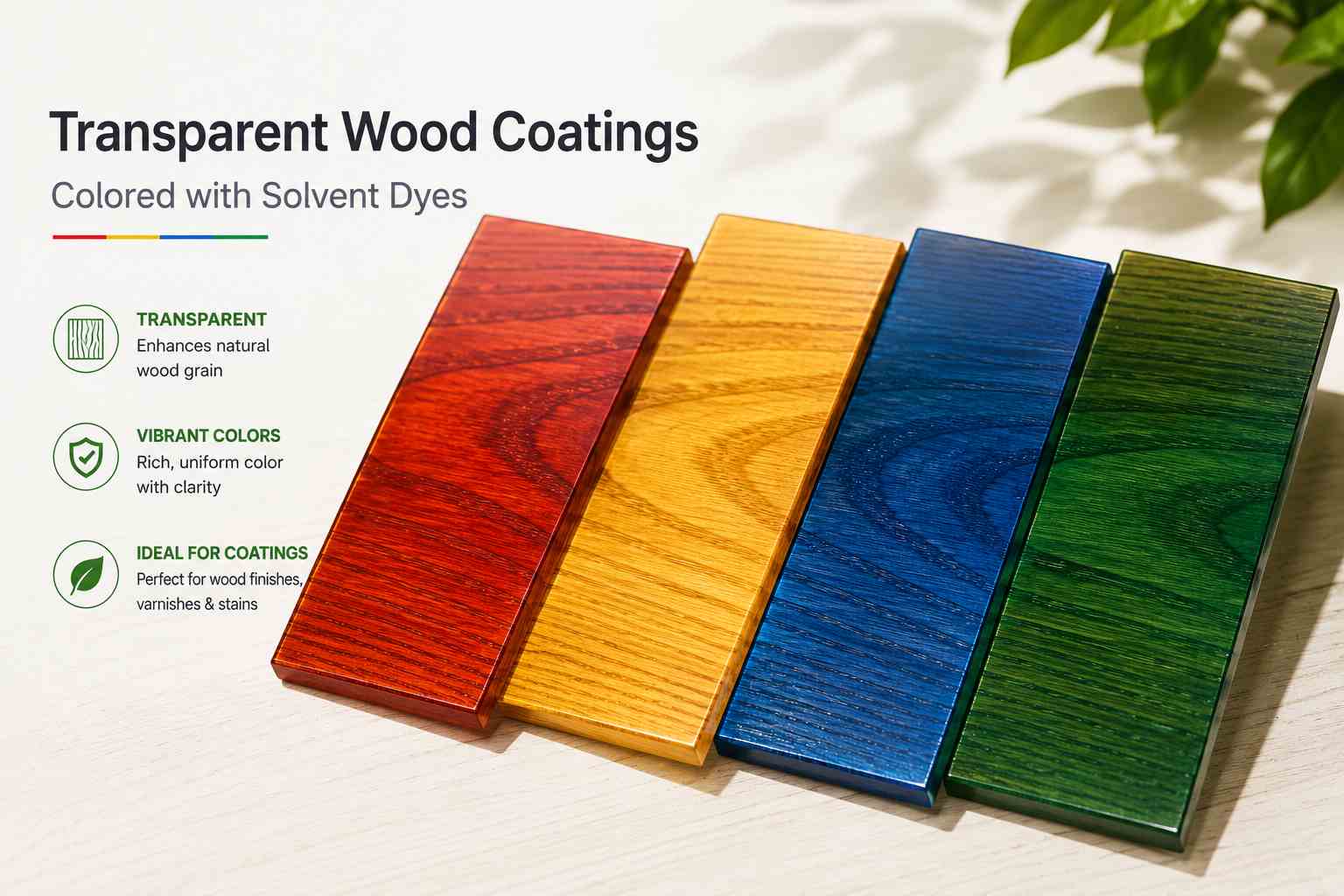
Solvent dyes provide coloration without masking the texture and grain pattern of wood.
They create rich color effects while maintaining a clear and natural appearance.
Small dosage levels can generate intense coloration suitable for wood finishing applications.
Because solvent dyes dissolve completely in compatible systems, they help achieve even color distribution.
Solvent dyes are widely used in furniture finishing systems to create transparent and decorative wood effects.
Suitable for doors, cabinets, wall panels, and decorative wood components.
Used in selected wood floor finishing systems requiring transparent coloration.
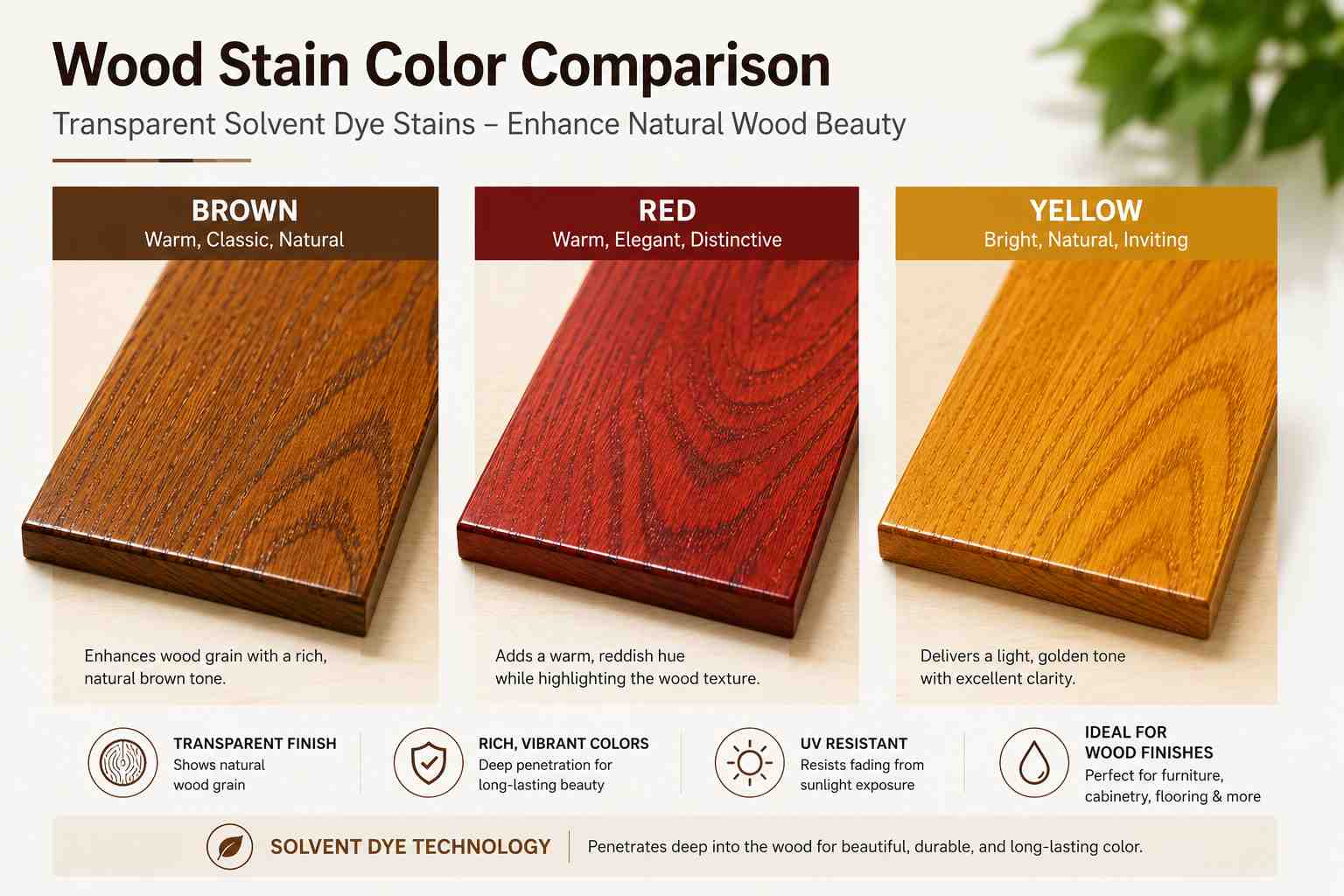
Commonly applied in wood stain formulations to enhance appearance while preserving natural grain.
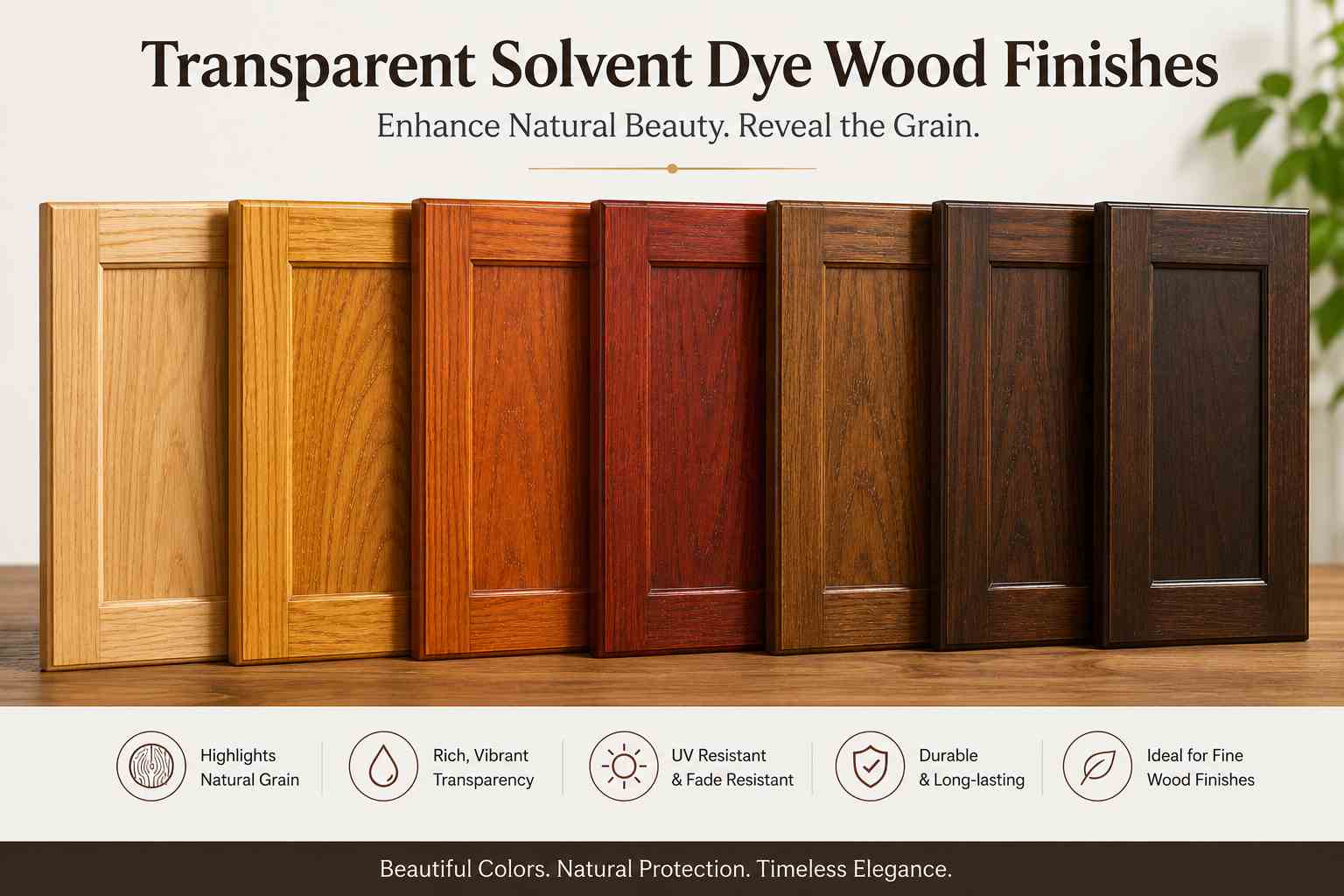
The following products are commonly considered for wood coating and wood stain applications:
Product selection should be based on:
The primary advantage of solvent dyes is their ability to maintain wood grain visibility.
Proper solubility is critical for achieving uniform color development without precipitation.
Outdoor and high-exposure applications may require dyes with enhanced light stability.
Consistent dye quality helps ensure uniform appearance across production batches.
For more information about color consistency and industrial coloration, readers may find these resources useful:
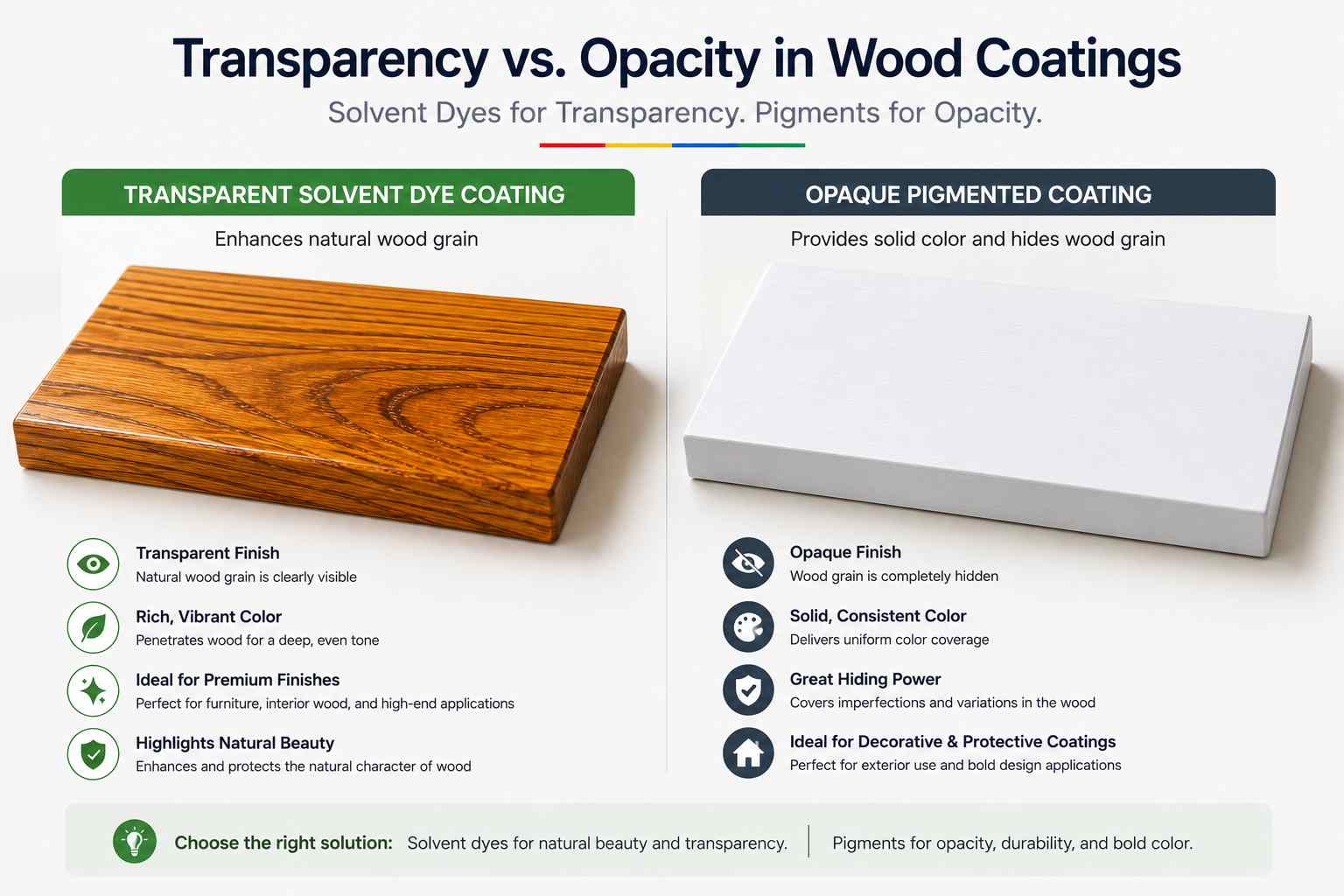
Solvent dyes provide transparent coloration, while pigments generally create more opaque finishes.
Dyes preserve natural wood patterns, whereas pigments partially or completely cover them.
Solvent dyes often create deeper and richer transparent effects.
Dyes are preferred for decorative transparent finishes, while pigments are commonly used when hiding power is required.
For a broader understanding of industrial colorants, see:
When selecting solvent dyes for wooden paint applications, buyers should confirm:
Providing detailed application information helps suppliers recommend the most suitable products.
25KG Kraft Bag, 400kg/500kg Carton Box
Lead Time: Normally around 15 days after signed contract.
Fineland Chem supplies solvent dyes for wood coatings, wood stains, furniture finishes, and other industrial coloration applications.
Products are manufactured under controlled quality systems to ensure stable color strength, solubility performance, and batch-to-batch consistency. Technical communication and export-oriented support are available for global customers.
They provide transparent coloration while preserving the natural appearance and grain of wood.
For transparent wood stain applications, solvent dyes are often preferred because they maintain wood grain visibility.
Yes. They are widely used in furniture finishing systems and decorative wood coatings.
No. Solvent dyes are selected specifically because they provide coloration while maintaining transparency.
Selection depends on the coating system, desired shade, transparency requirements, and lightfastness expectations.