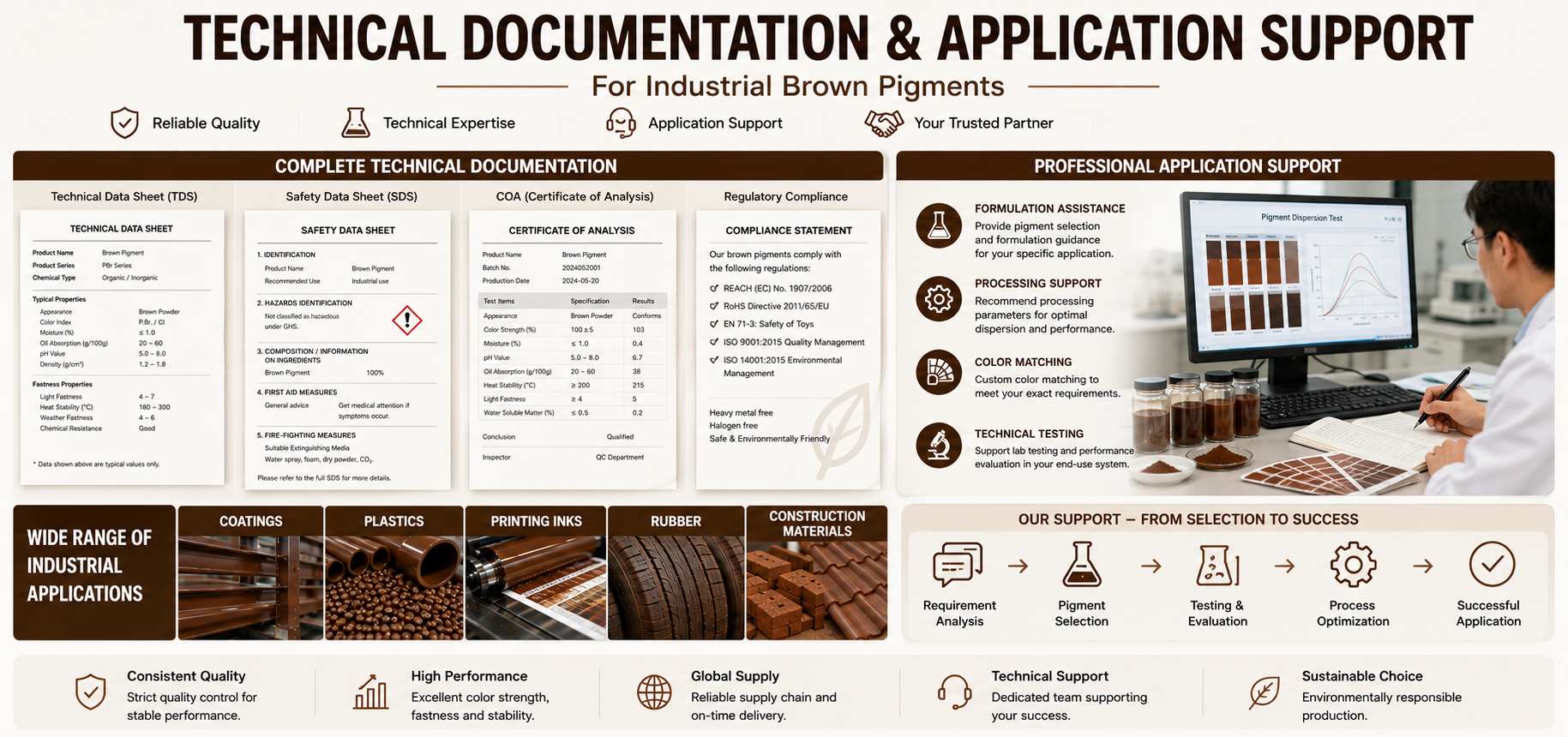
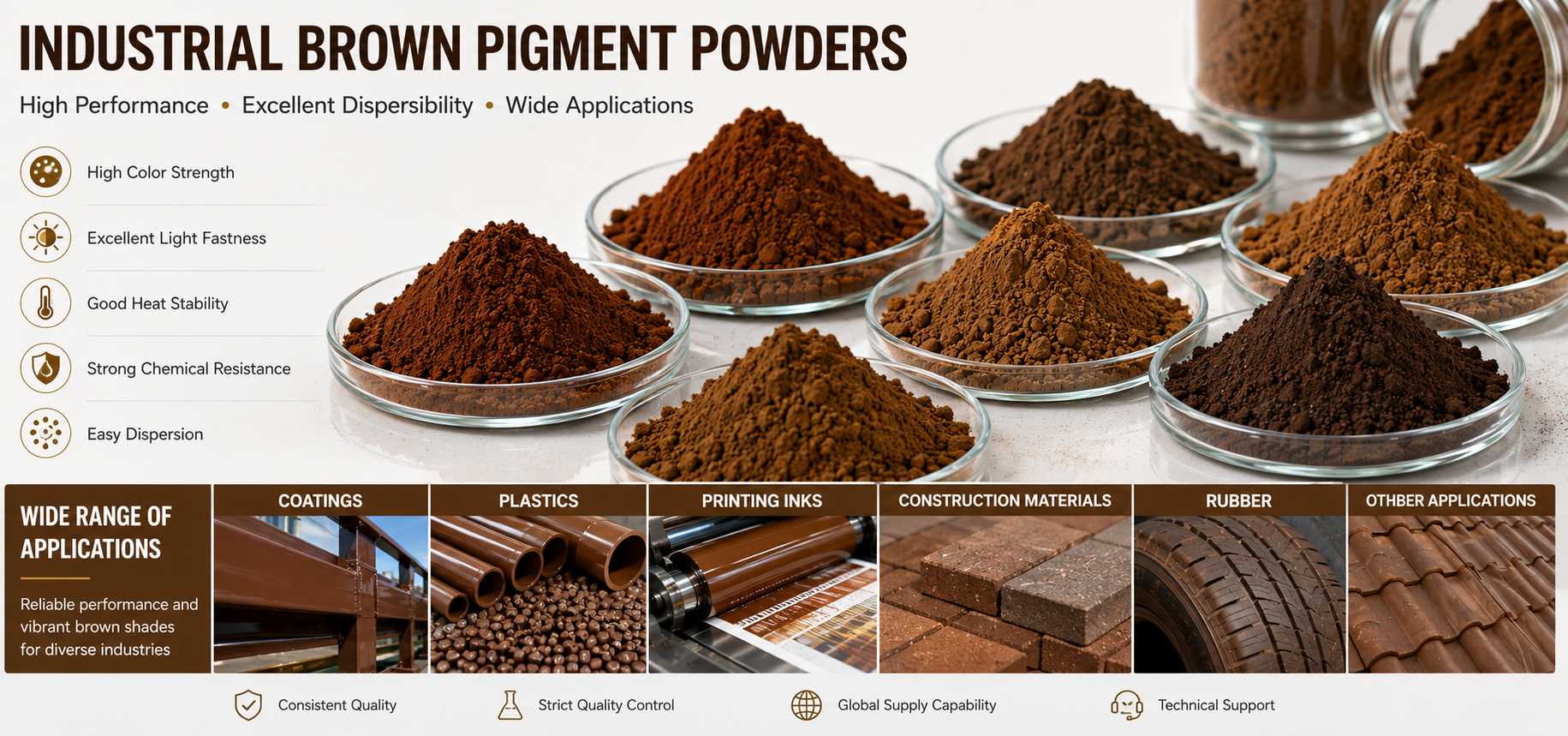
Brown pigments are insoluble colorants that produce brown shades by remaining as finely dispersed particles within a material. Unlike soluble dyes, pigments provide long-lasting color stability and are widely used in industrial manufacturing where durability and processing consistency are important.
Brown pigments are commonly selected for applications requiring natural, earthy, or wood-like color appearances across a variety of industrial products.
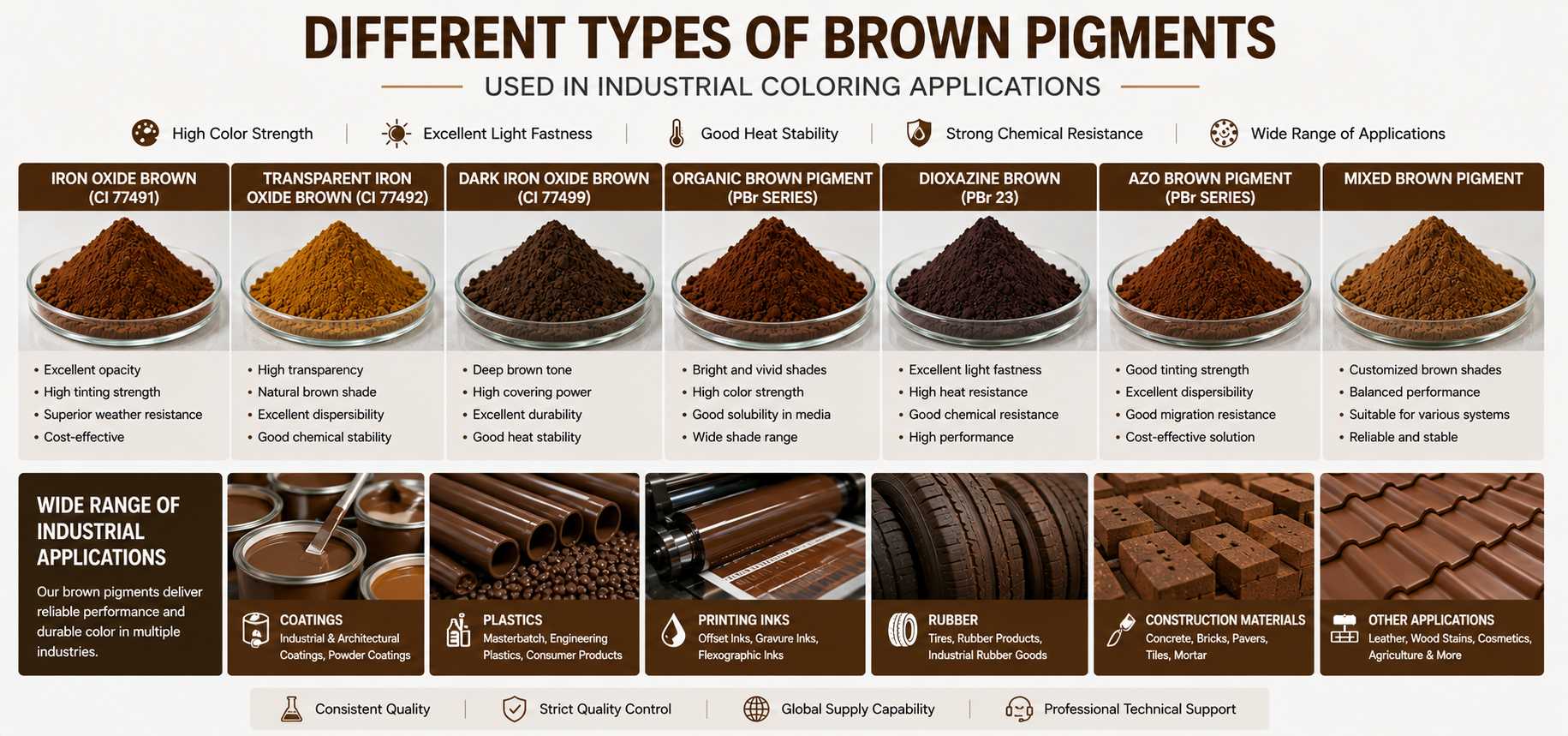
Brown pigments are available in different chemical compositions and formulations to meet various industrial coloring requirements.
Depending on the application, manufacturers may select pigments that prioritize color consistency, thermal stability, or weather durability. Different pigment technologies are suitable for different processing conditions and end-use environments.
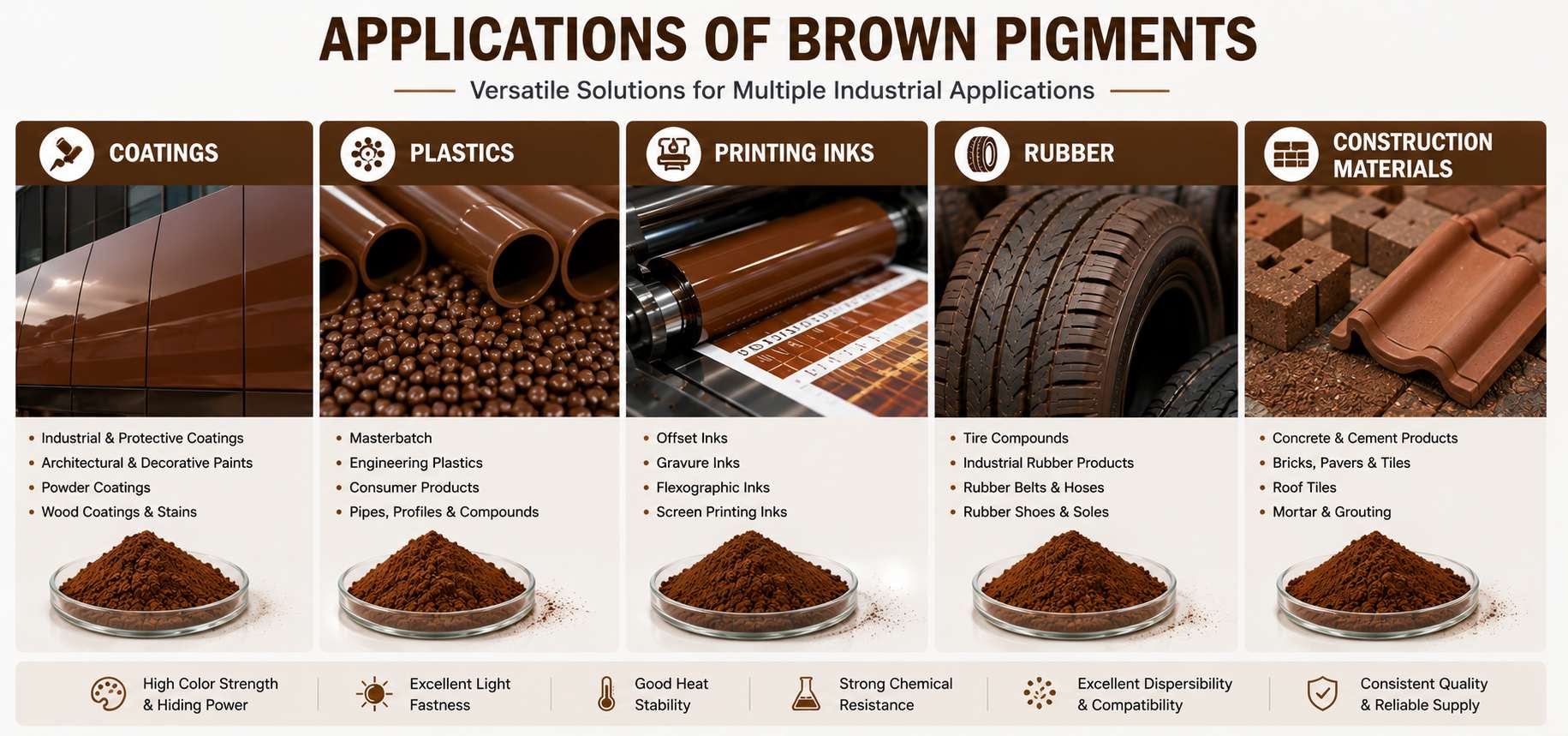
Brown pigments are widely used in industrial applications where natural color appearance and long-term durability are required.
Typical applications include:
Application requirements may vary depending on processing methods, environmental exposure, and desired visual effects.
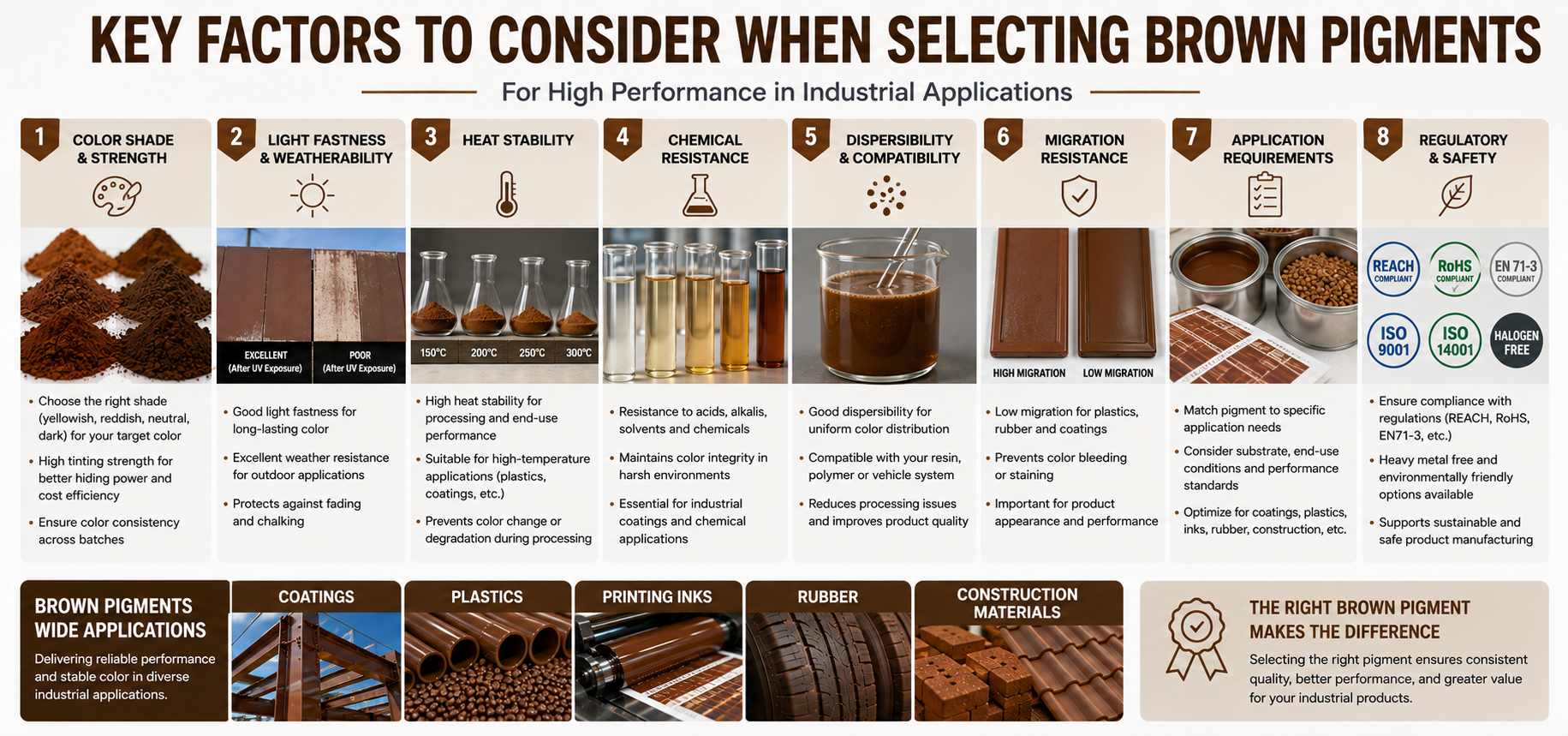
Selecting a brown pigment involves balancing color appearance with application performance.
Important considerations include:
Selecting pigments according to application requirements helps ensure consistent manufacturing performance and reliable product quality.
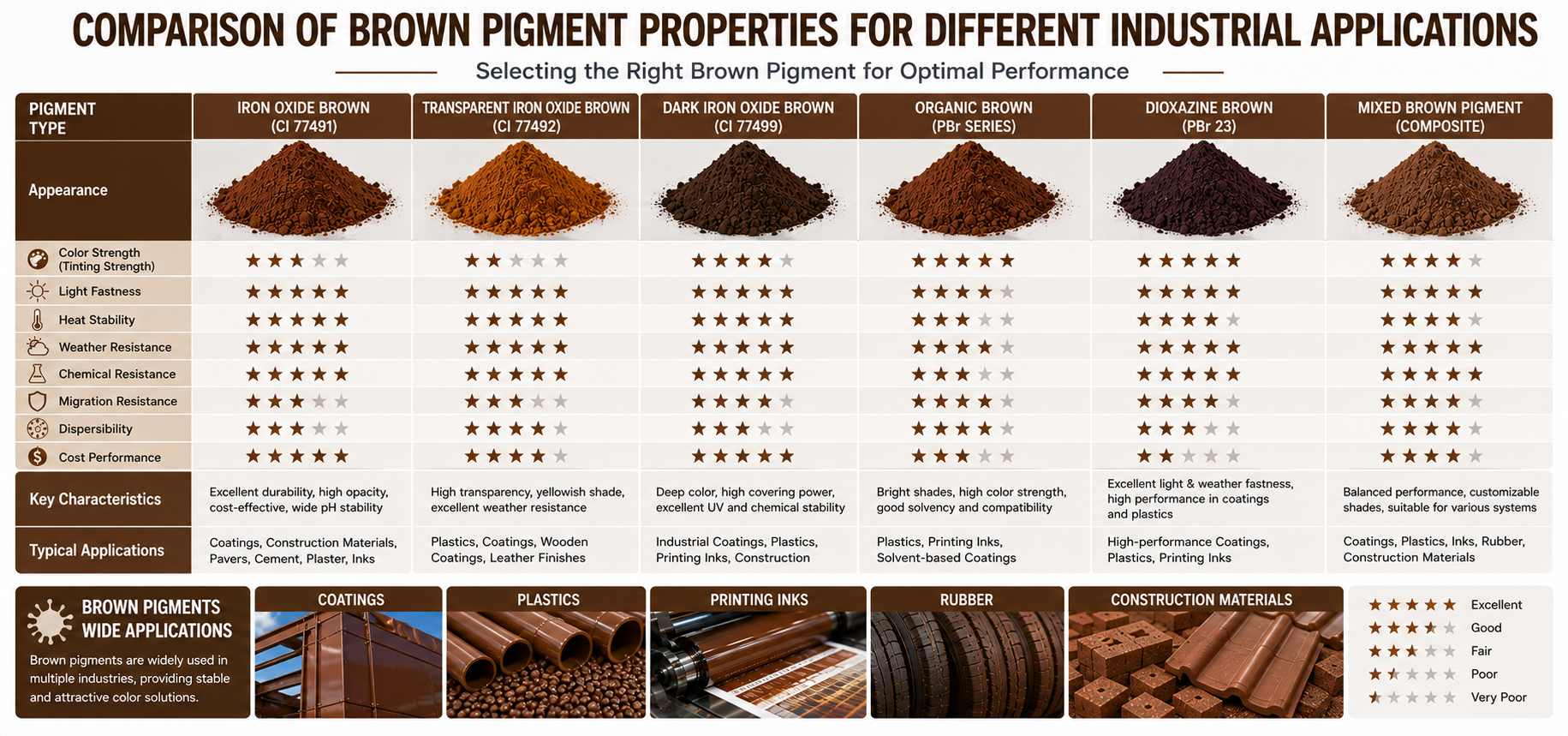
Although many brown pigments appear similar in color, their performance may vary depending on particle size, chemical composition, and manufacturing processes.
Performance differences may include:
Understanding these characteristics helps manufacturers select pigments that best match specific application requirements.
Reliable pigment selection is supported by technical documentation and application guidance throughout the product evaluation process.
Available documentation may include:
Additional technical information can be discussed according to specific application requirements and target market regulations.