
August 2026 showed a pigment and coatings industry continuing to balance market recovery with cost pressure, regulatory expectations, technological development, and supply-chain restructuring. Compared with the mixed pricing environment seen earlier in the year, several developments during August provided clearer signals about where the industry is heading.
For pigment producers and coatings formulators, three themes stood out during the month: the gradual adjustment of pigment supply and production capacity, continued consolidation among major coatings companies, and increasing investment in sustainable and technology-driven manufacturing.
1. Titanium Dioxide Supply Enters a New Adjustment Phase
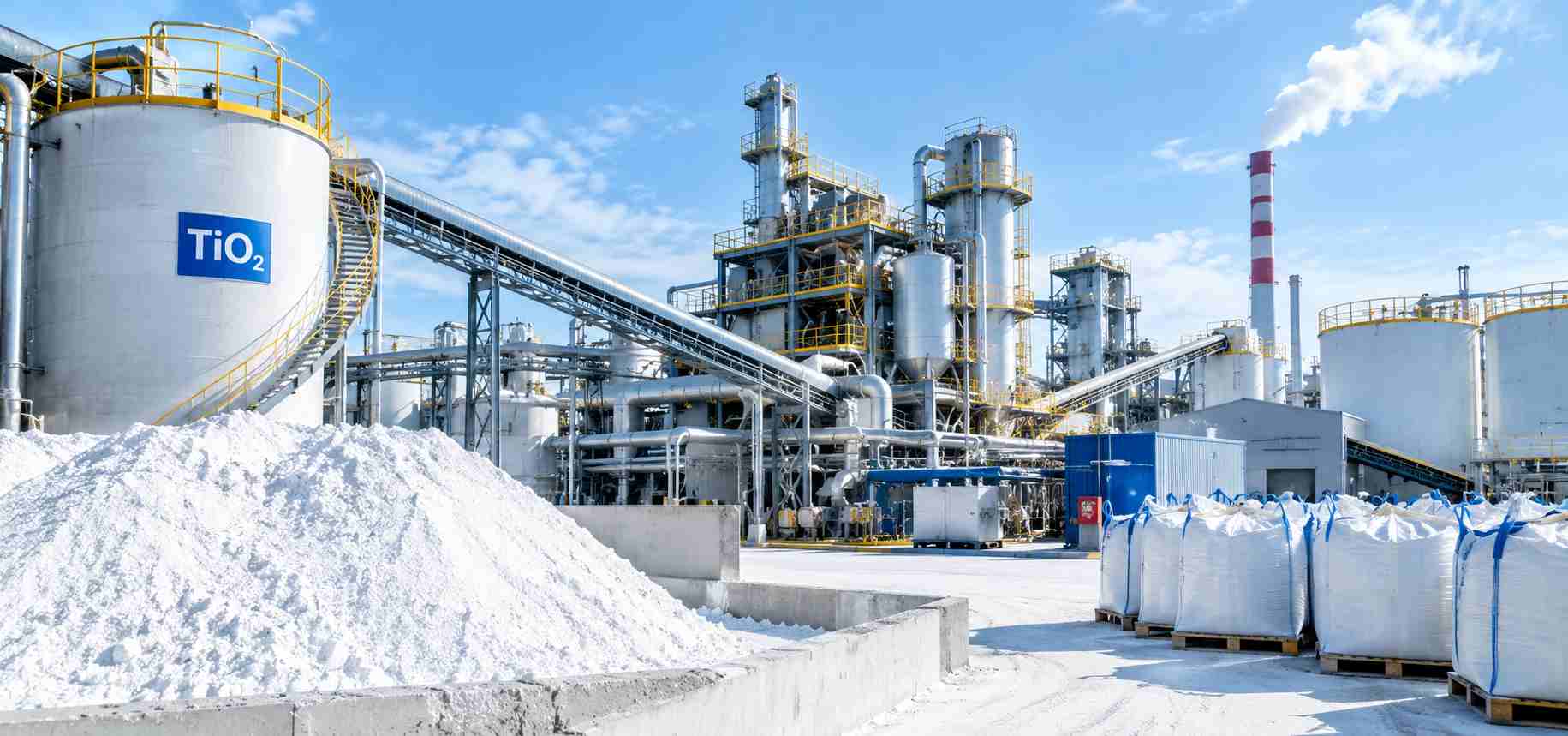
Titanium dioxide remained one of the most closely watched pigment materials during August. The restart of the Tioxide production facility at Greatham in the United Kingdom was an important development for the global TiO₂ supply chain.
Following its acquisition by LB Group, the Greatham plant restarted production in August after several months of commissioning and maintenance. The facility has a nameplate capacity of approximately 150,000 tonnes per year, with production expected to ramp up progressively toward full capacity in early 2027. The return of this capacity adds another factor to the regional supply balance for TiO₂ producers and buyers.
The development is particularly relevant because TiO₂ is widely used across architectural coatings, industrial coatings, plastics, inks, and other applications where opacity and whiteness are important. The additional production capacity may improve long-term supply security, although the impact on global prices will depend on utilization rates, regional demand, inventories, and competing production capacity.
Tioxide restarts titanium dioxide production at Greatham site in the UK – European Coatings
A follow-up interview published later in August indicated that the first production stream had returned to operation and that the company was prioritizing a phased recovery of production and customer supply.
Interview with Tioxide: Back on stream at Greatham – European Coatings
2. TiO₂ Pricing Remains Influenced by Both Demand and Cost
While new production capacity is returning to the market, pricing remains influenced by a combination of demand, production costs, and regional conditions.
Chemours’ second-quarter results provided another useful indicator. Its Titanium Technologies segment recorded TiO₂ pigment sales of approximately US$639 million in Q2 2026. Global pricing increased during the period, while volumes declined slightly year over year. The company also reported that a further TiO₂ price increase implemented from June contributed to higher year-to-date pricing.
This illustrates why the TiO₂ market should not be viewed simply through the lens of production capacity. Even when demand volumes are relatively soft, pricing can remain supported by producer cost structures, regional supply conditions, and commercial pricing strategies.
For pigment buyers, regional benchmarking therefore remains important. A global average price may not accurately represent the purchasing conditions faced by customers in Europe, Asia, or North America.
Chemours releases second quarter 2026 results – European Coatings
3. Major Coatings Industry Consolidation Moves Forward
One of the biggest corporate developments of August was the shareholder approval of the proposed combination between Akzo Nobel and Axalta.
On August 5, shareholders of both companies approved the proposed all-stock merger. The transaction still requires regulatory approvals and other closing conditions, with completion expected in late 2026 or early 2027. If completed, the combination would create one of the world’s largest coatings companies with businesses spanning automotive, industrial, architectural, powder, marine, and protective coatings.
The significance of this development extends beyond the two companies involved. Consolidation can affect purchasing structures, technology investment, manufacturing footprints, product portfolios, and relationships throughout the coatings supply chain.
For pigment suppliers, large-scale consolidation may also influence customer procurement strategies. Larger coatings groups may increasingly seek standardized raw materials, global supply capabilities, technical consistency, and stronger regulatory documentation across regions.
Axalta and Akzo Nobel shareholders approve merger of equals – European Coatings
4. Coatings Companies Continue to Show Uneven but Resilient Performance
Despite economic uncertainty in some markets, financial results from major coatings companies indicated that demand has not weakened uniformly.
Sherwin-Williams reported second-quarter 2026 net sales of US$6.79 billion, representing 7.5% year-on-year growth. Its Performance Coatings Group also recorded growth, while protective and marine coatings showed particularly strong performance within the Paint Stores Group. At the same time, the company cited rising raw-material costs and announced an 8% price increase for its Paint Stores Group effective September 2026.
These results suggest a market characterized less by broad-based expansion or contraction and more by differences between applications and regions. Protective coatings, automotive refinishing, industrial coatings, and other specialized applications can behave differently from more construction-dependent segments.
This differentiation is important for pigment manufacturers because pigment demand is ultimately linked to the specific performance and formulation requirements of individual downstream applications.
Sherwin-Williams reports 7.5% net sales growth in Q2 2026 – European Coatings
5. Sustainable Pigment Manufacturing Moves from Concept to Industrial Scale
Sustainability remained a major technology theme during August, but several developments demonstrated that the focus is increasingly shifting from product claims toward actual manufacturing processes.
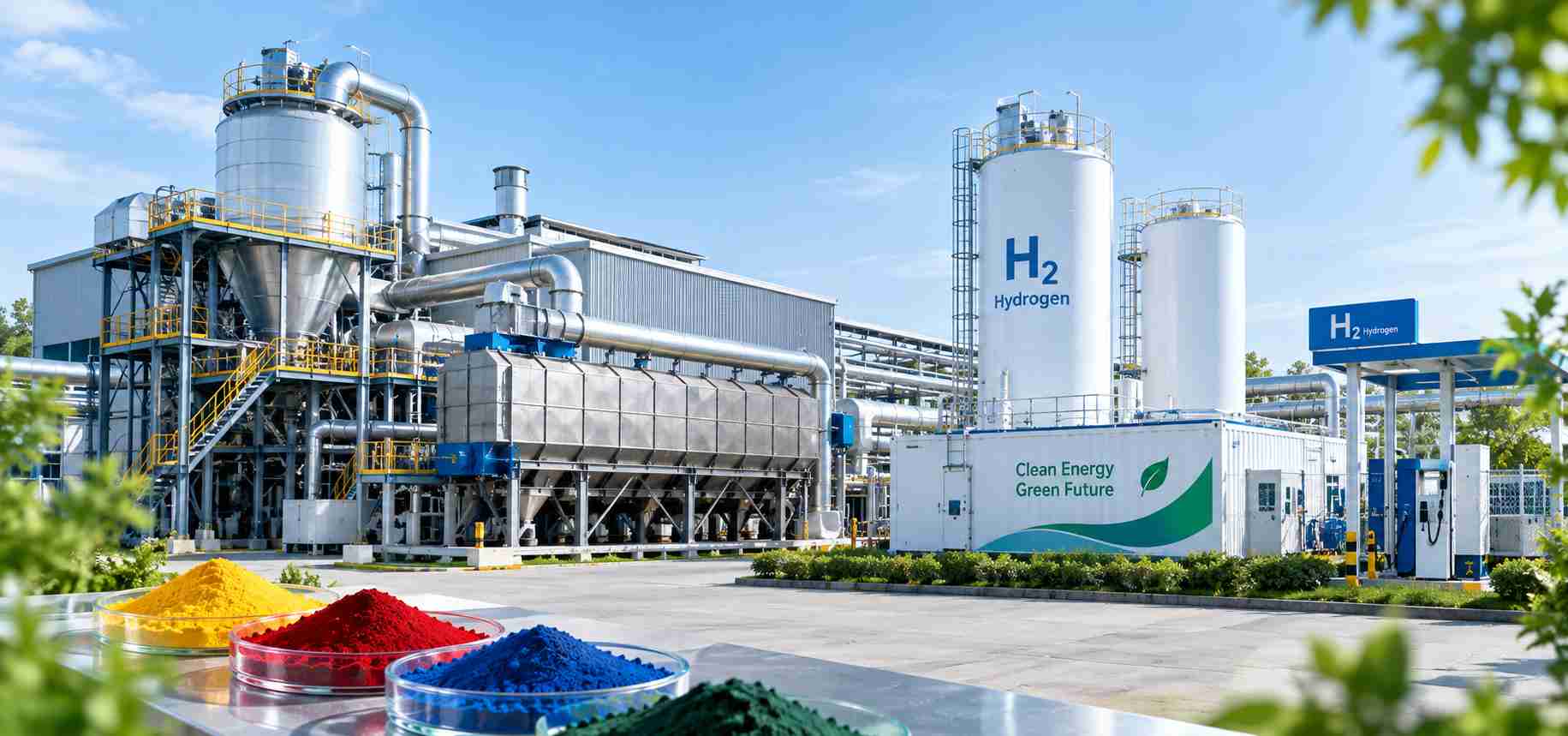
A notable example came from the iron oxide pigment sector. Lanxess began using hydrogen as a fuel for drying iron oxide pigments at its Krefeld-Uerdingen site, replacing natural gas in the relevant production process. The company estimates that the change can save approximately 6,000 tonnes of CO₂ emissions annually.
The significance of this development lies in its scale. Decarbonization is often discussed in terms of new materials or alternative formulations, but manufacturing energy can also represent an important part of a pigment’s environmental profile.
For the wider pigment industry, the example illustrates a broader direction: future sustainability efforts are likely to involve not only the chemical composition of pigments, but also energy sources, production efficiency, waste management, and process design.
Iron oxides: Lanxess deploys hydrogen in large-scale production – European Coatings
6. Digitalization and AI Begin to Influence Coatings Development
Technology development in August was not limited to manufacturing equipment and materials. Artificial intelligence and machine learning are also becoming increasingly relevant to coatings research.
A review published in August examined how machine learning can be used to accelerate surface-coating development by identifying relationships between formulation variables, processing conditions, and final performance. Potential applications include optimizing adhesion, hardness, durability, corrosion resistance, and other functional properties.
For pigment and coatings development, this direction could be particularly significant because formulations involve many interacting variables. Pigment concentration, particle characteristics, binder chemistry, additives, dispersion conditions, and curing parameters can all influence final performance.
Rather than replacing formulation expertise, data-driven tools may increasingly be used to reduce trial-and-error experimentation and identify promising formulation windows more efficiently.
Machine learning transforms design of surface coatings – European Coatings
7. Functional and Reflective Coatings Continue to Attract Technical Attention
Another technology trend during August was the development of coatings designed to deliver properties beyond conventional appearance and protection.
Research into infrared-reflective coatings, for example, is increasingly connected with building energy performance. A recent analysis examined how digital-twin and multiphysics simulation approaches can help predict the thermal behavior of reflective coatings under realistic environmental conditions.
This area is relevant to pigment technology because optical properties such as solar reflectance and near-infrared behavior can depend strongly on pigment selection and coating formulation.
The development of cool coatings, reflective pigments, and other functional color technologies therefore represents an intersection between traditional color science and broader energy-efficiency requirements.
8. Regionalization of Technical Support and Production Continues
Another noticeable trend in August was the continued expansion of regional technical capabilities.
For example, Clariant opened two new R&D laboratories in China to strengthen local development capabilities for additives used in coatings, plastics, and adhesives. The facilities are intended to support development from laboratory research through pilot-scale work and improve responsiveness to customers in China and the wider Asia-Pacific region.
Similarly, Lubrizol and Brenntag strengthened their collaboration in Vietnam, focusing on technical support for coatings, construction, and inks applications. The development reflects a wider industry trend toward bringing technical resources closer to regional customers.
For pigment and coatings companies, regional technical service can become increasingly important as customers demand faster formulation support, application testing, and troubleshooting.
Clariant opens two new R&D laboratories in China – European Coatings
Lubrizol and Brenntag strengthen coatings collaboration in Vietnam – European Coatings

9. Supply Chain Resilience Remains a Strategic Priority
Supply-chain considerations continued to influence investment decisions across the chemical and coatings industries.
During August, companies announced investments aimed at strengthening local or regional manufacturing and distribution capabilities. Actega, for example, announced a new sealant production facility in Foshan, China, intended to strengthen supply responsiveness for Asian metal-packaging customers.
Although sealants are not pigments, the development reflects a broader trend across specialty chemicals: manufacturers are increasingly considering where production should take place, how quickly materials can reach customers, and how regional capacity can reduce supply-chain risks.
For pigment buyers, this trend reinforces the importance of evaluating suppliers not only on price and product specifications, but also on production capacity, inventory planning, logistics capabilities, and continuity of supply.
10. August Outlook: Performance, Sustainability and Resilience Remain Interconnected
Looking ahead to the final months of 2026, the pigment and coatings industry appears likely to remain focused on balancing several priorities at the same time.
First, pigment supply and pricing will continue to respond to changes in production capacity and regional demand, with TiO₂ remaining an important indicator for the broader coatings raw-material market.
Second, consolidation among major coatings companies could reshape procurement structures, product portfolios, and competitive dynamics.
Third, sustainability is becoming increasingly tangible. Developments such as hydrogen-powered pigment production show that environmental improvements are beginning to extend into large-scale manufacturing processes rather than remaining limited to product formulation.
Finally, digitalization, machine learning, functional pigments, and regional technical development are expanding the definition of innovation in the coatings industry.
The overall direction is therefore not simply toward higher pigment demand or lower production costs. Instead, the industry is moving toward a more integrated model in which color performance, durability, regulatory compliance, manufacturing efficiency, sustainability, and supply reliability are increasingly evaluated together.
For pigment producers, formulators, and buyers, the remainder of 2026 will likely be defined by how effectively these different requirements can be balanced.