Introduction
July 2026 continued to reflect a period of transformation for the global pigment and coatings industry. While market recovery remains uneven across regions, manufacturers and downstream users are increasingly focusing on three major priorities: regulatory compliance, sustainable development, and high-performance materials.
The pigment industry is closely connected with multiple downstream sectors, including architectural coatings, industrial coatings, plastics, printing inks, and specialty applications. As customers continue to demand improved durability, environmental responsibility, and consistent quality, pigment producers are adapting their technologies and production strategies accordingly.
This monthly brief reviews the major industry trends influencing pigments and coatings in July 2026.
1. Sustainability Becomes a Core Direction for Coatings and Pigment Development
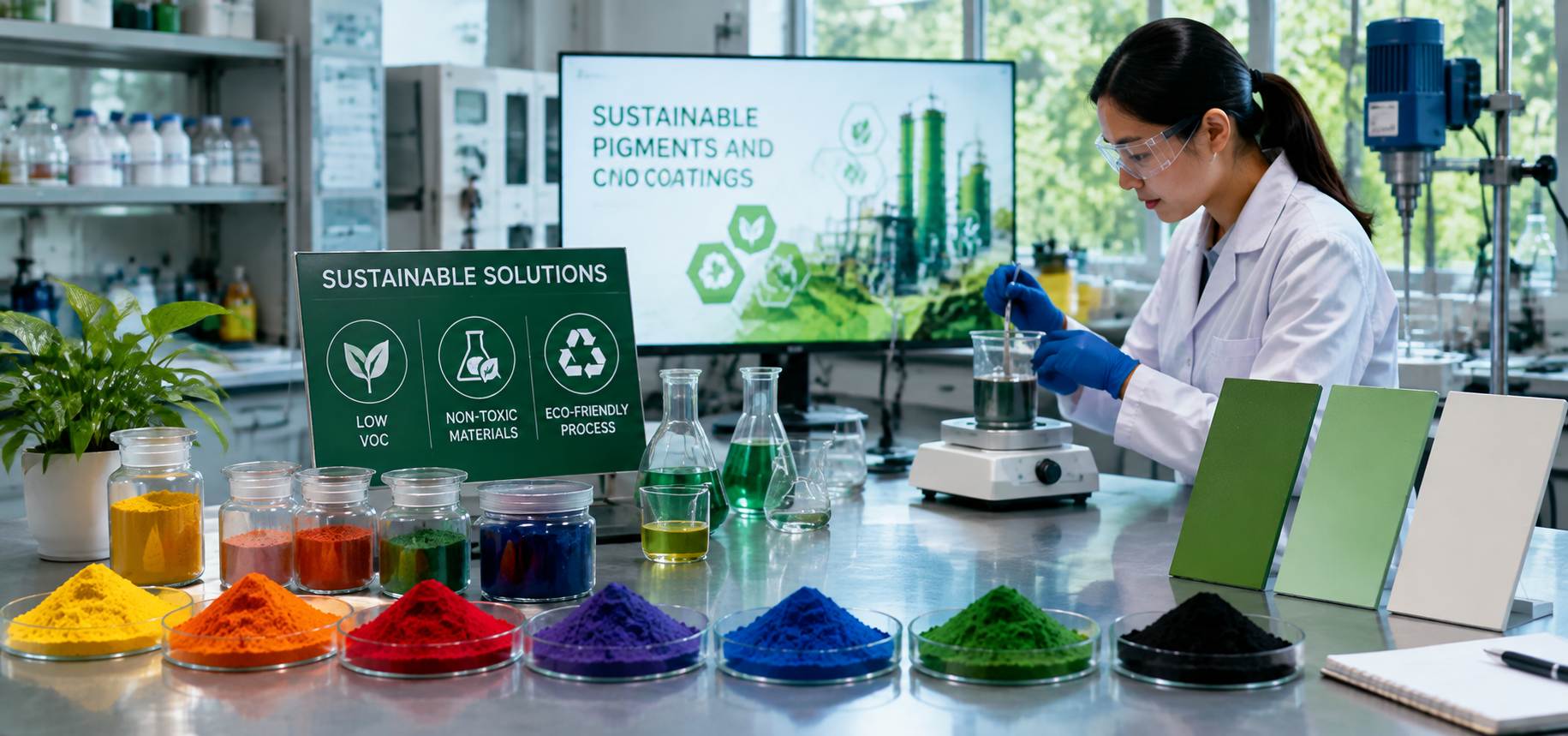
Sustainability continues to move from a long-term goal toward an essential requirement throughout the coatings value chain. In 2026, manufacturers are facing increasing expectations to reduce environmental impact while maintaining coating performance, durability, and cost competitiveness.
For pigment producers, this trend is influencing product development in several areas:
- Reduction of hazardous substances
- Development of heavy-metal-free pigment alternatives
- Improvement of production efficiency
- Lower environmental impact during the product lifecycle
The coatings industry is also placing greater emphasis on measurable sustainability improvements rather than general environmental claims. Factors such as carbon footprint, raw material sourcing, energy consumption, and product durability are becoming increasingly important during material selection.
For pigment applications, this means future solutions must balance both environmental requirements and technical performance, especially in demanding applications such as outdoor coatings, automotive coatings, and industrial protection systems.
Related industry source:
Sustainable coatings: from ambition to implementation – European Coatings
2. Regulatory Requirements Continue to Influence Pigment Selection
Regulatory compliance remains one of the strongest drivers affecting pigment formulation and application decisions.
Across major markets, manufacturers are paying closer attention to:
- Restricted substances
- Heavy metal content
- Chemical registration requirements
- Product documentation transparency
For pigment manufacturers, compliance is no longer only a legal requirement. It has become an important factor influencing customer confidence and long-term supply chain relationships.
In Europe, chemical regulations continue to shape how raw materials and finished products are evaluated. Companies involved in pigments, coatings, and related chemical industries are increasingly required to provide detailed information regarding composition, safety, and environmental impact.
This regulatory trend is also accelerating demand for alternatives such as:
- Lead-free pigments
- Low-toxicity inorganic pigments
- High-performance organic pigments with improved environmental profiles
The industry expectation is that regulatory pressure will continue encouraging innovation rather than simply restricting product choices.
Related industry source:
British Coatings Federation – Chemical Regulations Update July 2026
3. High-Performance Pigments Remain Important for Industrial Applications
Although sustainability has become a major industry focus, performance requirements remain equally important.
Industrial users continue to require pigments with:
- Excellent weather resistance
- Strong color stability
- Heat resistance
- Chemical resistance
- Good dispersion performance
This is especially important in applications where products are exposed to demanding environments, including:
- Exterior architectural coatings
- Automotive coatings
- Engineering plastics
- Industrial equipment coatings
The market trend shows that customers are increasingly avoiding simple cost-based material selection. Instead, they are evaluating total performance throughout the product lifecycle.
A pigment that provides longer service life, better appearance retention, and fewer production issues can create significant value even if the initial material cost is higher.
In industrial coatings, sustainability and durability are increasingly considered together. Longer-lasting coatings can reduce maintenance frequency and extend product lifespan, supporting broader environmental objectives.
Related industry source:
Three Key Sustainability Trends Shaping the Industrial Coatings Industry in 2026 and Beyond – PPG
4. Raw Material Supply and Global Pigment Production Challenges
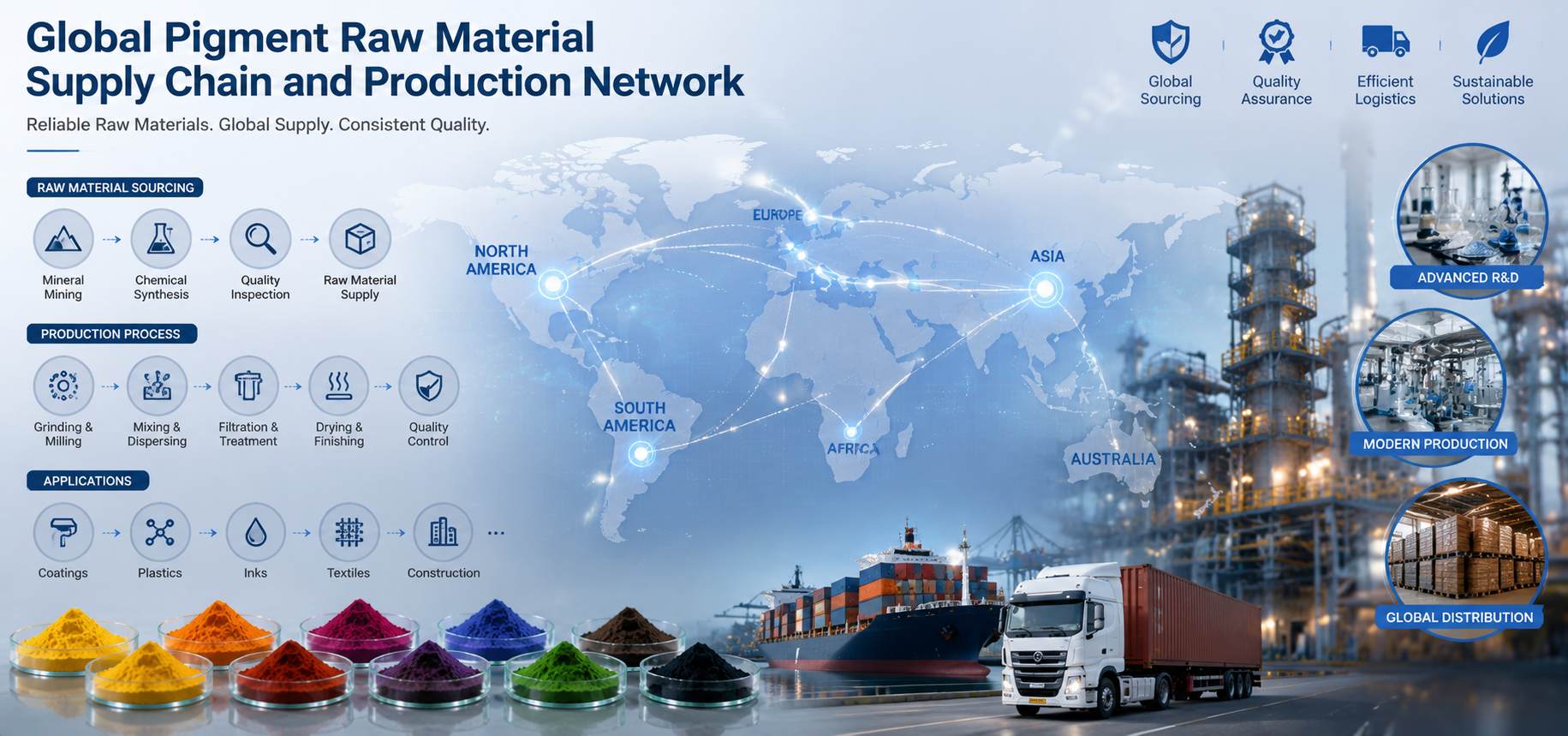
Raw material availability continues to be an important factor influencing pigment production and pricing stability in 2026.
Pigment manufacturing depends on a wide range of upstream chemical materials, including aromatic intermediates, metal oxides, inorganic mineral resources, and specialty additives. Any disruption affecting these materials can influence production schedules, inventory management, and overall supply chain reliability.
For organic pigments, fluctuations in the availability and pricing of chemical intermediates remain a major concern. These materials are closely connected with the broader petrochemical industry, meaning changes in crude oil prices, energy costs, and regional production capacity can indirectly affect pigment manufacturing costs.
For inorganic pigments, factors such as mineral resource availability, energy consumption, and environmental restrictions continue to influence production strategies. Pigments based on metal oxides and other mineral-derived materials require careful management of both raw materials and production emissions.
In response to these challenges, many manufacturers are focusing on:
- Improving production efficiency
- Optimizing inventory strategies
- Increasing supply chain transparency
- Developing alternative raw material solutions
Supply chain resilience has become an increasingly important consideration for pigment buyers, particularly for industries requiring consistent color standards and long-term supply stability.
Related industry source:
Chemical supply chains remain under pressure from geopolitical and economic uncertainty – ICIS
5. Architectural Coatings Market Continues Supporting Pigment Demand
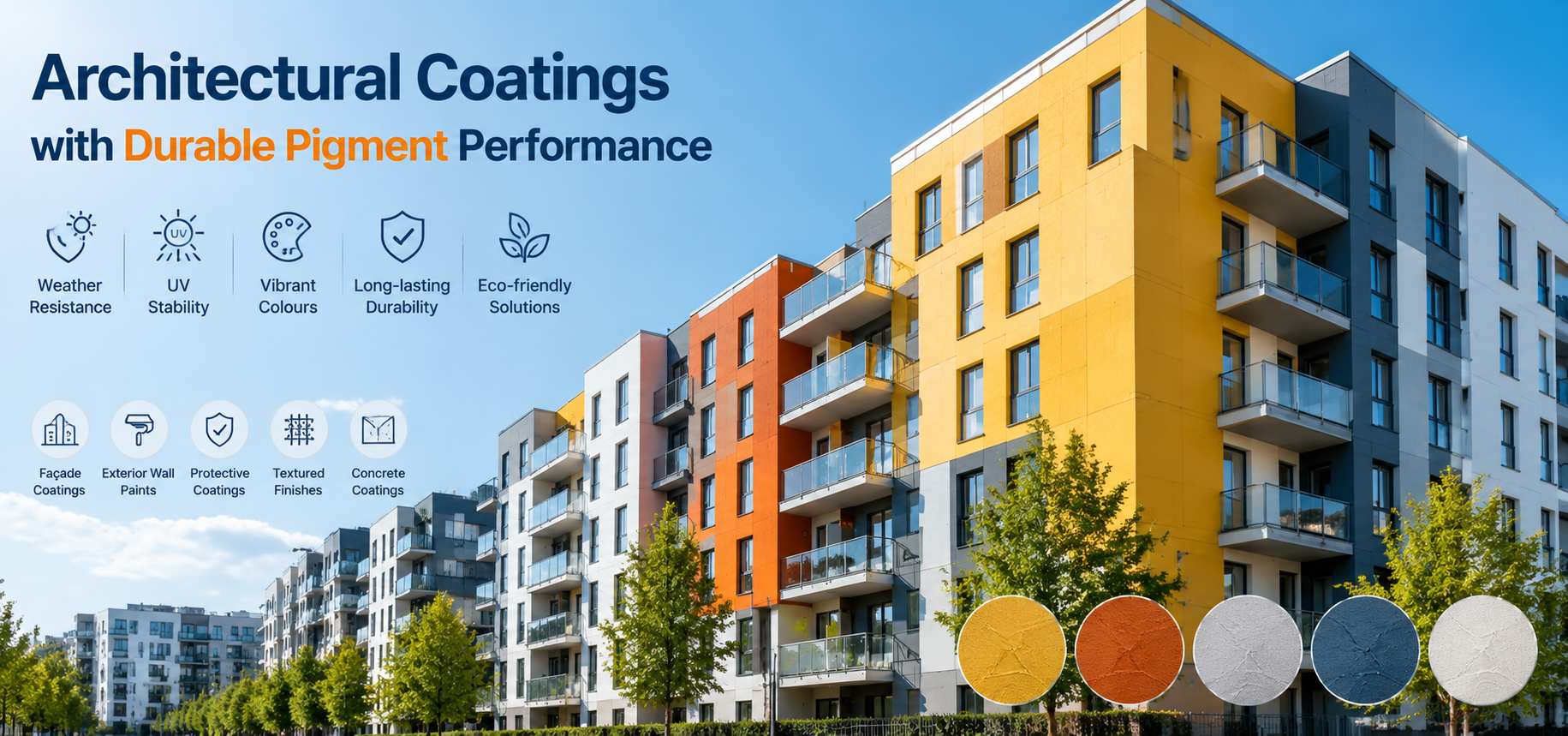
The architectural coatings sector remains one of the largest downstream markets for pigments, supported by global construction activity, renovation demand, and increasing requirements for durable building materials.
In 2026, architectural coatings manufacturers continue to focus on improving:
- Exterior durability
- Weather resistance
- Color retention
- Environmental performance
Pigments used in architectural applications must withstand long-term exposure to sunlight, moisture, temperature changes, and atmospheric conditions.
This creates strong demand for pigments with:
- Excellent lightfastness
- Weather stability
- Chemical resistance
- Consistent color performance
At the same time, sustainability requirements are reshaping architectural coating formulations. Low-VOC coatings, environmentally responsible materials, and longer-lasting finishes are becoming increasingly important in both residential and commercial construction markets.
For pigment suppliers, this means future growth opportunities will come not only from increasing coating volumes, but also from the demand for higher-performance pigment solutions.
Related industry source:
Architectural Coatings Market Trends and Industry Outlook – Coatings World
6. Technology Development Focuses on Dispersion Quality and Functional Pigments
Beyond color generation, pigment technology development is increasingly focused on improving overall application performance.
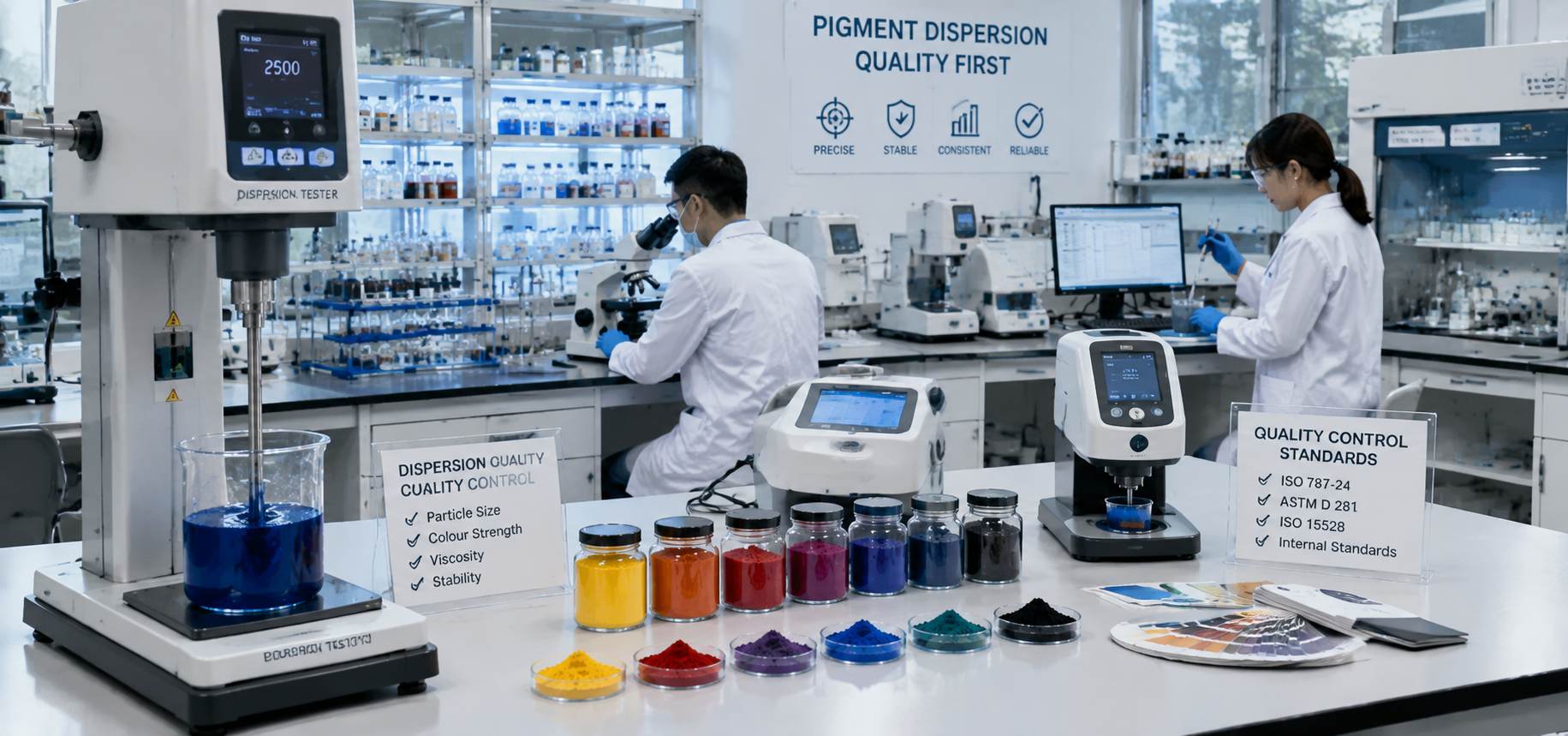
One of the key technical factors affecting pigment performance is dispersion quality.
Poor pigment dispersion can lead to:
- Uneven color distribution
- Reduced color strength
- Surface defects
- Poor processing stability
This is particularly important in applications such as plastics, coatings, and printing inks, where consistent appearance and processing reliability are essential.
Modern pigment development is therefore increasingly connected with dispersion technology, surface treatment, particle engineering, and application-specific optimization.
In addition to traditional coloring functions, functional pigments are also receiving more attention. These materials may provide additional properties such as:
- UV protection
- Thermal stability
- Special optical effects
- Improved durability
As industries demand materials with greater functionality, pigment manufacturers are moving beyond simple color solutions toward more specialized performance materials.
Related industry source:
Pigment Dispersion: Challenges and Solutions in Coatings Applications – PCI Magazine
7. Digitalization and Quality Control Become More Important in Pigment Manufacturing
Quality consistency remains a critical factor for pigment manufacturers, especially as customers require tighter color specifications and more reliable production performance.
Digital technologies are increasingly being applied throughout pigment manufacturing, including:
- Automated production monitoring
- Digital color measurement
- Process data analysis
- Quality prediction systems
Color consistency is particularly important for industries such as automotive coatings, consumer products, packaging, and premium plastics, where even small color differences may affect final product appearance.
Advanced measurement technologies allow manufacturers to evaluate color differences more accurately and improve communication between pigment suppliers and downstream users.
The adoption of digital quality management systems is expected to continue as global customers demand greater transparency and repeatability.
Related industry source:
Digital transformation in the coatings industry – European Coatings
8. Outlook for the Second Half of 2026
Looking toward the second half of 2026, the pigment and coatings industry is expected to continue balancing several competing priorities:
- Cost control
- Environmental compliance
- Supply chain stability
- Technical innovation
- Market-specific performance requirements
While short-term market conditions remain influenced by economic uncertainty and regional differences, long-term demand fundamentals remain supported by important sectors including construction, transportation, packaging, and consumer products.
The direction of the industry is becoming increasingly clear: future pigment solutions must combine reliable performance with improved sustainability and regulatory compatibility.
Manufacturers that can successfully integrate advanced production technologies, efficient supply chains, and environmentally responsible development strategies will be better positioned to meet evolving customer expectations.
The pigment industry is no longer focused only on producing color. It is moving toward providing complete material solutions that support durability, efficiency, and sustainable development across multiple industries.