
Introduction
Nylon is one of the most important engineering plastics used in modern manufacturing. Thanks to its excellent mechanical strength, abrasion resistance, and chemical durability, nylon materials are widely applied in automotive parts, textiles, electrical components, packaging, and industrial products.
Coloring nylon, however, is more technically challenging than coloring many standard plastics. The high processing temperatures, semi-crystalline structure, and varying grades of nylon require carefully selected pigments and dyes to achieve stable and consistent coloration.
Today, manufacturers use both pigments and dyes for nylon coloration depending on application requirements such as transparency, heat resistance, migration resistance, and color strength.
For general background information, see: Nylon
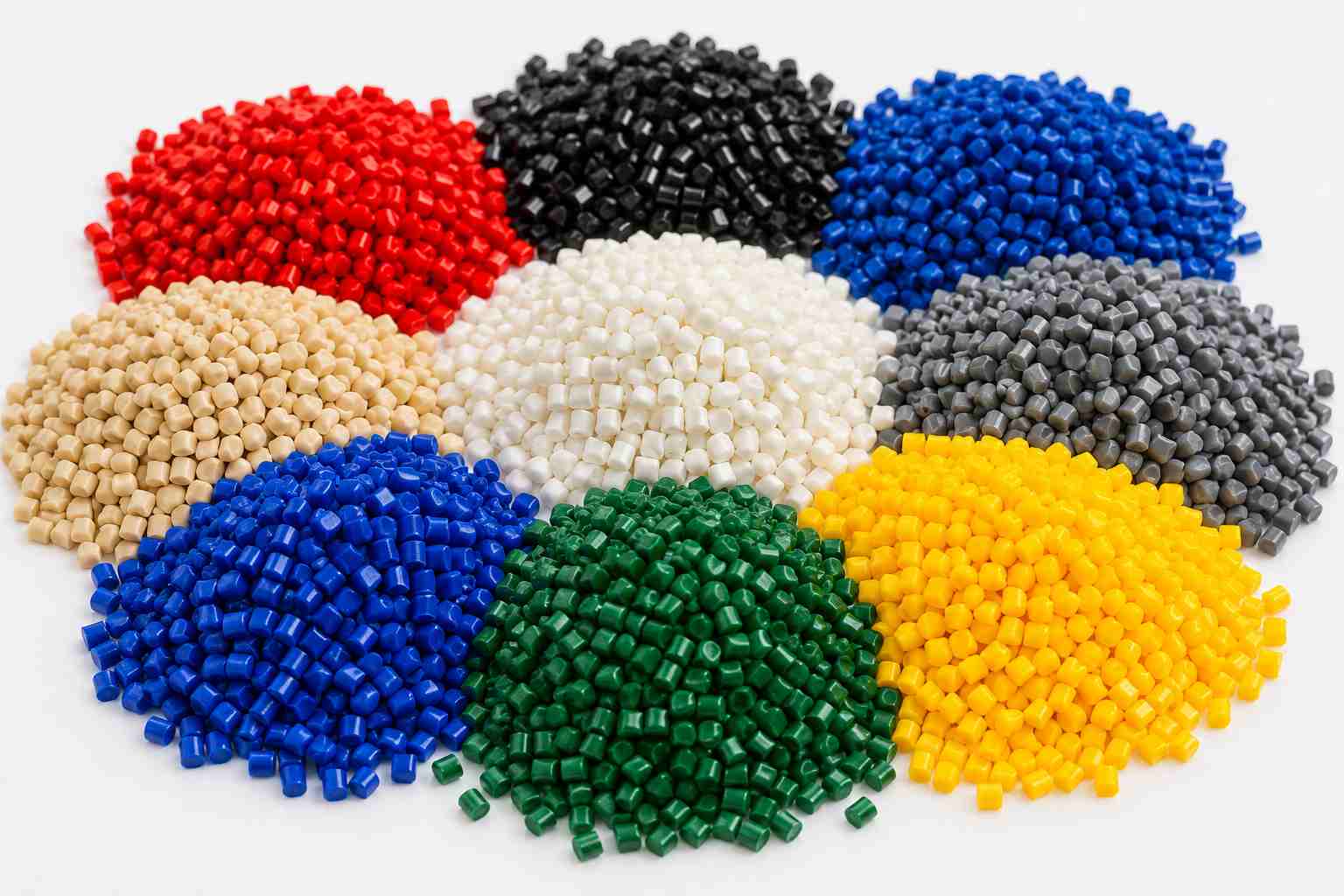
Understanding Nylon as a Coloring Substrate
Nylon belongs to the polyamide (PA) family of engineering plastics. Common types include:
- PA6
- PA66
- PA12
- Glass fiber reinforced nylon compounds
Compared with commodity plastics like PE or PP, nylon processing often involves higher molding temperatures, typically between 240°C and 320°C depending on the grade.
This creates several coloration challenges:
- Pigment heat stability requirements
- Moisture sensitivity during processing
- Potential color shift after molding
- Dispersion consistency in reinforced systems
Because nylon is partially crystalline, pigments and dyes may also behave differently depending on resin transparency and crystallization rate.
Pigments vs. Dyes in Nylon Coloring
Pigments
Pigments are insoluble colorants dispersed within the nylon matrix. They are widely used when long-term durability and migration resistance are required.
Advantages of pigments:
- Better lightfastness
- Superior weather resistance
- Strong chemical stability
- Lower migration risk
- Suitable for outdoor applications
Pigments are commonly used in:
- Automotive nylon parts
- Electrical housings
- Industrial components
- Engineering plastics
For broader pigment selection principles, see:
How to Choose the Right Industrial Pigment for Coatings and Plastics
Dyes
Dyes dissolve partially or fully within the polymer system and provide extremely bright, transparent coloration.
Advantages of dyes:
- High transparency
- Excellent color brilliance
- Easier shade adjustment
- Low loading levels
Dyes are often preferred for:
- Transparent nylon applications
- Fibers and textiles
- Decorative engineering plastics
- Optical effects
However, dyes may offer lower heat stability and weather resistance compared with pigments.
For related reading, see:
Key Specifications to Consider When Purchasing Solvent Dyes
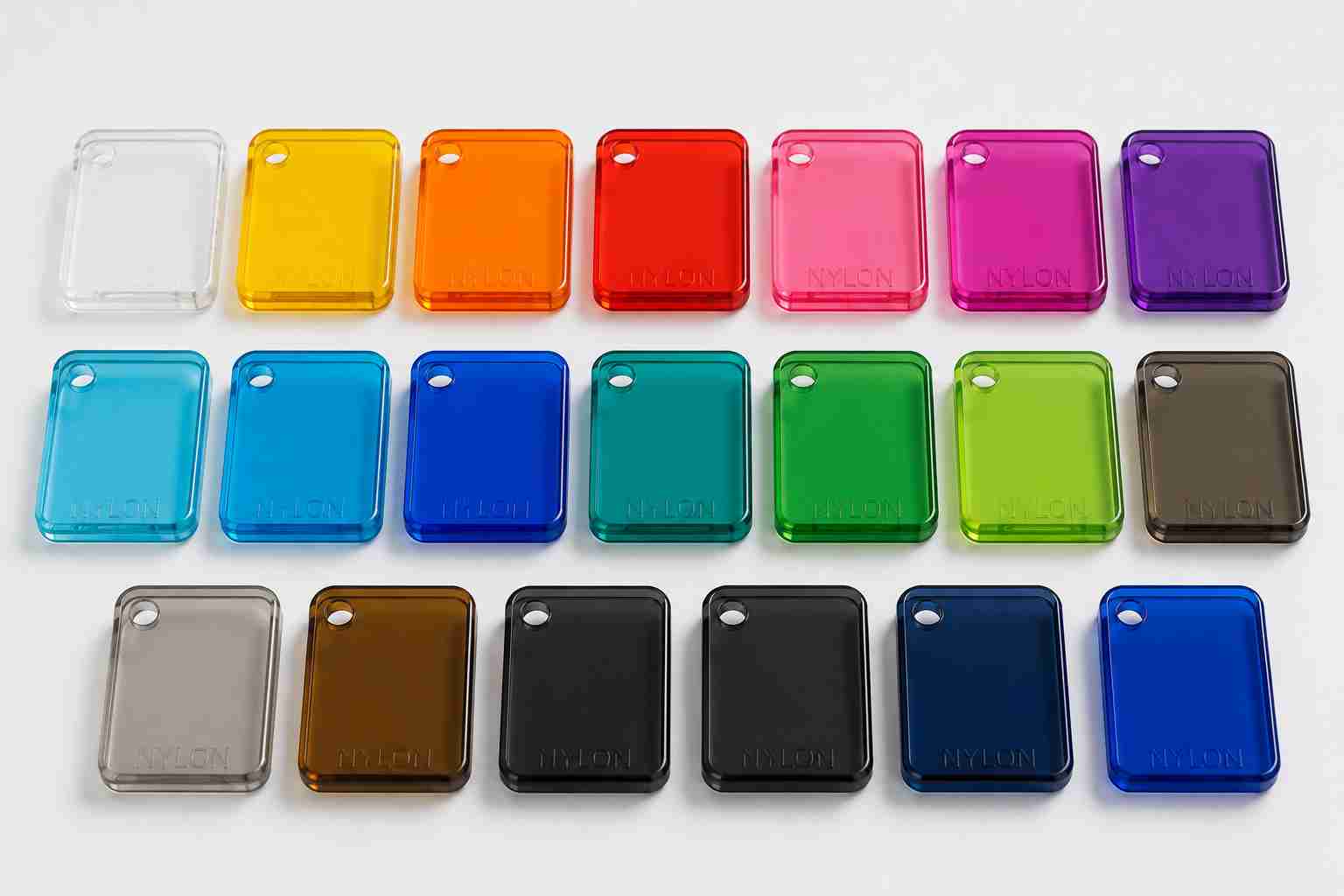
Important Properties for Nylon Colorants
Heat Resistance
One of the most critical factors in nylon coloration is thermal stability.
Because nylon processing temperatures are relatively high, colorants must withstand:
- Extrusion temperatures
- Injection molding heat
- Multiple processing cycles
Poor heat stability can lead to:
- Color darkening
- Shade shift
- Decomposition
- Reduced mechanical performance
High-performance organic pigments, inorganic pigments, and selected solvent dyes are commonly used for high-temperature nylon systems.
Dispersion Performance
Good dispersion is essential for color consistency and surface appearance.
Poorly dispersed pigments may cause:
- Specks
- Flow marks
- Reduced gloss
- Mechanical weakness
This becomes especially important in glass fiber reinforced nylon compounds where high shear processing can affect pigment particle distribution.
For technical guidance, see:
Pigment Dispersion Techniques Every Industrial Chemist Should Know
Why Dispersion Quality Determines the Final Performance of Industrial Pigments
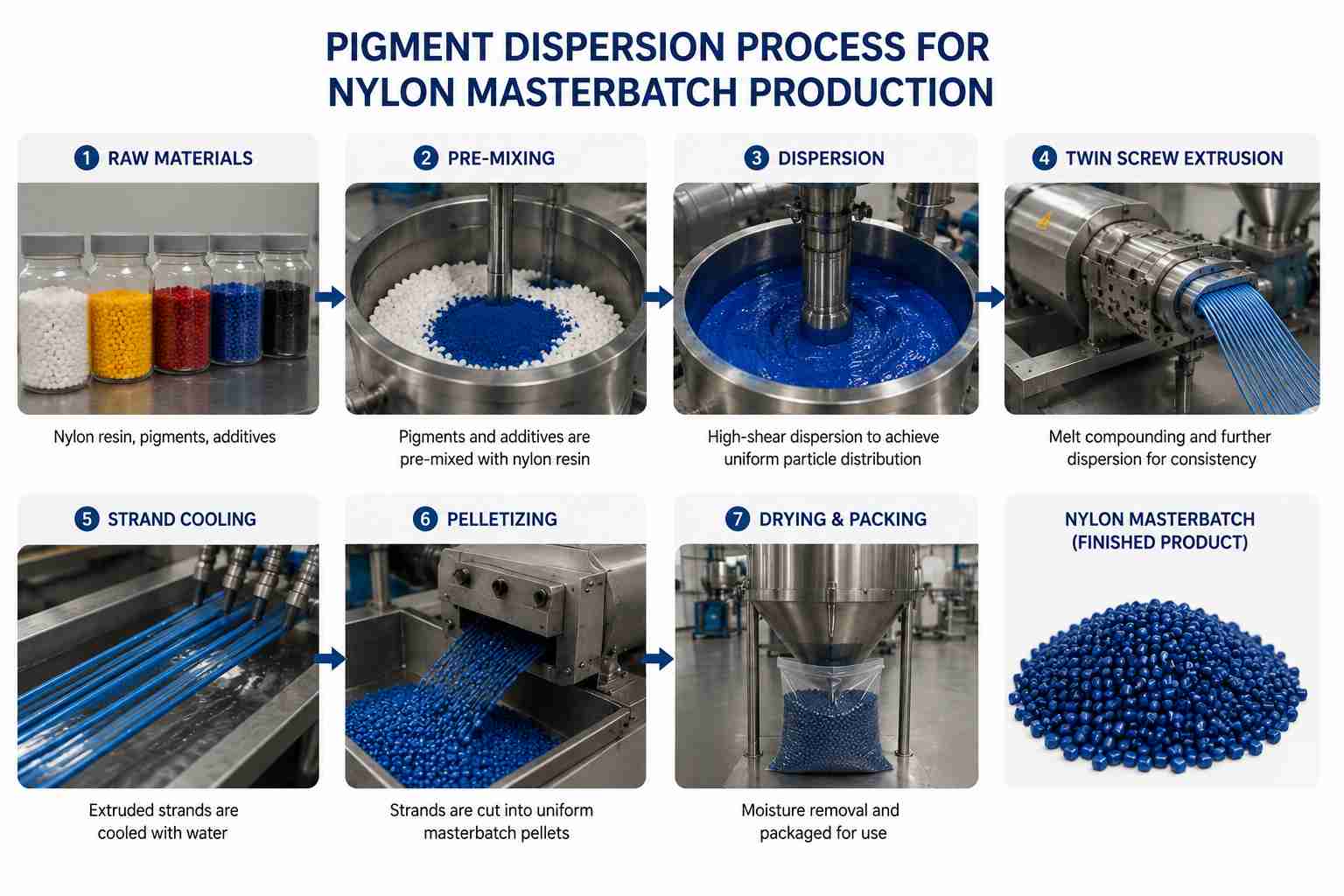
Lightfastness and Weather Resistance
Outdoor nylon applications require colorants capable of resisting:
- UV degradation
- Heat aging
- Moisture exposure
- Chemical attack
Applications such as automotive exterior components and industrial connectors often demand high-performance pigment systems with excellent weather durability.
Inorganic pigments and certain high-performance organic pigments are frequently selected for these demanding environments.
For comparison between pigment technologies, see:
Organic vs Inorganic Pigments: Which Performs Better in Industrial Applications
Common Pigments Used for Nylon
Organic Pigments
Organic pigments provide bright shades and strong tinting strength.
Common examples include:
- Pigment Red 254
- Pigment Yellow 12
- Phthalocyanine Blue pigments
- Quinacridone pigments
These pigments are widely used in engineering plastics because of their balance between color performance and heat resistance.
Inorganic Pigments
Inorganic pigments are selected when maximum durability and thermal stability are required.
Typical examples include:
- Titanium dioxide
- Iron oxide pigments
- Ultramarine Blue
- Carbon black
These pigments generally provide:
- Strong opacity
- Excellent heat resistance
- Good dimensional stability
For more about inorganic pigment technologies, see:
What Is Inorganic Pigment
Applications of Colored Nylon
Colored nylon materials are widely used across multiple industries.
Automotive Components
Nylon is heavily used in:
- Engine covers
- Connectors
- Cooling system parts
- Interior trim components
Colorants must withstand heat, oils, vibration, and UV exposure.
Electrical and Electronics
Colored nylon helps identify connectors, cable components, and technical assemblies.
Requirements include:
- Dimensional stability
- Flame retardancy compatibility
- Long-term thermal aging resistance
Consumer Products
Many consumer products use colored nylon because of its durability and design flexibility.
Applications include:
- Power tool housings
- Sports equipment
- Kitchenware
- Household components
Textile and Fiber Applications
Nylon dyes are especially important in:
- Apparel fibers
- Industrial yarns
- Carpets
- Technical textiles
These applications often prioritize color brightness and dyeability.
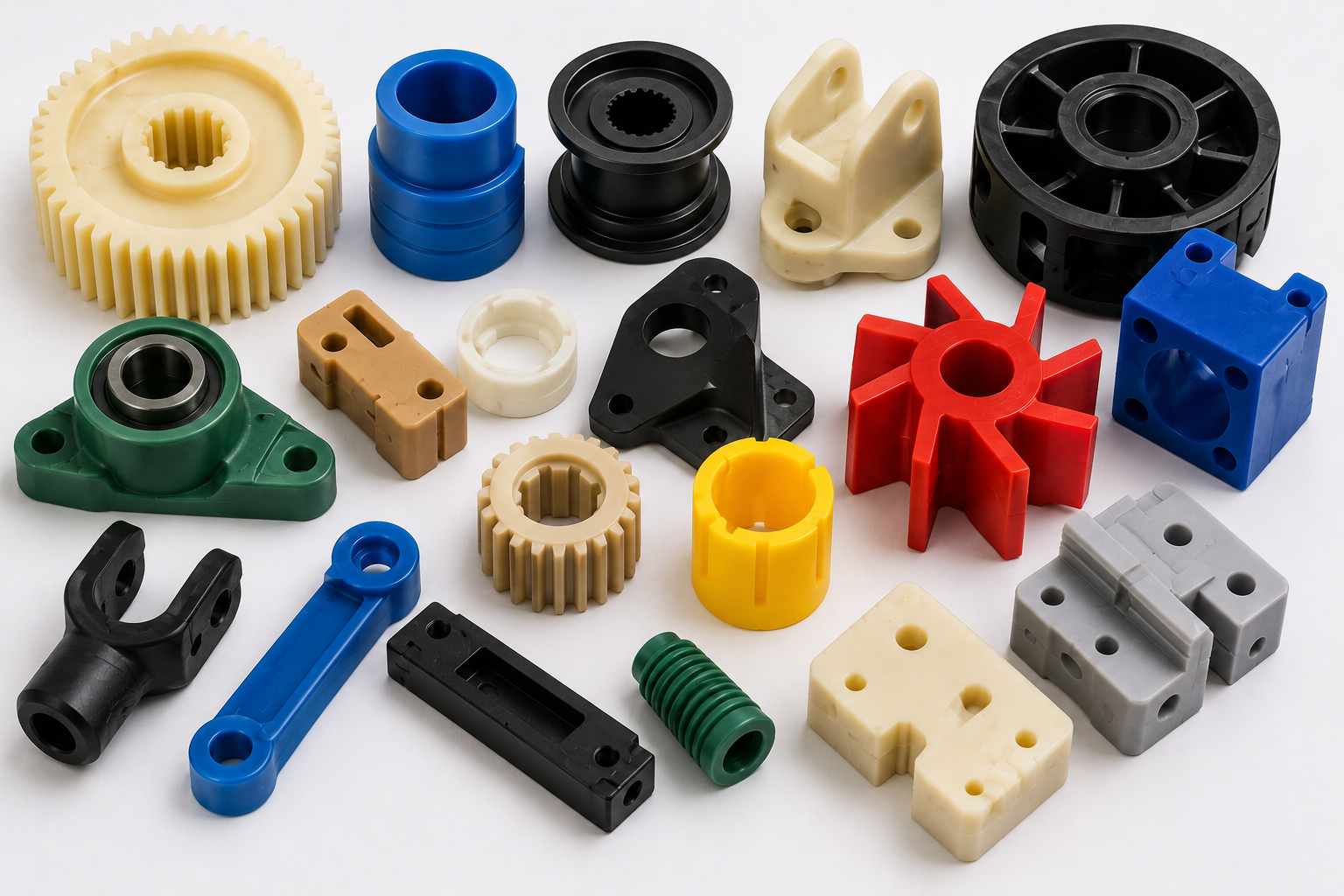
Industry Trends in Nylon Coloration
Sustainable and Heavy-Metal-Free Systems
Global regulations continue pushing manufacturers toward safer and more environmentally responsible colorants.
Lead-free and halogen-free pigment technologies are increasingly important in engineering plastic applications.
Related reading:
Why Lead-Free Pigments Are the Future of Plastics and Coatings
Improved Color Consistency
Advanced dispersion technology and precision color matching systems are helping manufacturers achieve more stable production quality.
For additional insight, see:
Improving Color Consistency in Industrial Production with Advanced Pigments
Functional and Specialty Effects
Modern nylon coloration increasingly includes:
- Laser marking compatibility
- Conductive pigments
- Metallic effects
- Fluorescent coloration
- UV-resistant systems
These advanced requirements are driving further innovation in pigment and dye chemistry.
Conclusion
Coloring nylon requires careful selection of pigments and dyes capable of withstanding demanding processing and application conditions. Heat resistance, dispersion quality, weatherability, and long-term stability all play critical roles in achieving reliable coloration performance.
As nylon applications continue expanding in automotive, electronics, textiles, and engineering plastics, advanced pigment and dye technologies will remain essential for delivering durable, high-quality, and visually consistent products.