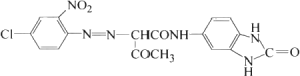
Typical Applications
Pigment Orange 36 is used in several industrial coloration systems.
• Automotive Coatings: OEM finishes and refinish coatings requiring durable orange shades.
• Industrial Coatings: Architectural coatings, powder coatings, and general industrial paints.
• Plastics: Polyolefins, PVC, and engineering plastics.
• Printing Inks: Packaging inks and selected solvent-based ink systems.
• Masterbatch: Used in color masterbatch formulations for plastics.
These applications benefit from the pigment’s durability and compatibility with various resin systems.
Key Performance Properties Related to Applications
• Color Shade:
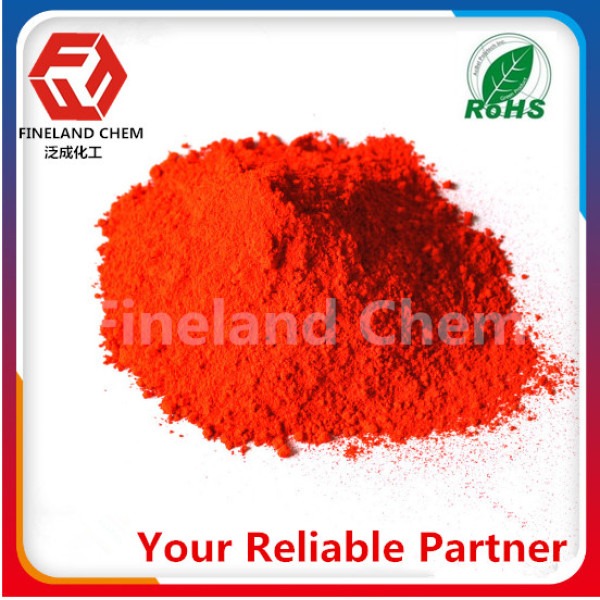
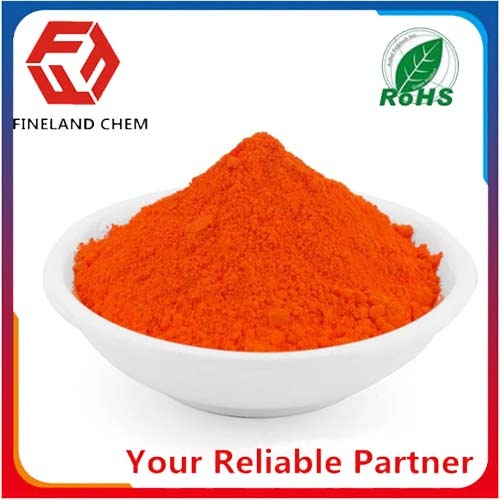
Produces a bright reddish-orange tone with clean and vivid color appearance.
• Tinting Strength:
Provides strong tinting strength suitable for coatings and plastic formulations.
• Lightfastness:
Offers very good lightfastness, making it suitable for applications exposed to light.
• Heat Resistance:
Suitable for plastic processing temperatures typically up to 280–300 °C, depending on the polymer system.
• Weather Resistance:
Demonstrates stable performance in outdoor exposure environments.
• Chemical Resistance:
Resistant to many acids, alkalis, and common industrial solvents.
Advantages
-
Excellent Light and Weather Fastness – Offers outstanding resistance to light, heat, and outdoor weathering, making it ideal for automotive OEM coatings and exterior applications.
-
Stable Gloss and Rheology – Maintains gloss and smooth flow even at high pigment concentrations, ensuring uniform surface appearance.
-
Wide Compatibility – Can be easily combined with quinacridone and inorganic chrome pigments, providing versatile color matching options.
-
Superior Solvent and Heat Resistance – Demonstrates excellent durability in metallic inks, PVC (7–8 grade lightfastness), and HDPE without deformation.
-
Versatile Application Range – Suitable for automotive coatings, decorative inks, plastics, and unsaturated polyester coloring, offering long-term color stability and cost efficiency.
Typical Limitations
• Cost Considerations:
As a high-performance pigment, Pigment Orange 36 may be more expensive than conventional azo pigments.
• Formulation Requirements:
Proper dispersion may be necessary to achieve optimal color development.
• Opacity Adjustment:
Transparency or opacity may vary depending on formulation and binder systems.
Buyer Guidance
When evaluating Pigment Orange 36, buyers typically consider:
• Required shade tone (reddish orange vs. yellowish orange)
• Exposure conditions such as outdoor weathering or UV exposure
• Processing temperature of plastics or curing temperature of coatings
• Required lightfastness and weather durability
• Compatibility with coating, plastic, or ink resin systems
• Regulatory and compliance considerations for industrial applications
Synonyms
| Orange HL | C.I. 11780 | Pigment Orange 36 | C.I. Pigment Orange 36 |
| Permanent Orange HL | Permanent Orange HSL | Orange Pigment 36 | Yarabrite Orange HL |
| Pigment Permanent Orange HL | Benzimidazolone Orange HL | Novoperm Orange HL | Sudaperm Orange 2915 |
| Lysopac Orange 3620C | Kenalaye Orange HP-RLOX | Novoperm Orange HL 70 | Symuler Fast Orange 4183H |
| Novoperm Orange HL 70-NF | Sunfast Orange 36(271-9036) |
Manufacturer and Supplier Information
Pigment Orange 36 is produced by manufacturers specializing in high-performance organic pigments, particularly benzimidazolone pigment chemistry. Commercial grades may vary in particle size distribution, surface treatment, and dispersion characteristics, depending on their intended use in coatings, plastics, or printing inks.
Package and Delivery
● 25KG Kraft Bag, 400kg/500kg Carton Box
● Lead Time: Normally around 15 days after signed contract.
FAQ
1.What color shade does Pigment Orange 36 produce.
Pigment Orange 36 typically produces a bright reddish-orange shade suitable for coatings and plastics.
2.Is Pigment Orange 36 suitable for outdoor coatings.
Yes. It is often used in automotive and industrial coatings because of its good lightfastness and weather resistance.
3.Can Pigment Orange 36 be used in plastics.
Yes. The pigment can be used in polyolefins and certain engineering plastics, depending on processing conditions.
4.What are the key characteristics of Pigment Orange 36.
Typical characteristics include bright orange shade, good lightfastness, strong heat resistance, and stable performance in coatings and plastic systems.