
Water-based coatings are deliberately alkaline — commonly pH 8–10 and, in some systems, up to 11. At that pH, a pigment that performs perfectly in a solvent-based paint can flocculate, shift shade or thicken the whole batch. The cause is not its colour but its chemistry: alkalinity changes the pigment’s surface charge, ionizes its dispersant and swells its thickener at once. Understanding those three effects is the fastest way to diagnose shade drift before it reaches a customer.
Why pH 9–11 Is a Bigger Chemical Jump Than It Looks
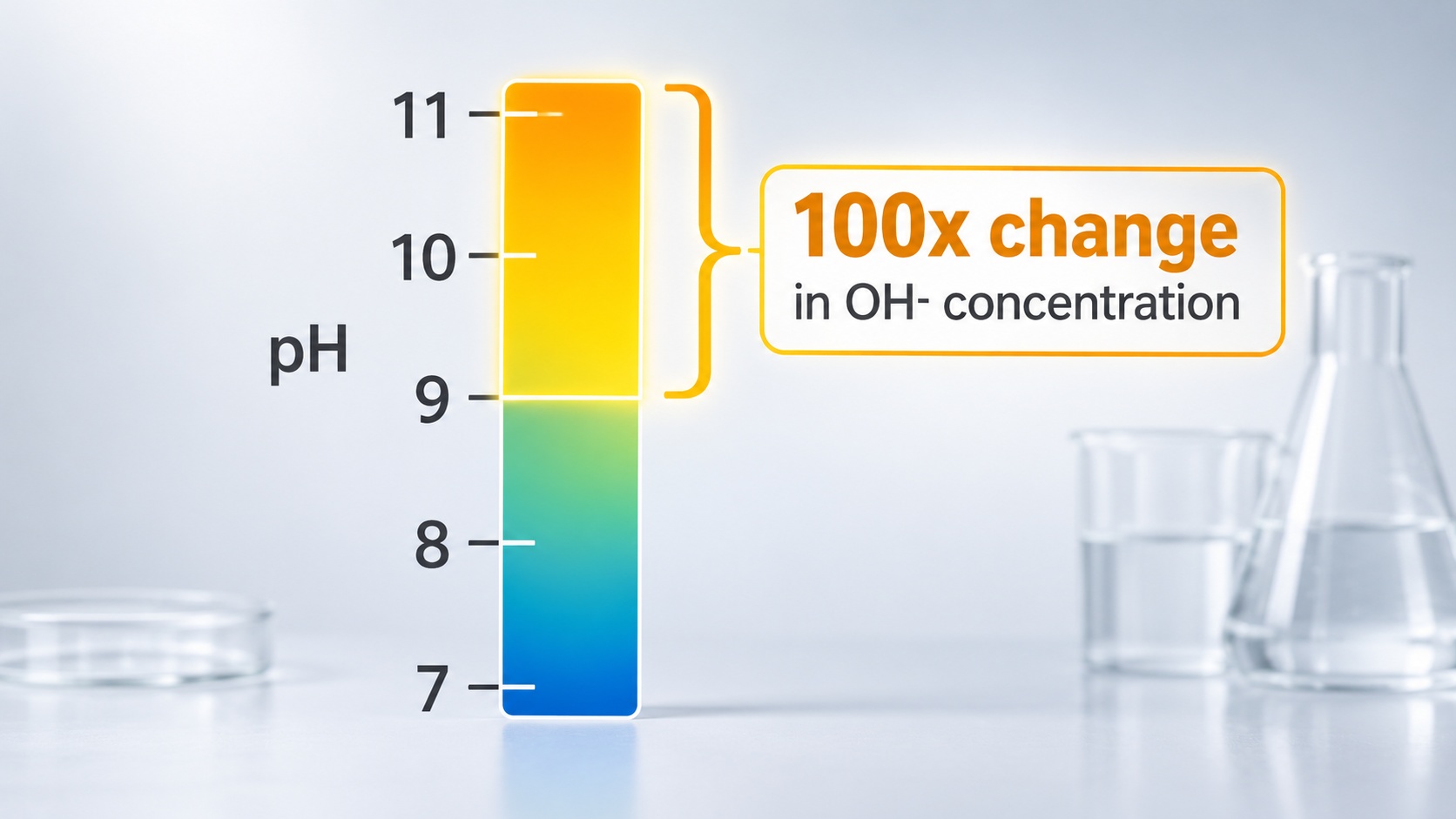
The numbers on a pH meter understate the chemistry. The pH scale is logarithmic, so a difference of one unit equals a tenfold change in hydrogen ion activity — moving from pH 9 to pH 11 changes hydroxide ion concentration by a factor of 100. A formulator who has “only nudged pH from 9 to 10.5” has changed the environment by more than an order of magnitude. That is why a pigment can be stable in one batch and fail in the next after a small amine adjustment.
In water-based systems that alkalinity is intentional: amines neutralize acid groups on the resin so it can be diluted in water, and the same alkalinity activates thickeners. The pigment is simply the most visible part of a pH-sensitive system.
The Same Pigment Carries a Different Surface Charge at Different pH
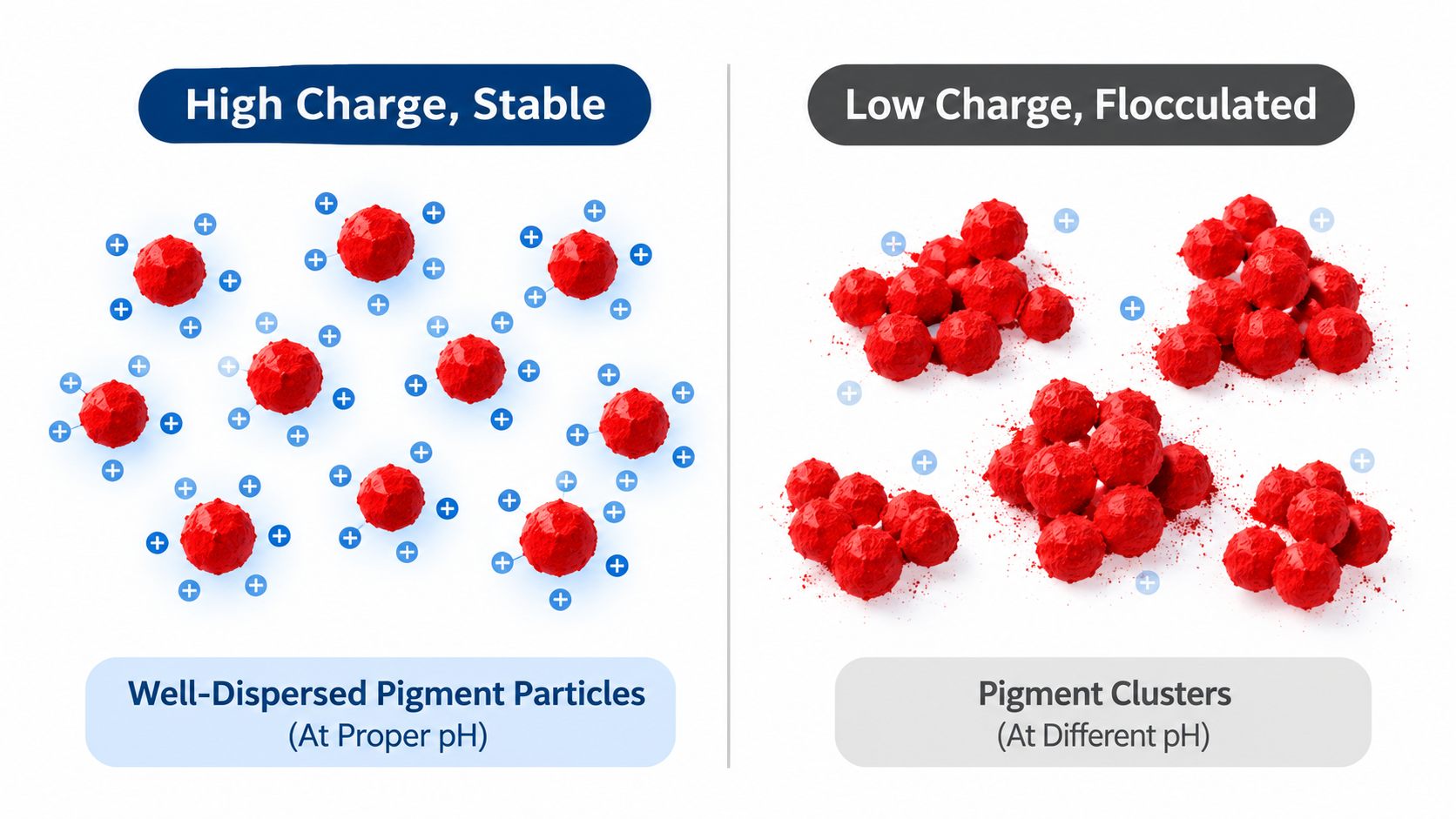
Every pigment particle in water carries a surface charge, and that charge — not its colour — decides whether particles stay apart or clump. High charge means strong electrostatic repulsion and a stable dispersion; as pH approaches the pigment’s isoelectric point, charge falls, repulsion weakens and particles flocculate.
Zeta potential describes this behaviour: a high zeta potential keeps a dispersion electrically stabilized and resistant to aggregation, while a low one lets attractive forces take over so the dispersion breaks and flocculates. Two pigments sharing a Colour Index number can therefore disperse very differently in the same alkaline paint, because their surface treatments give them different charge behaviour at pH 9–11. Flocculation shows up as lower colour strength, gloss loss, settling and shade drift.
Dispersants and Thickeners Are pH-Dependent Too
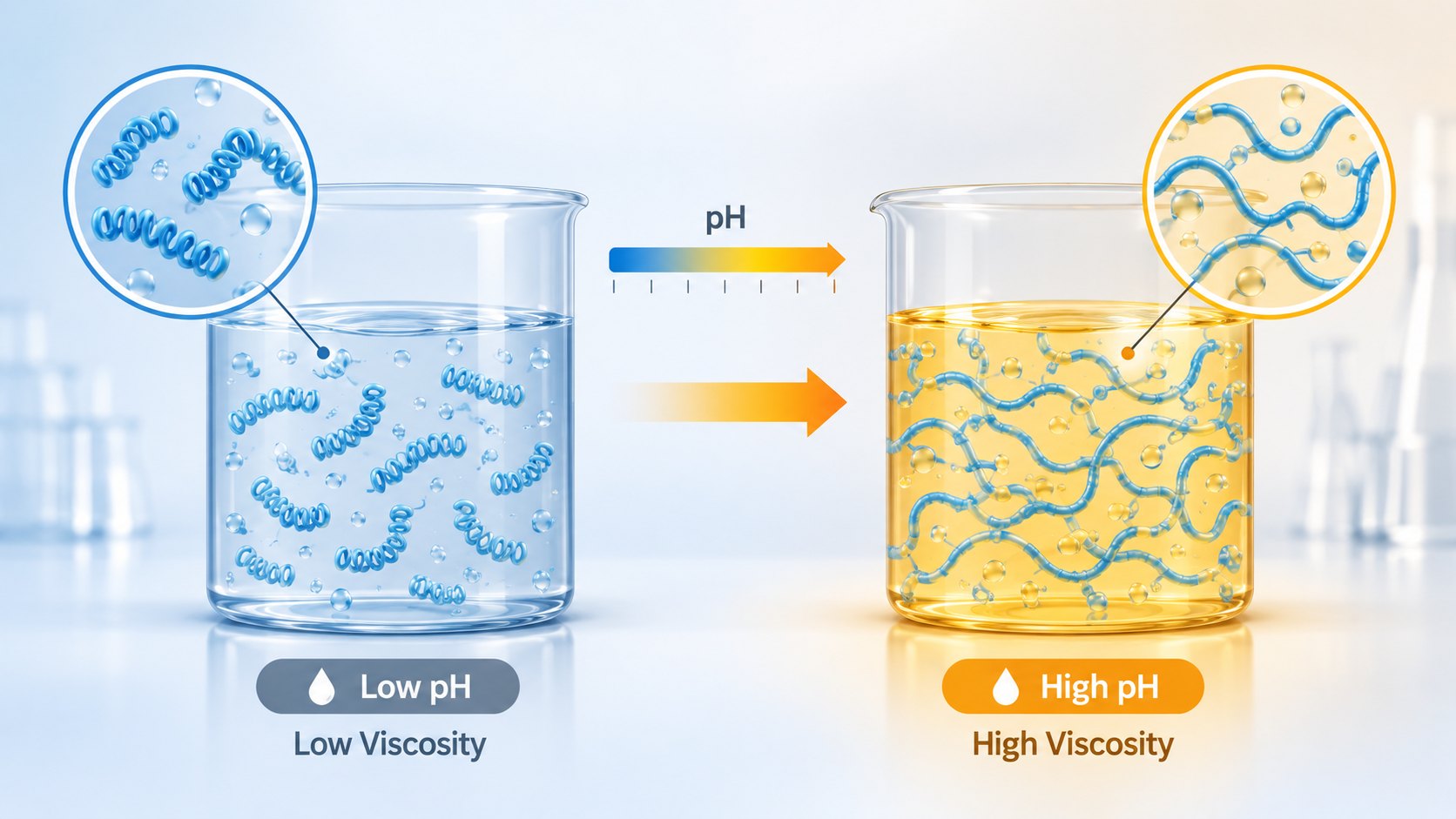
The pigment is only half the story. Waterborne dispersants work by adsorbing onto the particle and charging it; if the dispersant is a weak acid or base, its ionization — and stabilizing power — depends directly on pH. Alkali-swellable (ASE) and hydrophobically modified (HASE) thickeners must be neutralized before their chains uncoil and build viscosity. Changing pH changes the rheology of the whole paint, which is why a shade problem and a viscosity problem often share one root cause.
For the background on how particles are separated and stabilized in the first place, see our earlier article on what pigment dispersion is.
Which Pigments Actually Change in Alkaline Water-Based Systems
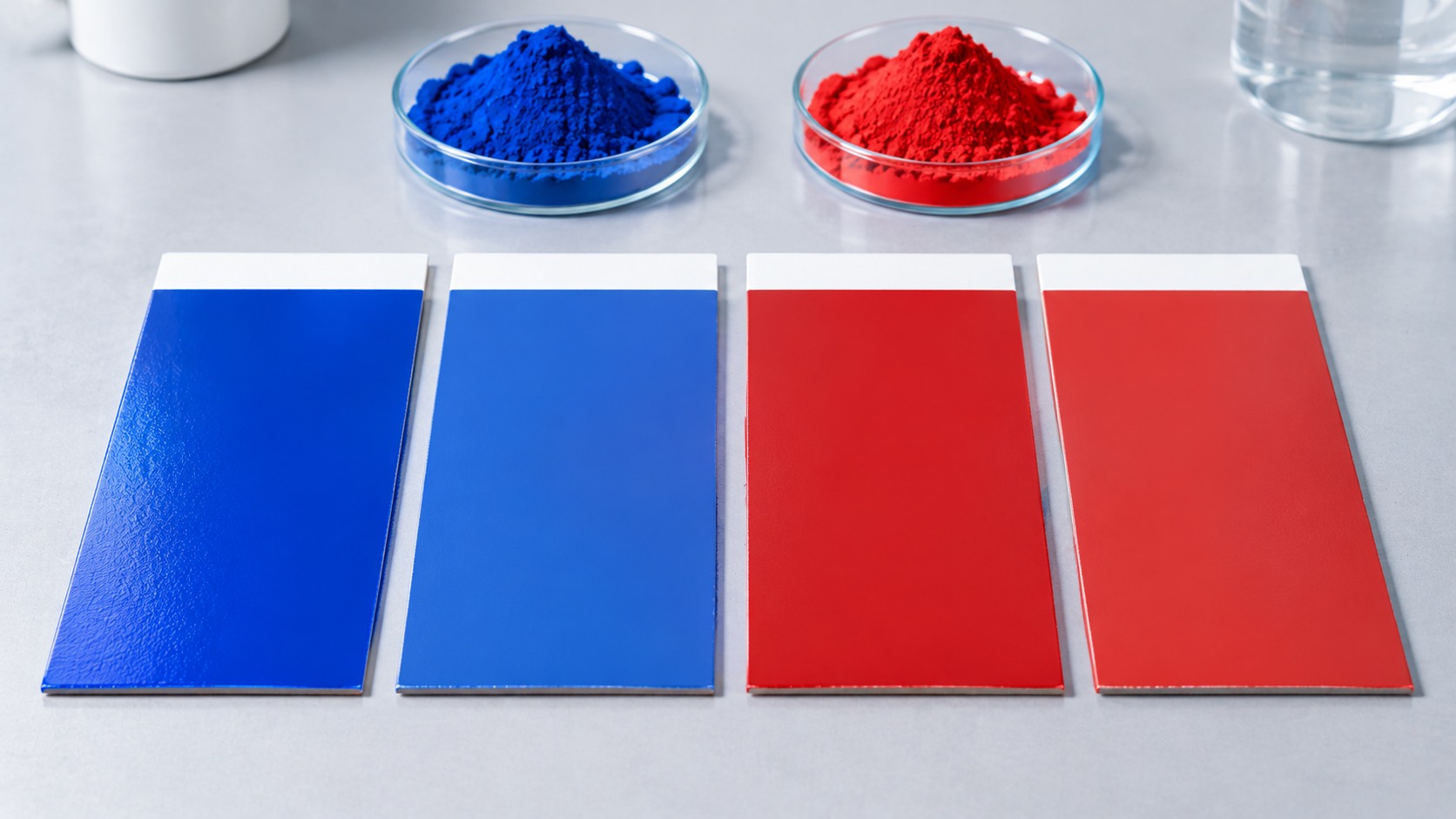
Not all pigments react equally. Inorganic pigments such as iron oxides and titanium dioxide are generally robust across the alkaline range; some organic families are more sensitive. Lake pigments deserve attention: they are made by precipitating a dye onto an inert metallic salt, and many modern lakes are azo dyes whose sulfonate or carboxylate groups give the chromophore a negative charge — a structure inherently responsive to pH and dissolved ions.
Ultramarine blue sits at the opposite end: it tolerates alkalinity but is attacked by acid, so it suits high-pH paints yet fails if the system turns acidic. Titanium dioxide is produced in varying particle sizes that are both oil- and water-dispersible, and in specific grades; a grade chosen for a solvent system is not automatically right at pH 9–11.
pH Drift During Storage Can Mimic a Bad Pigment
A batch can leave production on-spec and still drift in storage. Amine neutralizers are volatile, and loosely sealed containers absorb carbon dioxide; both pull pH down over weeks. Thickeners lose activation, dispersants lose ionization and the pigment re-flocculates. The symptoms look exactly like a poor pigment: rising viscosity, colour loss, settling and shade drift. Check pH before blaming the pigment — changing it will not fix a formulation whose pH moved after filling.
What to Ask Your Pigment Supplier For
Avoid pH surprises by requesting evidence, not a generic datasheet:
- Performance in a real water-based binder at your target pH, not only a solvent system.
- Acid and alkali resistance with method and conditions stated — a bare “grade 5” is not comparable.
- Dispersion and storage stability: zeta potential or a heat-age test at pH 9–11.
- Tint strength and hue after pH adjustment, since flocculation changes both.
- Batch-to-batch ΔE with stated illuminant and geometry.
- Full compliance pack (heavy metals, lead-free, REACH, RoHS) for the exact grade.
Key Takeaways
- pH 9 to 11 is a hundredfold change, not a small adjustment.
- Surface charge, dispersant ionization and thickener swelling shift together.
- Inorganics are robust; lakes are pH-sensitive; ultramarine is alkali-tolerant but acid-sensitive.
- Storage pH drift mimics pigment failure — check pH first.
Frequently Asked Questions
Why does my water-based paint change shade when I adjust the pH?
pH changes surface charge and the tendency to flocculate. As zeta potential falls, particles cluster, lowering colour strength and gloss and shifting the shade — though the pigment has not changed.
Is pH 9–11 too alkaline for organic pigments?
Not for most. Many inorganic pigments and common organics such as phthalocyanines are stable in alkali. The sensitive cases are mainly lakes and acid-sensitive families — request alkali-resistance data with test conditions.
Can I use the same pigment grade in solvent-based and water-based coatings?
Not automatically. Water-based systems add surface charge, ionized dispersants and pH-activated thickeners. A solvent-grade pigment may flocculate or lose strength at pH 9–11; qualify it in the actual binder.
How can I tell pH drift from pigment failure?
Check the stored batch’s pH first. Volatile amines and absorbed CO₂ can lower pH in storage, deactivating thickeners and dispersants. If correcting pH restores viscosity and colour, the pigment was not the cause.
What data should I request from a pigment supplier for water-based systems?
Request performance in a real water-based binder at your target pH, acid/alkali resistance with test conditions, dispersion stability data, batch-to-batch ΔE with illuminant, and the compliance pack for the exact grade.
For application-specific pigment options, visit Fineland Chem’s Water-Based Coatings page.