
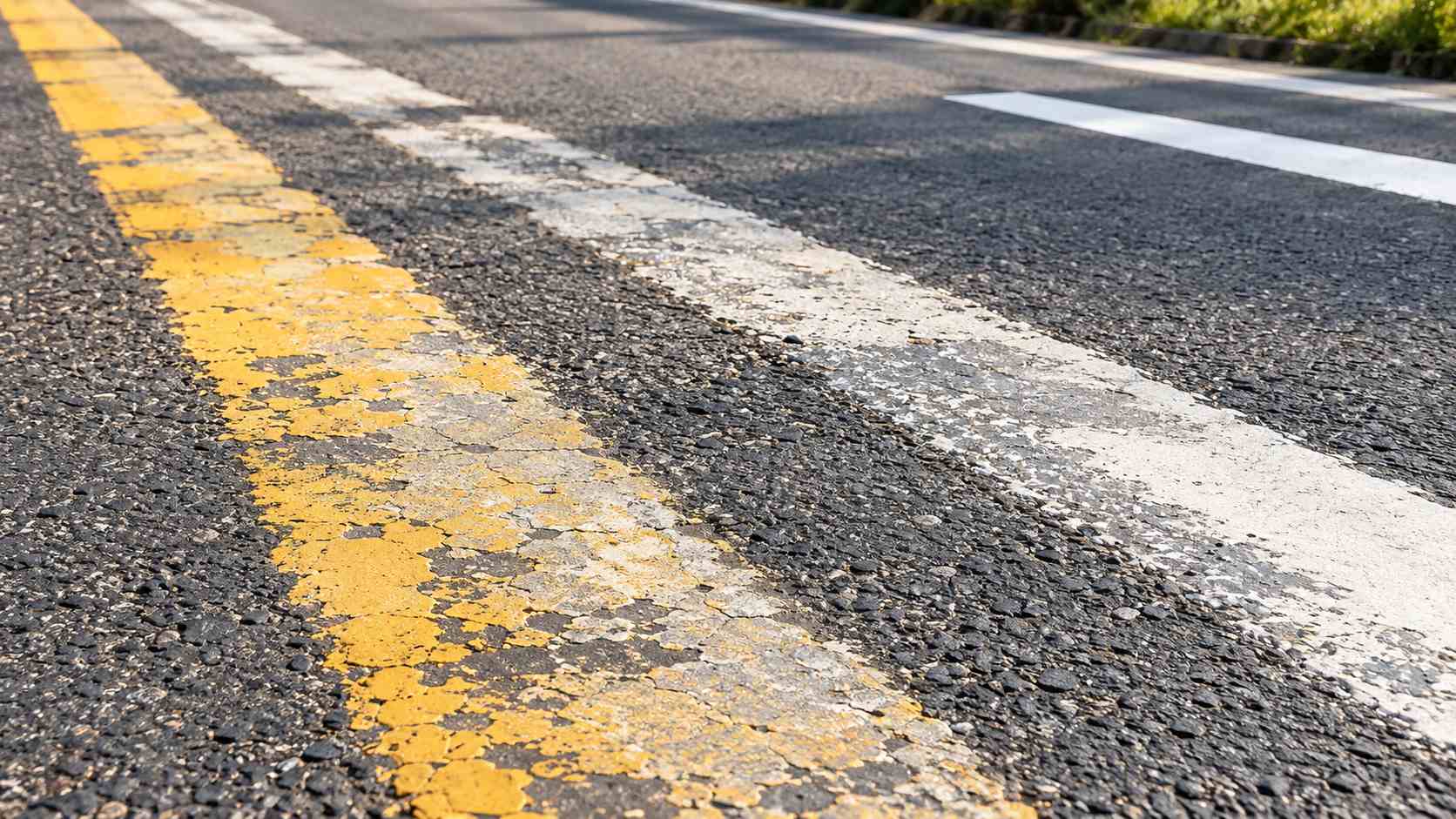
Road markings rarely fade for a single reason. Apparent colour loss is usually three failures at once: pigment degradation under UV, binder chalking that releases pigment from the surface, and wear of the glass beads that make the line visible at night. Night-time brightness typically declines before daytime colour, so a line can remain intact yet already fail after dark. Specifying a higher lightfastness grade will not fix a problem that starts in the binder or the bead application.
Why Road Markings Are a Worst-Case Colour Application
A horizontal line on asphalt receives more UV, water and abrasion than almost any other coated surface: it faces the sun directly, sits on an alkaline substrate, and endures tyre wear, de-icing salts and snowploughs. Agencies treat this as a performance requirement, not a cosmetic one — the MUTCD provisions on minimum pavement marking retroreflectivity, now in Section 3A.05 of the 11th Edition, require markings to stay visible over time. A pigment that performs well in a thick industrial coating can still fail quickly in a thin marking, where less binder protects each particle.
The Three Mechanisms Behind Apparent Fading
- Pigment photodegradation. Organic yellows, oranges and reds lose chroma first under UV; a lightfastness rating only means something if it comes from an outdoor-relevant exposure test.
- Binder erosion, or chalking. Once the resin oxidises, exposed pigment is washed or abraded away. The line turns pale and grey — routinely misread as pigment fading.
- Loss of glass beads. Beads are only partially embedded; when damaged or knocked out, retroreflectivity degrades even though the marking remains, and fades faster than the marking itself.
Distinguishing these three before changing the pigment saves an entire reformulation cycle.
Heat Can Change the Colour Before the Line Ever Sees Traffic
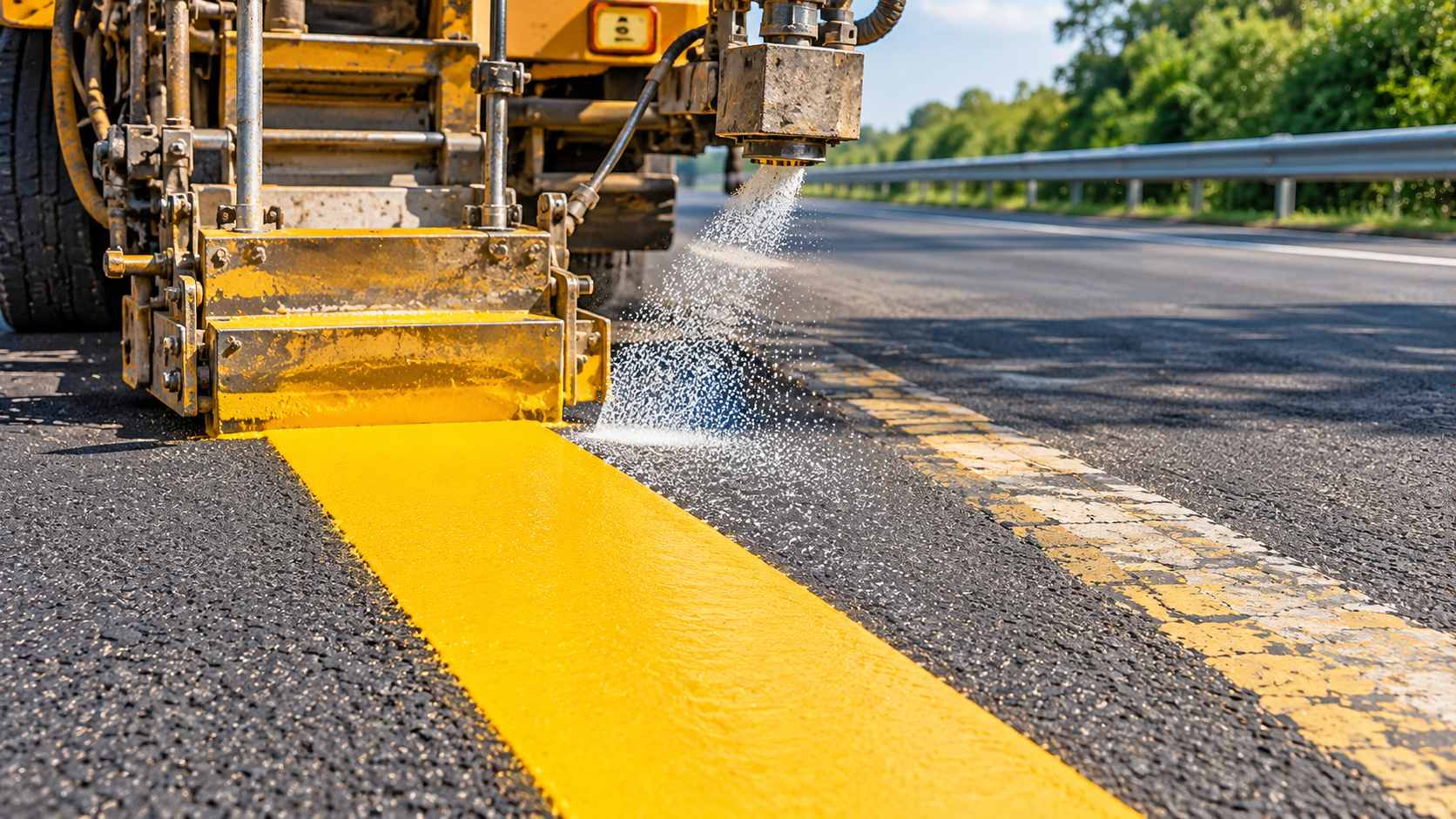
Thermoplastic road marking paints are 100% solids applied from a hot melt at roughly 200 °C. A pigment without adequate heat stability can shift shade in the kettle — a change often blamed on weathering months later. Check heat resistance alongside lightfastness, with a margin above the real melt and hold temperature. For white markings, rutile titanium dioxide supplies UV opacity and hiding power, so any yellowing shows immediately against grey asphalt.
Why Lead-Free Replacement Is Not a One-for-One Swap
Chrome yellow (C.I. Pigment Yellow 34) and molybdate red (C.I. Pigment Red 104) were standard in road markings for their opacity, weather resistance and low cost. Both now appear on ECHA’s REACH Authorisation List, so their use in the EU requires authorisation, not simple registration. Lead-free routes — high-performance organic yellows, bismuth vanadate (P.Y.184), DPP or quinacridone reds — each trade off chroma, hiding power, heat stability or cost. Matching the shade is easy; the replacement still needs re-qualifying for lightfastness, weathering, heat and opacity in the actual binder. A closer match with weaker weather resistance only moves the failure a few months down the road.
What to Ask a Pigment Supplier For
The fastest way to avoid premature fading is to request evidence, not adjective-heavy datasheets:
- Full identification: C.I. generic name and commercial grade — one C.I. number can cover products with very different fastness.
- Fastness data with test conditions: light source, duration, rating scale, outdoor or accelerated. A bare “7” is not comparable between suppliers.
- Heat stability matched to your process: including dwell time in the melt, with a safety margin.
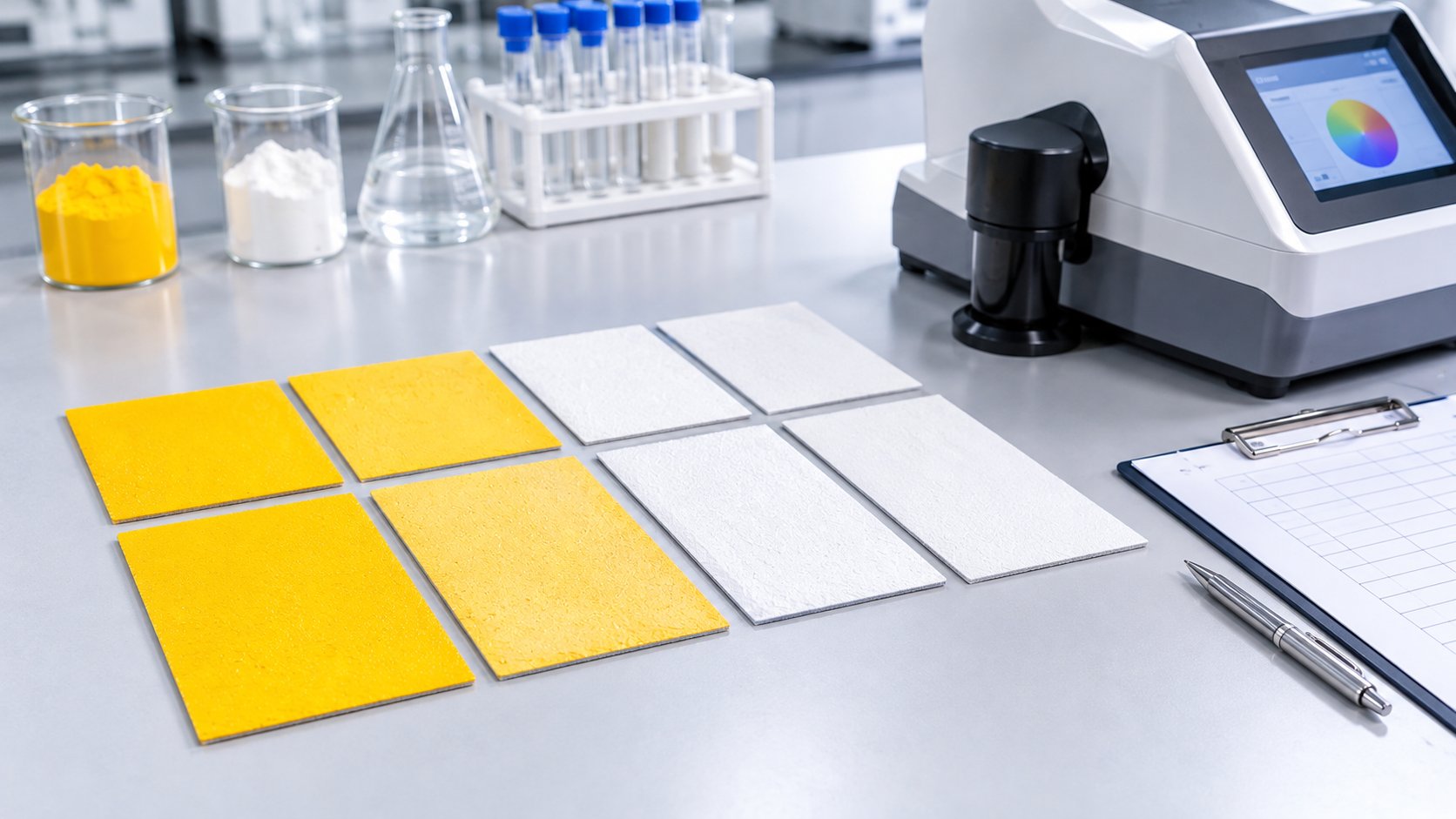
- Batch-to-batch colour tolerance: a defined ΔE limit plus the illuminant and measurement geometry used to judge it.
- Standardised retroreflectance data where beads are involved, measured by a recognised method such as ASTM D4061-25.
- Compliance documents: heavy-metal, RoHS and REACH statements, written lead-free confirmation, and a sample tested in your own binder.
Key Takeaways
- Apparent fading is usually three problems: pigment degradation, binder chalking and glass bead loss.
- Night-time retroreflectivity declines before daytime colour does.
- Heat damage during thermoplastic application can look exactly like premature weathering.
- Lead-free grades need re-qualifying, not shade-only swaps; always ask for the test conditions behind a rating.
Frequently Asked Questions
Does a higher lightfastness rating guarantee a longer-lasting marking?
No. Lightfastness describes the pigment; service life also depends on binder durability, film build, bead retention and traffic. A high rating cannot compensate for a binder that chalks early.
Why does a white line look fine by day but vanish at night?
Night visibility comes from glass beads, not pigment. Once beads wear away, far less headlight returns to the driver even though daytime colour is unchanged.
Can a lead-chrome yellow be replaced without reformulating?
Rarely. Lead-free yellows differ in hiding power, heat stability and weathering, so dosage, opacity and sometimes the binder need revalidating.
For more information about pigment options for road marking paints, visit Fineland Chem’s application page: Thermoplastic Road Marking Paints.