Fastness Properties
| Heat Resistance (℃) |
300 |
Alkali Resistance (1-5) |
4 |
| Light Resistance (Full Shade, 1-8) |
8 |
Migration Resistance(1-5) |
5 |
| Light (Reduced tinting, 1-8) |
8 |
Ethyl Acetate (1-5) |
4 |
| Weather Resistance (1-5) |
5 |
Ethanol (1-5) |
4 |
| Acid Resistance (1-5) |
4 |
MEK (1-5) |
4 |
Typical Applications
Pigment Red 101 is used in a wide range of industrial and construction applications.
Typical applications include:
-
Architectural and industrial coatings
Used in decorative paints, protective coatings, and general industrial coatings.
-
Construction materials
Applied in concrete, cement, bricks, roof tiles, and paving blocks.
-
Plastic coloration
Suitable for plastics such as PVC, PE, PP, and other polymer systems.
-
Building materials
Used in asphalt, mortar, and colored construction products.
-
Ceramic and glass applications
Used in ceramic bodies and glazing systems requiring stable red coloration.
Key Performance Properties Related to Applications
The performance characteristics of Pigment Red 101 are influenced by its iron oxide composition and stable inorganic structure.
Key properties include:
-
Color shade
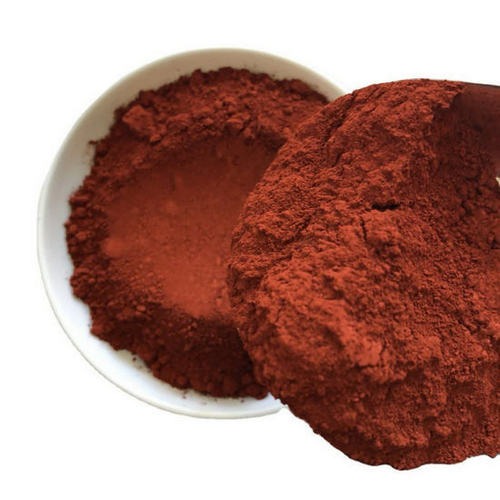
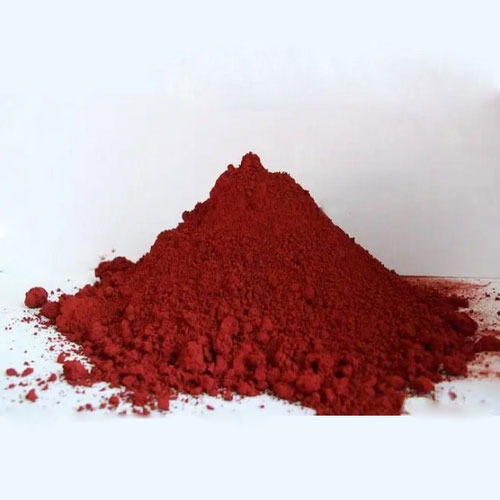
Reddish-brown to deep red tone depending on particle size and manufacturing process.
-
Opacity
High hiding power and good opacity in many formulations.
-
Lightfastness
Excellent resistance to light exposure.
-
Heat resistance
Very good thermal stability, suitable for high-temperature applications.
-
Chemical stability
Resistant to acids, alkalis, and many environmental conditions.
Advantages
Pigment Red 101 offers several characteristics typical of inorganic iron oxide pigments:
-
Excellent durability and weather resistance
-
High opacity and hiding power
-
Good heat and chemical resistance
-
Stable coloration in construction and industrial applications
-
Suitable for indoor and outdoor use
Typical Limitations
Pigment Red 101 may present certain limitations depending on the application system.
Typical limitations include:
-
Lower color brightness compared with many organic red pigments
-
Shade range is generally limited to earthy red or reddish-brown tones
-
Tinting strength may be lower than some synthetic organic pigments
Buyer Guidance
When selecting Pigment Red 101 for industrial applications, several factors are typically considered:
-
Desired shade (ranging from light red to deep reddish-brown)
-
Particle size and dispersion characteristics
-
Compatibility with coatings, plastics, or construction materials
-
Heat and weather resistance requirements
Different commercial grades may offer variations in particle size distribution and surface treatment to suit different industrial applications.
Synonyms
| Iron Oxide Red |
Ferric Oxide |
Red Iron Oxide |
Synthetic Red Iron Oxide |
| C.I. Pigment Red 101 |
PR101 |
Iron(III) oxide |
Ferric oxide |
| Iron sesquioxide |
Diiron trioxide |
Iron(3+) oxide (Fe₂O₃) |
|
Manufacturer and Supplier Information
Pigment Red 101 is produced by inorganic pigment manufacturers worldwide and is commonly supplied as a powder pigment for coatings, construction materials, plastics, and ceramic applications.
Commercial grades may vary depending on particle size, production process, and application-specific performance characteristics.
Package and Delivery
● 25KG Kraft Bag, 1000kg Carton Box
● Lead Time: Normally around 15 days after signed contract.
FAQ
1.What color does Pigment Red 101 produce?
Pigment Red 101 produces a reddish-brown to deep red shade.
2.What type of pigment is Pigment Red 101?
It is an inorganic synthetic iron oxide pigment.
3.Is Pigment Red 101 suitable for outdoor use?
Yes. It provides excellent lightfastness and weather resistance, making it suitable for outdoor coatings and construction materials.
4.Where is Pigment Red 101 commonly used?
It is widely used in coatings, concrete, bricks, roof tiles, plastics, and other construction-related applications.