Fastness Properties
| Heat Resistance (℃) |
160 |
Alkali Resistance (1-5) |
4 |
| Light Resistance (Full Shade, 1-8) |
5-6 |
Migration Resistance(1-5) |
4 |
| Light (Reduced tinting, 1-8) |
5 |
Ethyl Acetate (1-5) |
4 |
| Weather Resistance (1-5) |
5 |
Ethanol (1-5) |
4 |
| Acid Resistance (1-5) |
4 |
MEK (1-5) |
4 |
Typical Applications
Pigment Red 21 is applied in a range of industrial coloration systems where conventional organic pigments are suitable.
Typical applications include:
-
Industrial coatings
Used in general industrial paints and decorative coatings.
-
Printing inks
Applied in packaging inks, publication inks, and other conventional ink formulations.
-
Plastic coloration
Suitable for some general-purpose plastics processed at moderate temperatures.
-
Rubber and textile printing
Used in rubber coloration and pigment printing formulations.
Key Performance Properties Related to Applications
The performance of Pigment Red 21 in various applications is influenced by its pigment chemistry and particle characteristics.
Key properties include:
-
Color shade
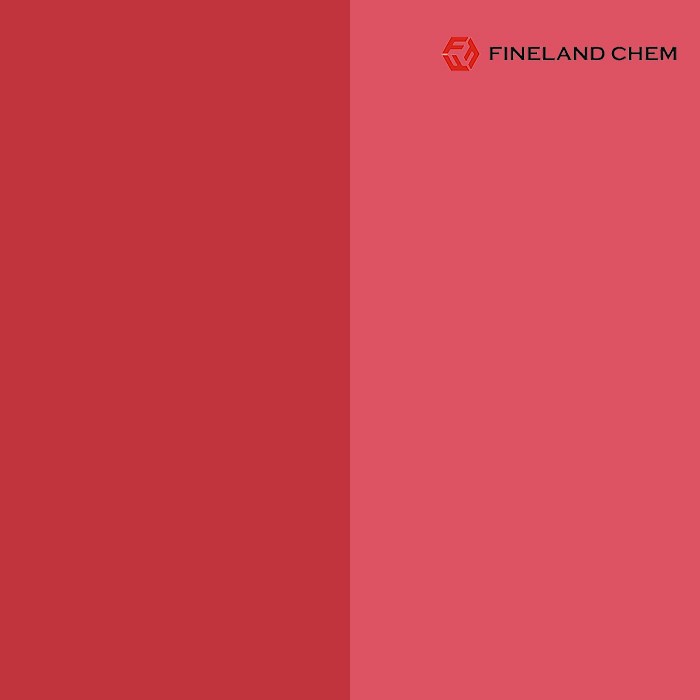
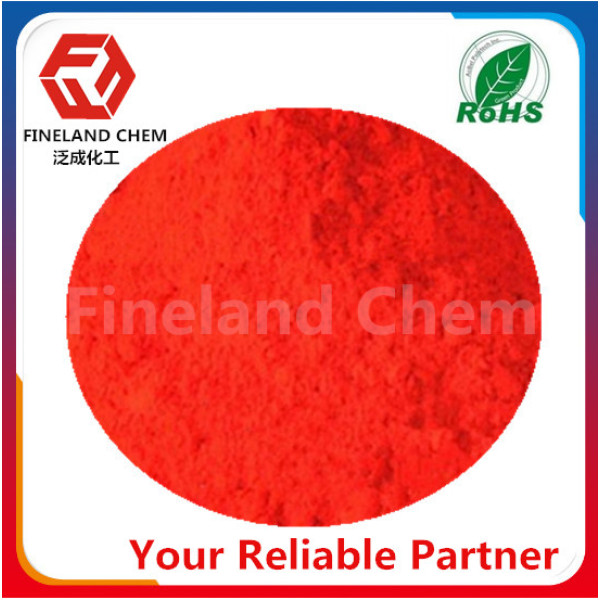
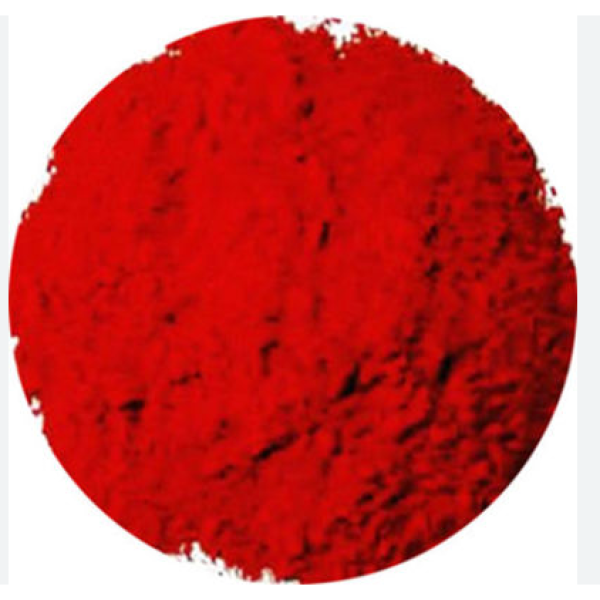
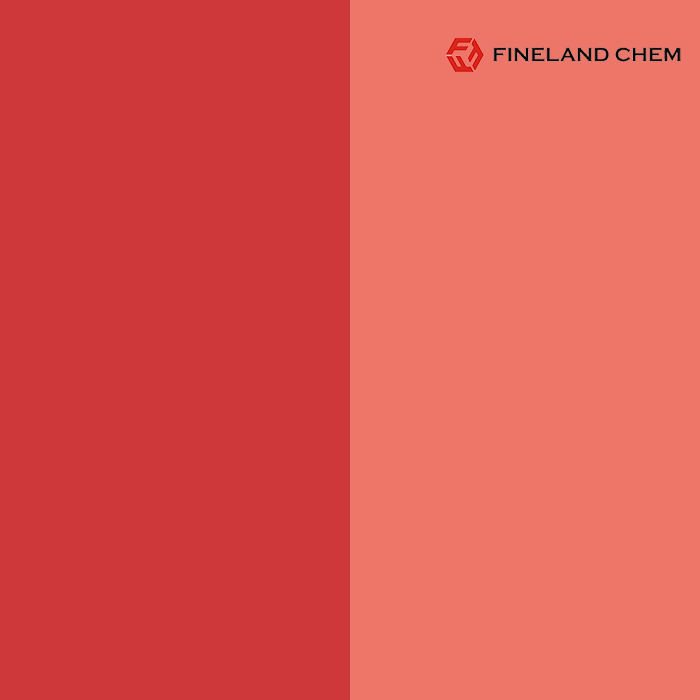
Yellowish-red tone with moderate chroma.
-
Tinting strength
Moderate color strength suitable for general coloration systems.
-
Dispersion properties
Can be dispersed in many coating, ink, and plastic formulations using conventional dispersion techniques.
-
Heat resistance
Moderate thermal stability typical of β-naphthol azo pigments.
-
Solvent resistance
Generally compatible with solvents commonly used in coatings and printing inks.
Advantages
1.Product Characteristics & Hue Performance
As a monoazo organic pigment, it has clear key identifiers (C.I. 12300; CAS 6410-26-0, chemical formula C₂₃H₁₆ClN₃O₂), featuring a vivid yellowish-red shade and strong tinting strength to provide bright visual effects. It is currently mass-produced in China, with commercial names including “Dahongfen” (Bright Red Powder) and “Tongyi Jinguanghong” (Unified Golden Bright Red), ensuring stable supply.
2.Performance Stability
It has good dispersibility and high opacity, showing stable performance in various formulation systems. With moderate lightfastness (typically rated around Grade 6) and heat resistance up to 140°C, it can meet the usage needs of most indoor and general-purpose scenarios, with strong adaptability.
3.Cost & Applicability Advantages
It has a significant cost advantage. It becomes a preferred choice in indoor coloring, basic industry and cultural & educational fields due to its high cost-effectiveness and bright hue, with wide applicability and prominent economy.
4.Wide Application Range
It covers the usage needs of multiple fields, including industrial coatings (red enamel paint, latex paint), printing & pigments (water-based/offset inks, watercolor/oil paints, stationery) and textile printing & dyeing. It has flexible scenario adaptation and does not require additional adaptation to a variety of special processes.
Typical Limitations
Pigment Red 21 may present certain limitations depending on the durability requirements of the final application.
Typical limitations include:
-
Moderate lightfastness, especially under outdoor exposure
-
Limited heat resistance compared with high-performance pigments
-
Possible bleeding or migration in some plastic systems
-
Not typically used in applications requiring long-term weather durability
Buyer Guidance
When selecting Pigment Red 21 for industrial formulations, several technical factors are often considered:
-
Processing temperature of plastics or coatings
-
Lightfastness requirements for indoor or outdoor applications
-
Compatibility with binder or resin systems
-
Dispersion performance in the final formulation
For applications requiring higher durability, weather resistance, or heat stability, alternative pigment classes may also be evaluated.
Synonyms
| Pigment Red 21 (C.I. 12300) |
C.I.P.R21 |
C.I. 12300 |
EINECS 229-096-4 |
| NAPTHOL RED YR |
Sanyo Fast Red CR |
Pigment Scarlet Powder |
|
| 4-((2-Chlorophenyl)diazenyl)-3-hydroxy-N-phenyl-2-naphthamide |
4-(2-chloro-phenylazo)-3-hydroxy-[2]naphthoic acid anilide |
4-[(2-chlorophenyl)azo]-3-hydroxy-n-phenyl-2-naphthalenecarboxamide |
4-[(2-Chlorophenyl)azo]-3-hydroxy-N-phenylnaphthalene-2-carboxamide |
| 2-Naphthalenecarboxamide, 4-((2-chlorophenyl)azo)-3-hydroxy-N-phenyl- |
2-Naphthalenecarboxamide, 4-(2-(2-chlorophenyl)diazenyl)-3-hydroxy-N-phenyl- |
|
|
Manufacturer and Supplier Information
Pigment Red 21 is manufactured by pigment producers worldwide and is typically supplied in powder form for use in coatings, inks, plastics, rubber, and related industrial applications.
Commercial grades may differ in particle size distribution, surface treatment, and dispersion characteristics depending on the intended application.
Package and Delivery
● 25KG Kraft bag, 400KG Carton Box.
● Lead Time: Normally around 15 days after signed contract.
FAQ
1.What color shade does Pigment Red 21 provide?
Pigment Red 21 generally produces a yellowish-red shade.
2.Is Pigment Red 21 an organic pigment?
Yes. It belongs to the organic azo pigment family, specifically the β-naphthol pigment group.
3.Can Pigment Red 21 be used in printing inks?
Yes. It has been used in various conventional printing ink formulations.
4.Is Pigment Red 21 suitable for high-temperature plastics?
It is typically used in plastics with moderate processing temperatures; higher-temperature polymers may require pigments with greater heat stability.