
Organic pigments are a core category of modern colorants, prized for their exceptional color strength, brightness, and transparency. Unlike inorganic pigments, which are built on metal oxides and mineral structures, organic pigments are based on carbon-containing molecular structures — most commonly azo compounds and polycyclic (phthalocyanine, quinacridone, and related) structures. This molecular design gives them a much wider and more vivid color gamut, which is why they dominate applications where bright, saturated color is the priority.
As industries move toward higher-performance, more sustainable, and more colorful products, organic pigments continue to expand into new coatings, plastics, printing, and specialty applications.
For general background information, see: Organic Pigment
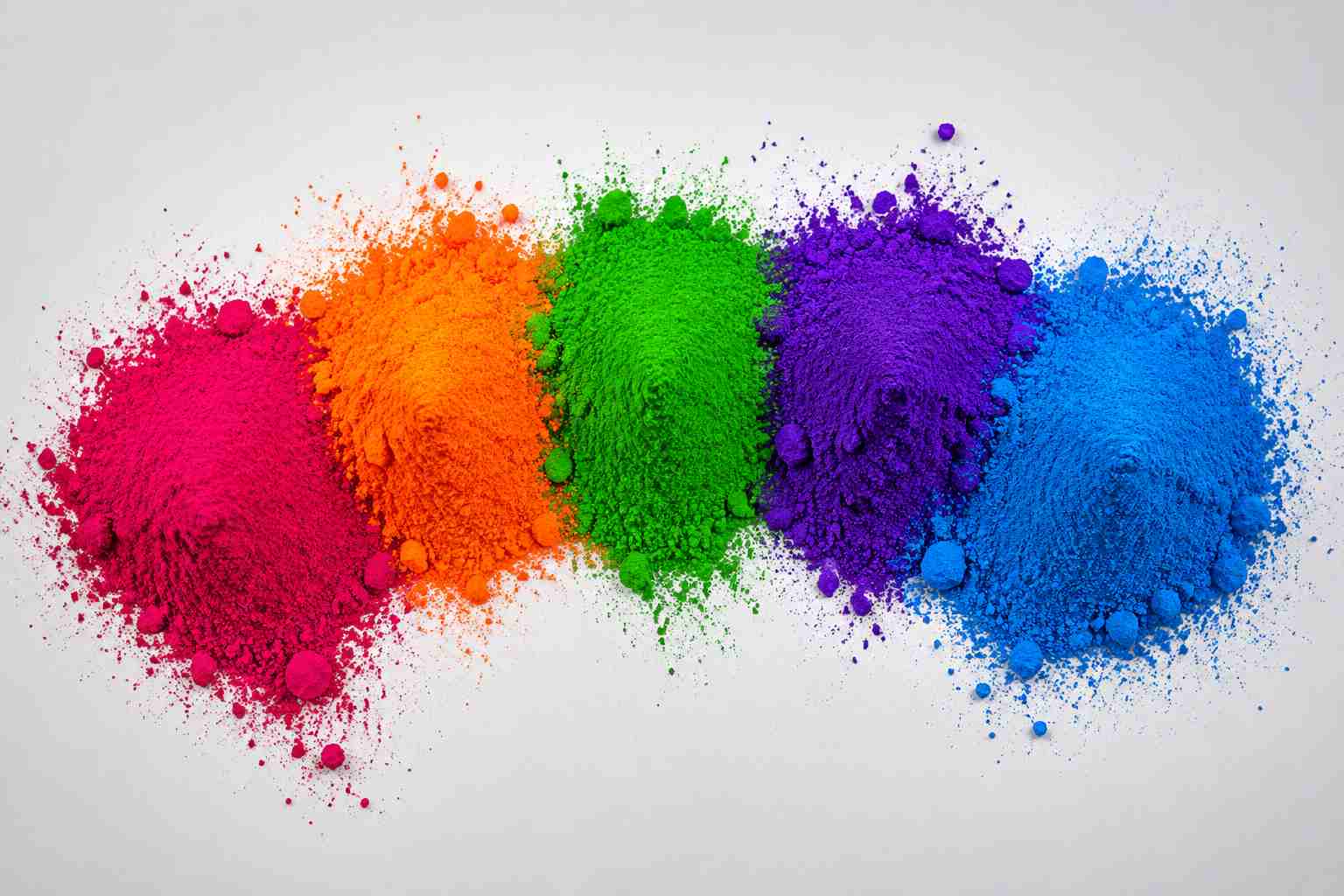
What Are Organic Pigments?
Organic pigments are colorants built from carbon-based molecular structures, typically synthesized through azo coupling or polycyclic condensation reactions. Like inorganic pigments, they are insoluble in the application medium and remain dispersed as fine solid particles — this is what distinguishes a pigment from a dye, which dissolves into the substrate.
Organic pigments are valued for their:
- Exceptional color strength (tinting strength)
- High brightness and vivid, saturated shades
- Good transparency, useful for glazes and specialty effects
- A very wide color gamut, including bright reds, oranges, violets, and greens that are difficult to achieve with inorganic pigments
Because of these properties, organic pigments are the preferred choice whenever a formulation needs bright, clean, high-chroma color rather than maximum opacity or heat resistance.
Main Types of Organic Pigments
Azo Pigments
Azo pigments are the largest and most widely produced family of organic pigments, characterized by one or more azo (–N=N–) linkages in their molecular structure. They cover most of the yellow, orange, and red color space and are generally cost-effective to manufacture.
Common types include:
- Monoazo pigments
- Disazo pigments
- Naphthol (Naphthol AS) pigments
- Benzimidazolone pigments — a higher-performance azo subclass known for improved heat and migration resistance
Typical applications include printing inks, plastics, and decorative coatings.
Related product lines: Yellow Pigment, Orange Pigment, Red Pigment

Phthalocyanine Pigments
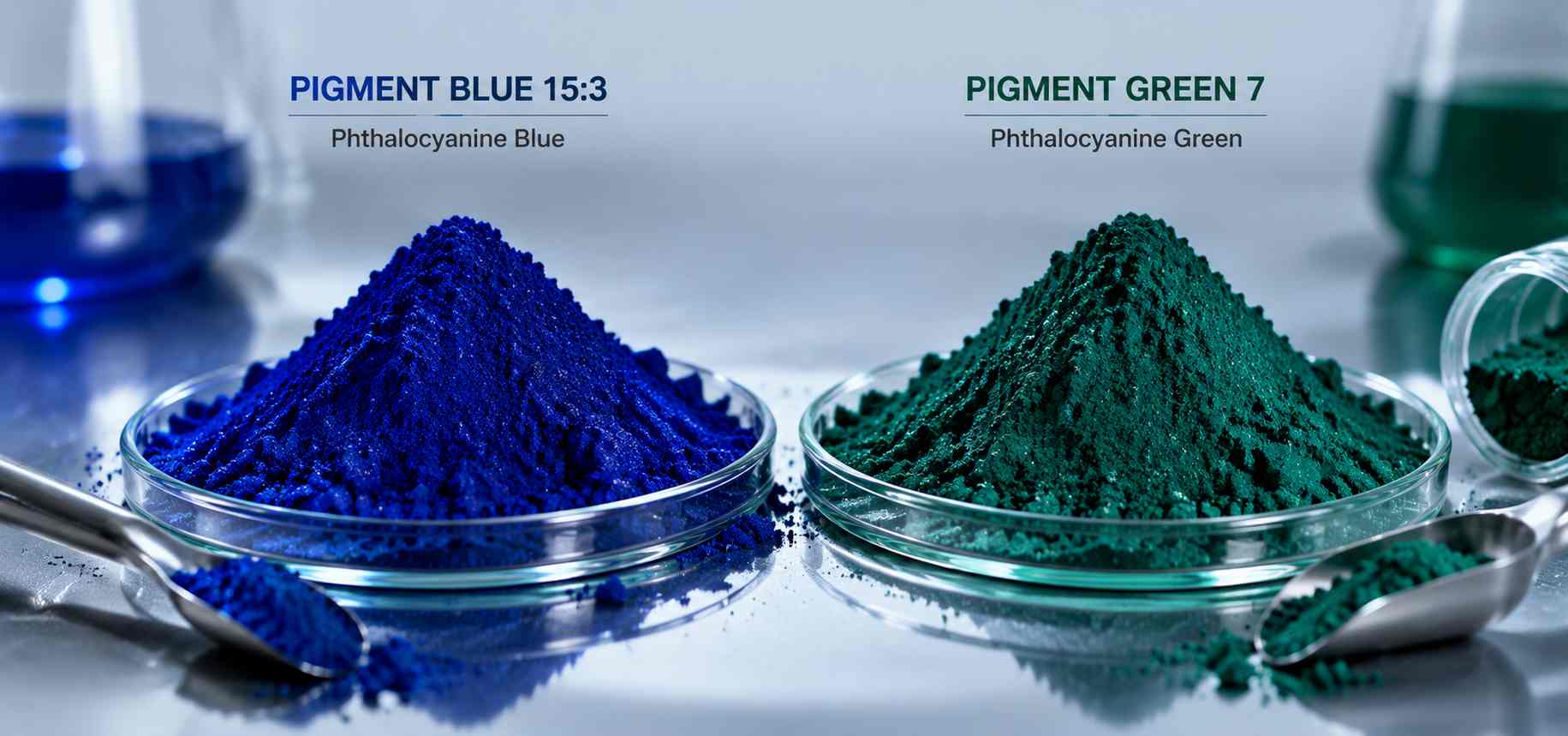
Phthalocyanine (Pc) pigments are polycyclic organic pigments built around a copper-centered macrocyclic ring. They are known for outstanding tinting strength, brightness, and excellent chemical and light stability.
Key shades include:
- Phthalocyanine Blue (Pigment Blue 15 and its crystal variants)
- Phthalocyanine Green (Pigment Green 7 and Pigment Green 36)
These pigments are core colorants for inks, plastics, coatings, and textile printing wherever a clean, bright blue or green is required.
Related product lines: Blue Pigment, Green Pigment
High-Performance Polycyclic Pigments
Beyond phthalocyanines, a broader group of high-performance organic pigments is built on more complex polycyclic structures. These include quinacridone, DPP (diketopyrrolopyrrole), perylene, and dioxazine pigment families.
These pigments are engineered for:
- Superior weather and light fastness compared with standard azo pigments
- Excellent heat resistance suitable for engineering plastics
- Bright violet, red, maroon, and orange shades not easily matched by simpler pigment classes
Related product lines: Violet Pigment, Brown Pigment
For more on this category, see: Difference Between High Performance Organic Pigments And Others
Advantages of Organic Pigments
Outstanding Color Brightness
Organic pigments deliver far more vivid, saturated color than inorganic pigments, making them the standard choice wherever brightness and chroma matter more than opacity.
High Tinting Strength
Because of their molecular structure, organic pigments generally require lower dosage to achieve strong coloration, which can improve cost efficiency in some formulations despite higher raw material cost per kilogram.
Wide Color Gamut
Organic pigments cover color ranges — particularly bright reds, oranges, violets, and greens — that are difficult or impossible to reproduce with inorganic pigment systems alone.
Good Transparency
Many organic pigments offer excellent transparency, which is essential for metallic and pearlescent coatings, glazes, and certain printing ink effects.
Limitations of Organic Pigments
Lower Opacity
Compared with inorganic pigments such as titanium dioxide or iron oxide, most organic pigments provide weaker hiding power and are less suited to fully opaque, solid-color applications.
Variable Heat and Weather Resistance
Standard azo pigments can be more sensitive to high processing temperatures and prolonged UV exposure than inorganic pigments, although high-performance polycyclic pigments substantially narrow this gap.
Higher Cost
Organic pigments, especially high-performance polycyclic types, are typically more expensive per kilogram than common inorganic pigments.
For a broader comparison, see: Organic vs Inorganic Pigments: Which Performs Better in Industrial Applications
Modern Industry Trends in Organic Pigments
Sustainability and Regulatory Compliance
Global regulations are pushing pigment producers toward cleaner synthesis routes and formulations free of restricted substances, alongside continued phase-out of heavy-metal-based colorants across industries.
For related reading, see: Why Lead-Free Pigments Are the Future of Plastics and Coatings
Growth of High-Performance Pigment Technology
Demand is rising for high-performance organic pigments that combine bright color with better heat stability and weather resistance, expanding their use in automotive coatings, engineering plastics, and exterior applications once dominated by inorganic pigments.
Advances in Particle and Dispersion Technology
Improved particle size control and surface treatment technologies are helping organic pigments achieve better dispersion stability, gloss, and compatibility with modern resin and ink systems.
For more about pigment dispersion, see: Pigment Dispersion Techniques Every Industrial Chemist Should Know
Applications of Organic Pigments
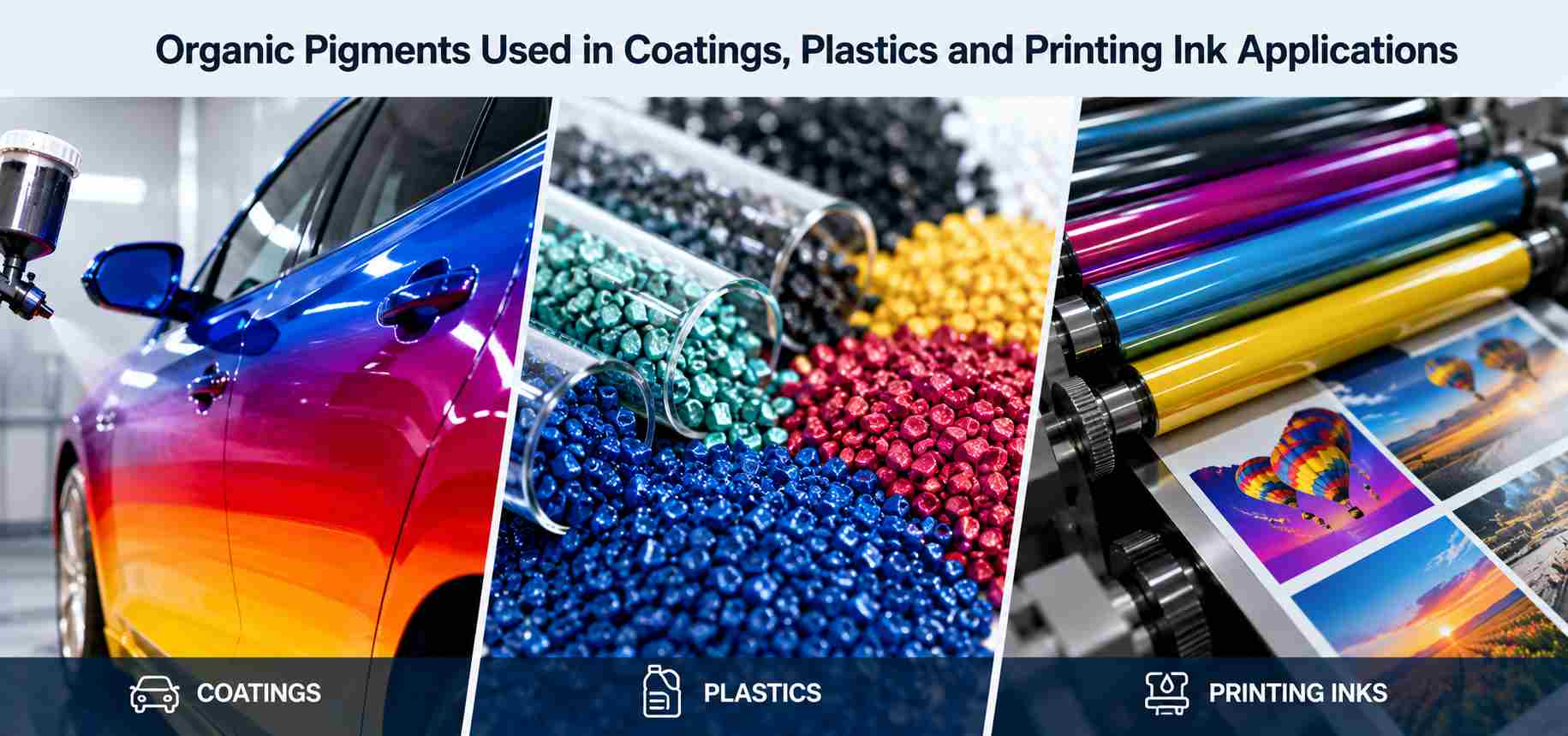
Organic pigments are used extensively across color-critical industries:
| Industry | Typical Applications |
|---|---|
| Coatings | Automotive paint, decorative coatings, industrial coatings |
| Plastics | Masterbatch, engineering plastics, packaging |
| Printing Inks | Offset, flexo, gravure, inkjet, packaging inks |
| Textiles | Textile printing, spun fiber coloration |
| Rubber | Colored rubber products |
Their combination of brightness, tinting strength, and color range makes organic pigments indispensable wherever vivid, high-impact color is the goal.
Conclusion
Organic pigments are essential to modern color technology, offering brightness, tinting strength, and a color gamut that inorganic pigments cannot match. As formulators continue to demand pigments that combine vivid color with better durability and regulatory compliance, high-performance organic pigment technology is playing an increasingly important role across coatings, plastics, printing inks, and specialty applications.