
Strengthening Technical Understanding of Road Marking Materials
Fineland Chem recently organized an internal technical training session focused on road marking paint applications, formulation concepts, and material selection. The session was presented by Leon and attended by members from the sales, purchasing, and technical teams as part of the company’s ongoing learning and knowledge-sharing activities.
The training introduced the fundamental structure of modern road marking systems and explained how different raw materials work together to achieve visibility, durability, adhesion, and weather resistance in traffic marking applications.
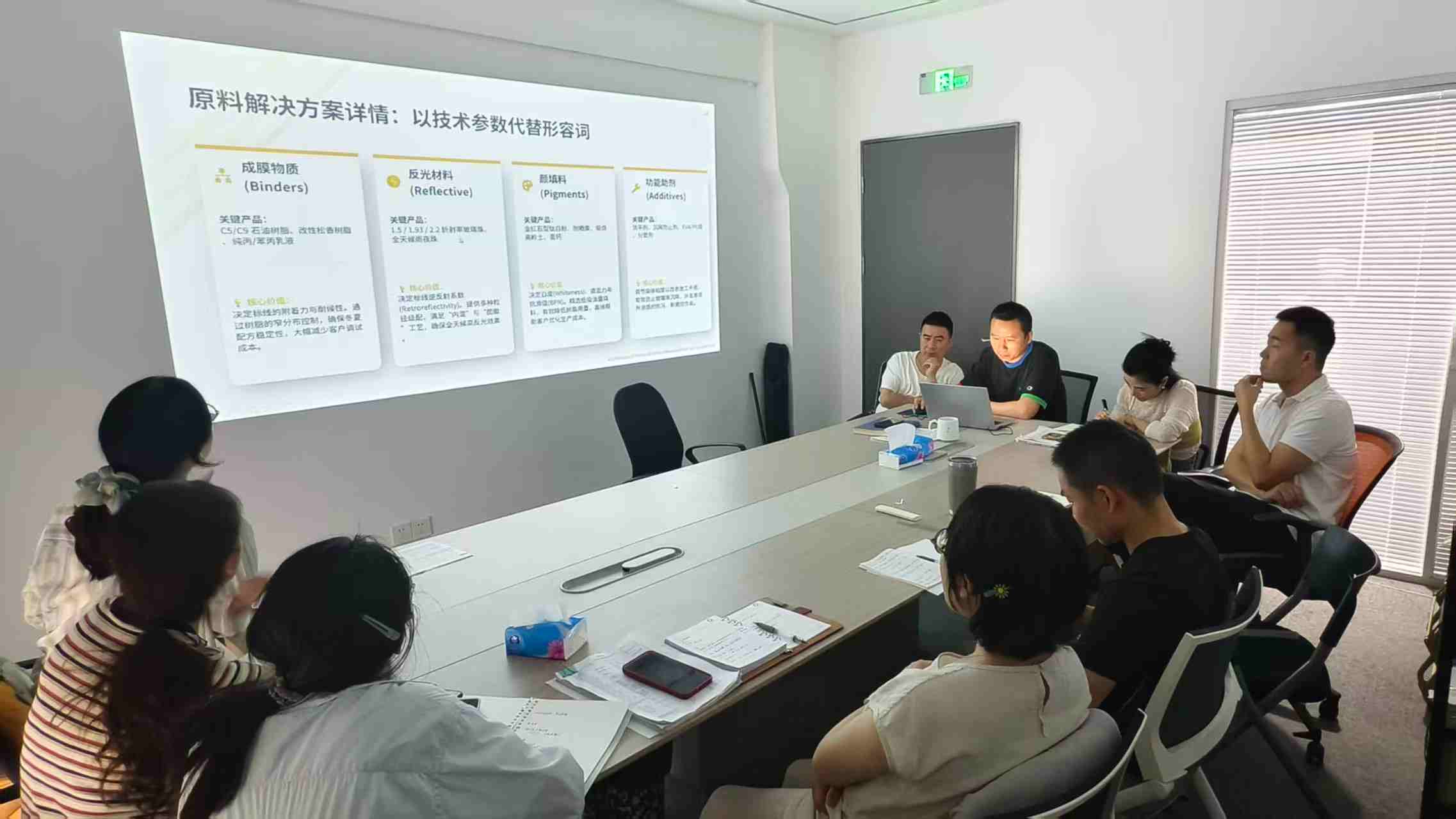
Key Components in Road Marking Paint Systems
During the session, the presentation covered several major categories of materials commonly used in road marking paints, including:
- Binders
- Reflective materials
- Pigments
- Additives
The discussion explained how each component contributes to the overall performance of the coating system.
Binders play an essential role in film formation, adhesion, flexibility, and durability. Different resin systems can influence drying speed, wear resistance, and compatibility with road surfaces.
Reflective materials, particularly glass beads, are critical for nighttime visibility. Their ability to reflect vehicle headlights helps improve traffic safety under low-light conditions.
Pigments provide color identification and opacity for lane markings. White and yellow remain the most commonly used colors globally, requiring strong weather resistance and color stability under long-term outdoor exposure.
Additives help optimize application performance, including leveling, anti-settling behavior, drying characteristics, and storage stability.
For readers interested in related coating technologies, see:
How Pigments Enhance Coating Durability and Gloss
How to Choose the Right Industrial Pigment for Coatings and Plastics
Understanding Performance Requirements for Traffic Coatings
The training also explored the practical performance requirements of road marking paints used in highways, urban roads, parking areas, and industrial zones.
Several important technical properties were discussed, including:
- Abrasion resistance
- Weather resistance
- Reflectivity retention
- Fast drying performance
- Adhesion to asphalt and concrete surfaces
- Resistance to water, oil, and chemicals
Because road markings are continuously exposed to sunlight, rain, vehicle friction, and temperature fluctuations, material selection is critical to maintaining long-term visibility and safety performance.
The session highlighted how formulation balance can directly affect construction efficiency and coating lifetime in different climates and traffic conditions.
Expanding Professional Knowledge Through Technical Training
At Fineland Chem, regular technical training sessions remain an important part of internal development. By combining practical application knowledge with material science fundamentals, the company continues improving its ability to provide professional support for customers across coatings, plastics, inks, and related industries.
The road marking paint training helped participating team members gain a clearer understanding of formulation logic, application requirements, and current industry practices, further strengthening communication between technical and commercial teams.
For additional reading related to pigments and industrial coatings, see:
Lead-Free Pigments 101: Benefits, Performance & Applications
Architectural Coatings Market Outlook 2026: Trends, Regulations, and Sustainability