
Introduction
As industries continue moving toward safer and more sustainable manufacturing, lead-free pigments are becoming increasingly important across plastics, coatings, and printing inks. Modern lead-free pigment technologies can now provide strong color performance, durability, and regulatory compliance while reducing environmental and health concerns associated with traditional lead-containing materials.
Today, lead-free pigments are widely used in consumer products, industrial coatings, packaging materials, and printing systems where both performance and safety are essential.
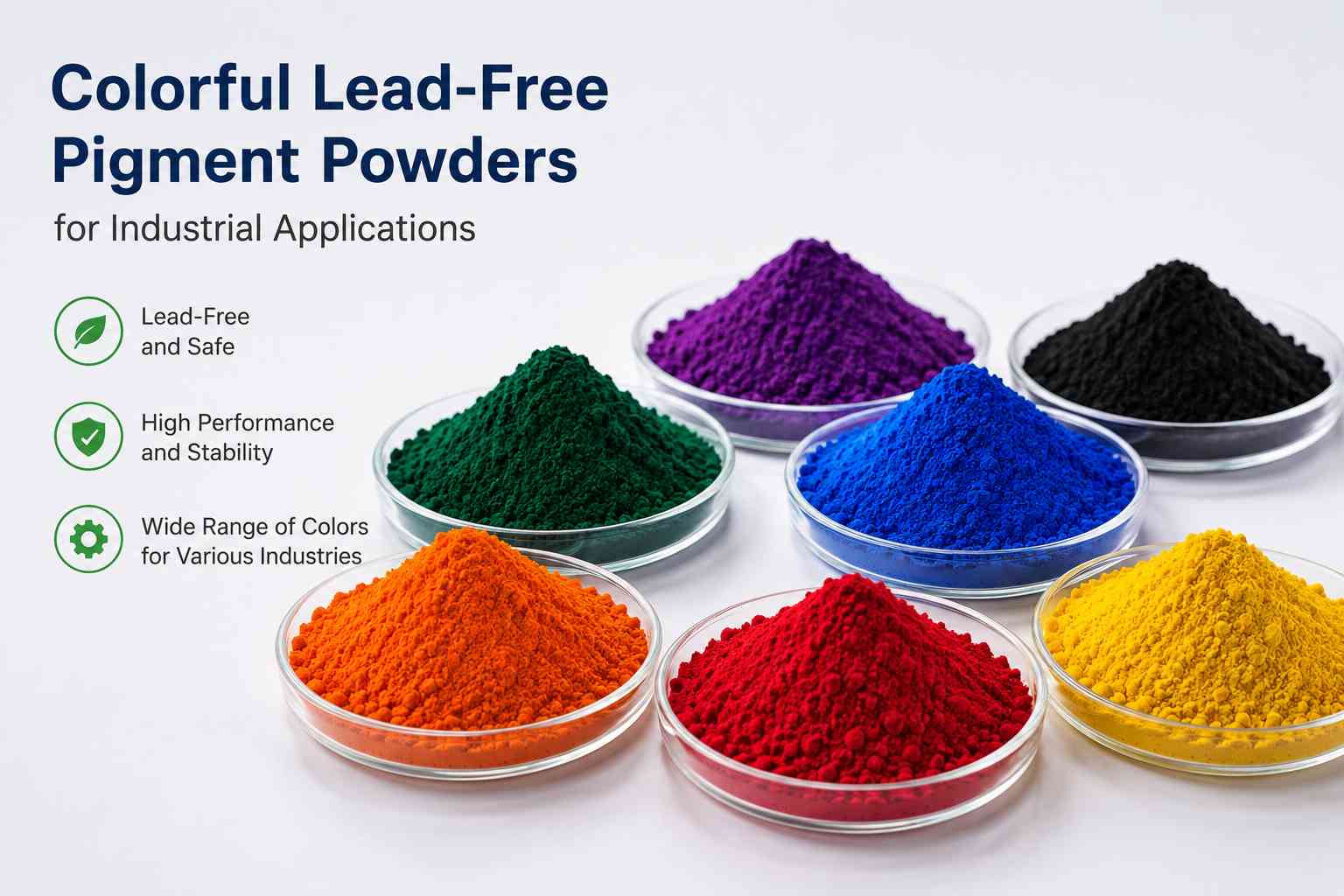
Lead-Free Pigments in Plastic Applications
Plastic coloration is one of the largest application areas for lead-free pigments. These pigments are commonly used in:
- PVC products
- Polyolefins (PP and PE)
- ABS and engineering plastics
- Household goods
- Packaging materials
- Toys and consumer products
Modern plastic manufacturing requires pigments with excellent heat stability, migration resistance, and processing compatibility. Lead-free pigments can maintain stable color during extrusion, injection molding, and compounding processes while meeting global safety standards.
In consumer-facing products, the transition to lead-free systems is especially important because of increasing restrictions on hazardous substances in toys, food packaging, and household plastics.
For related reading on plastic pigmentation systems, see:
How to Choose the Right Industrial Pigment for Coatings and Plastics
Coloring Polyolefins: A Technical Introduction to Organic Pigments for PP and PE
Applications in Architectural and Industrial Coatings
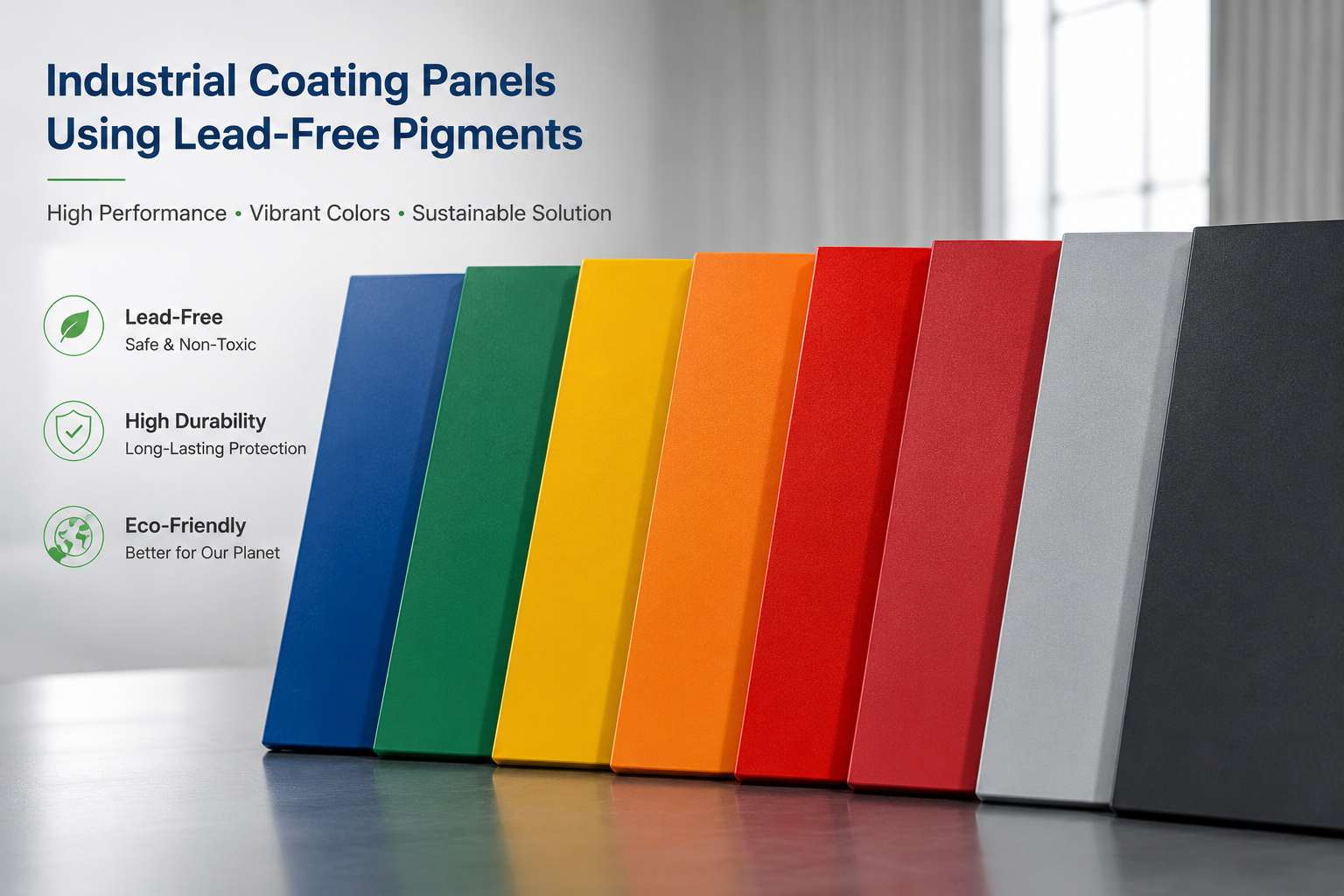
The coatings industry has significantly accelerated the adoption of lead-free pigments in recent years. Traditional lead-containing pigments were historically valued for their bright colors and corrosion resistance, but environmental regulations have driven the development of safer alternatives.
Lead-free pigments are now widely applied in:
- Architectural paints
- Industrial maintenance coatings
- Powder coatings
- Automotive coatings
- Decorative finishes
- Coil and appliance coatings
Modern inorganic and organic lead-free pigments can provide strong opacity, weather resistance, and color durability suitable for both indoor and outdoor environments.
In architectural systems, long-term UV stability and weather resistance are especially important. Many modern lead-free pigments are designed to withstand prolonged environmental exposure while maintaining shade consistency.
For broader industry trends related to sustainable pigments and coatings, see:
Pigment Industry Outlook 2026: Regulation, Sustainability, and Market Adaptation
How Pigments Enhance Coating Durability and Gloss
Lead-Free Pigments in Printing Inks
Printing inks represent another major application area for lead-free pigments, particularly in packaging and commercial printing.
These pigments are commonly used in:
- Offset inks
- Flexographic inks
- Gravure inks
- Water-based inks
- UV-curing ink systems
- Packaging printing
In ink applications, pigments must provide:
- High color strength
- Good dispersion behavior
- Solvent resistance
- Rub resistance
- Lightfastness
Lead-free pigments are increasingly preferred in food packaging and consumer printing because of stricter regulations regarding toxic substances.
The development of high-performance organic pigments has allowed manufacturers to achieve vivid colors while maintaining safer formulations for modern printing systems.
For related reading on printing ink pigments, see:
How Offset Ink Pigments Ensure Vibrant and Durable Print Results
Understanding Water-Based Ink Pigments: A Comprehensive Guide
Regulatory and Sustainability Drivers
One of the biggest factors behind the adoption of lead-free pigments is global regulation. Standards such as:
- REACH
- RoHS
- EN71 toy safety regulations
- Food-contact packaging requirements
have pushed manufacturers toward safer pigment technologies.
At the same time, sustainability initiatives are encouraging companies to reduce hazardous waste and improve recyclability across industrial production systems.
For additional background on hazardous substances and environmental concerns, see:
Lead paint
Challenges and Technical Considerations
Although lead-free pigments offer many advantages, formulators still need to consider several technical factors:
- Heat stability in high-temperature plastics
- Dispersion quality in coatings and inks
- Shade matching versus traditional lead pigments
- Outdoor durability and weather resistance
- Cost-performance balance
Advances in pigment chemistry continue improving these properties, helping modern lead-free systems achieve performance levels comparable to traditional technologies.
Conclusion
Lead-free pigments are now widely used across plastics, coatings, and inks because they combine safety, regulatory compliance, and strong color performance. As environmental standards continue evolving, these pigments are expected to play an even larger role in industrial manufacturing.
From plastic consumer products and durable coatings to modern packaging inks, lead-free pigments have become an important foundation for safer and more sustainable color technology.