
Introduction
Lead-free pigments have become a critical focus in the plastics, coatings, and inks industries. As awareness of health and environmental impacts grows, manufacturers are increasingly transitioning away from lead-based pigments to safer alternatives. These pigments provide high-quality color performance while complying with stringent global regulations, such as REACH and RoHS, making them a practical choice for sustainable industrial production.
For background on pigment safety and chemistry, see the Wikipedia article: Lead(chemical element).
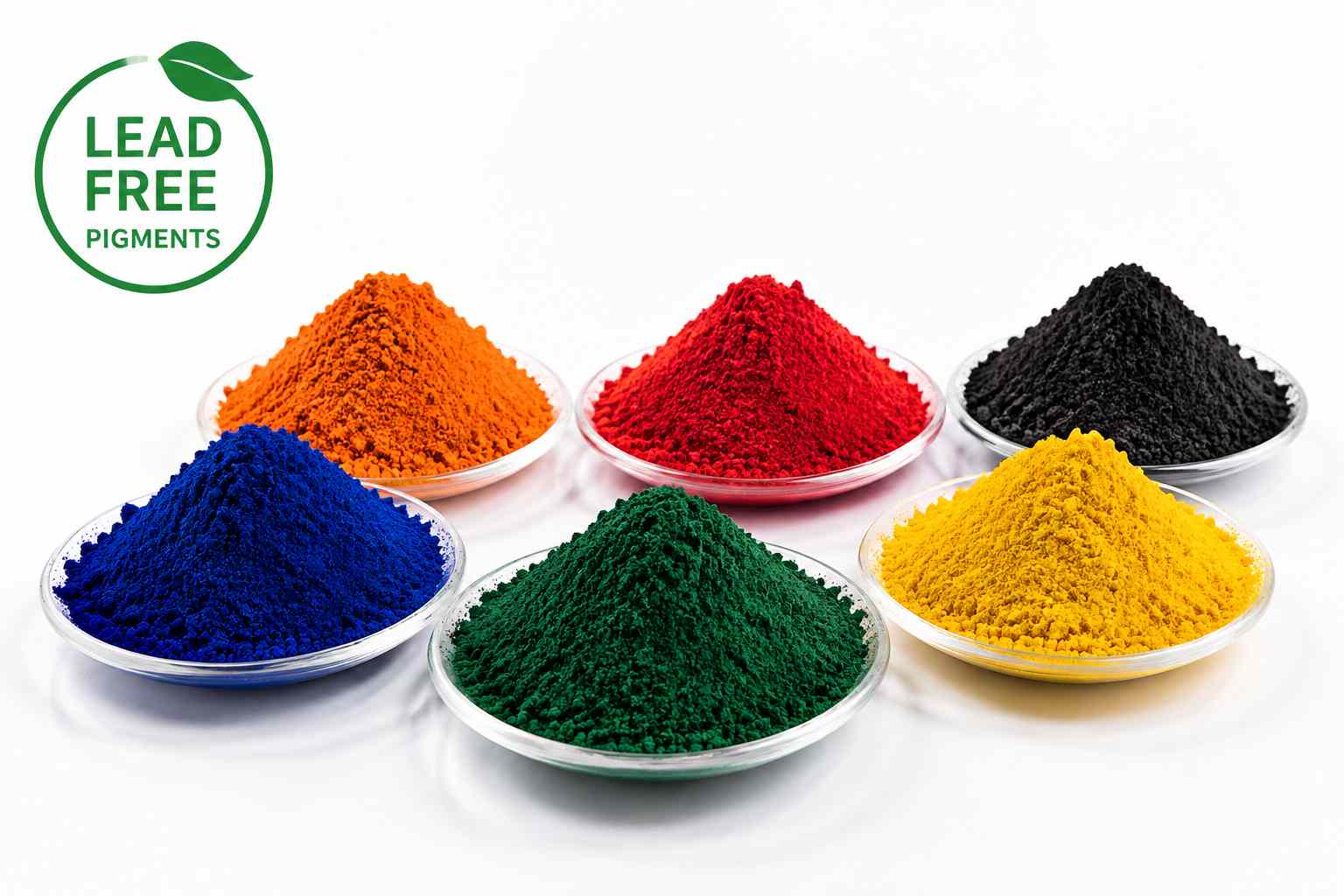
Why Lead-Free Pigments Are Essential
Health and Environmental Concerns
Lead compounds have long been used to produce vibrant colors in paints, plastics, and ceramics. However, exposure to lead can cause severe health issues, including neurological disorders, kidney damage, and developmental delays in children. Environmental contamination from lead-containing waste also poses risks to soil and water systems.
Replacing traditional lead pigments with lead-free alternatives eliminates these hazards, creating safer consumer products and reducing environmental liability. For an overview of inorganic pigments and their properties, see:
How to Choose the Right Industrial Pigment for Coatings and Plastics
[Image Alt Text: worker handling pigment samples with safety gloves]
Regulatory Drivers
Global regulations strongly encourage or mandate the elimination of lead in industrial materials. Key frameworks include:
- REACH (Registration, Evaluation, Authorisation and Restriction of Chemicals) – restricts lead in consumer and industrial products within the European Union.
- RoHS (Restriction of Hazardous Substances Directive) – limits lead content in electrical and electronic equipment.
- EPA Lead Paint Rules – limits the use of lead in residential paints in the United States.
These regulations have accelerated the development of lead-free alternatives that meet both performance and compliance standards. For additional context on lead-free pigment applications, see Wikipedia: Pigment.
Applications of Lead-Free Pigments
Lead-free pigments are widely used across multiple industries:
- Plastics: High-performance pigments for PP, PE, PVC, ABS, and polycarbonate provide vibrant color while maintaining heat stability and processability. They are used in consumer products, packaging, toys, and automotive components.
- Coatings: Lead-free alternatives in architectural paints, industrial coatings, and powder coatings offer durability, chemical resistance, and color consistency without environmental or health hazards.
- Inks: Printing and inkjet systems rely on lead-free pigments for bright, stable colors while avoiding toxic components in packaging or food-contact applications.
- Specialty Applications: Lead-free pigments can also serve in ceramics, glass, rubber, and building materials. They are often used for decorative finishes where color stability and safety are both required.
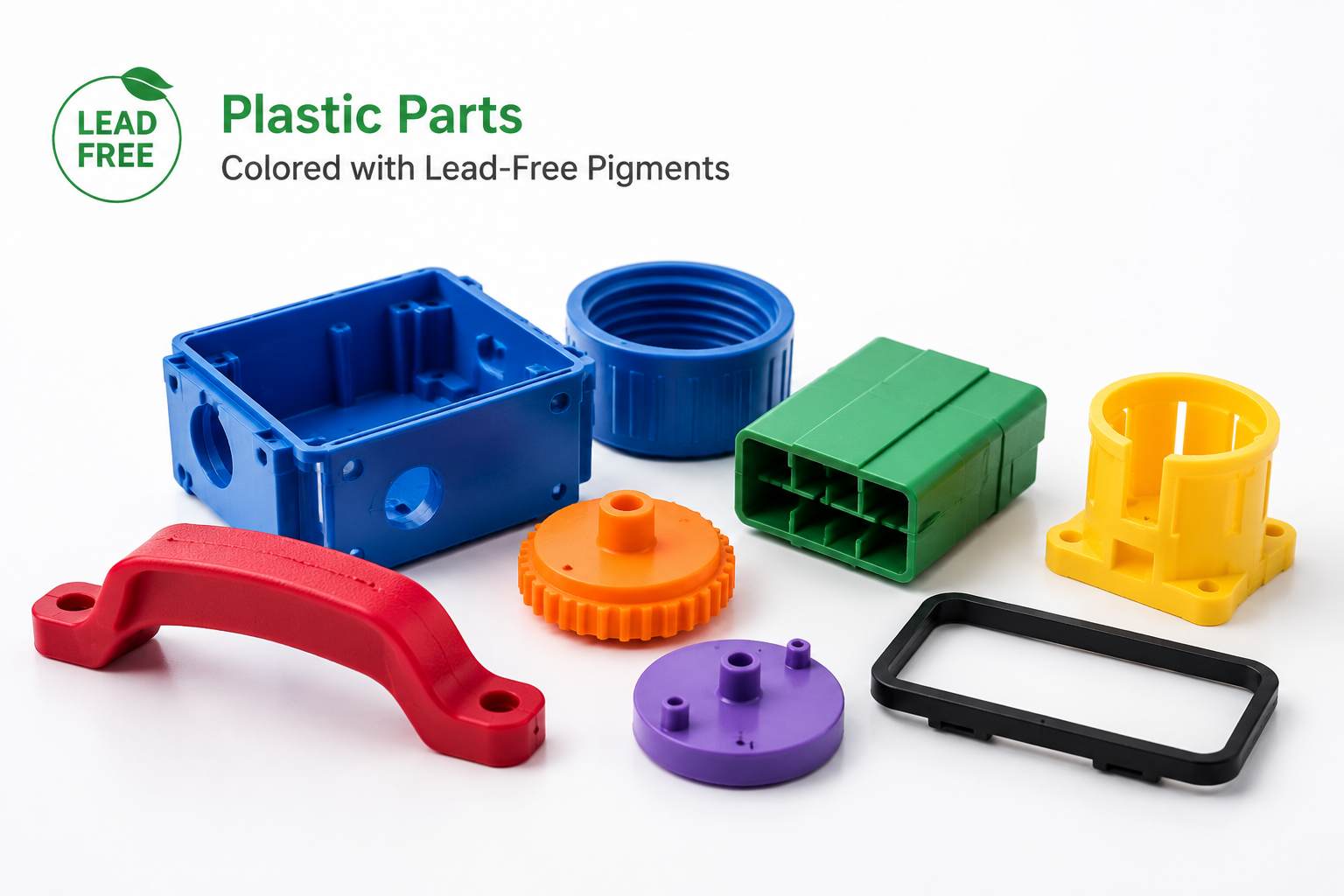
For more detailed guidance on why lead-free pigments are increasingly critical in plastics and coatings, see our related blog: Why Lead-Free Pigments Are the Future of Plastics and Coatings.
Advantages of Lead-Free Pigments
1. Safety
The most obvious advantage is reduced toxicity. Lead-free pigments minimize exposure risks for workers, consumers, and the environment, making them suitable for applications that require compliance with safety standards.
2. Regulatory Compliance
Switching to lead-free pigments helps manufacturers meet global regulations and avoid penalties or product recalls. It also improves market access for products in regions with strict lead restrictions.
3. Comparable Performance
Modern lead-free pigments often match or exceed the color brightness, opacity, and heat resistance of traditional lead-based pigments. Advances in pigment chemistry allow formulators to achieve durable and vibrant color without compromising performance.
4. Sustainability
Lead-free pigments support sustainable manufacturing by reducing hazardous waste, lowering environmental impact, and enhancing the recyclability of colored materials. For broader sustainability trends in pigments, see:
Pigment Industry Outlook 2026: Regulation, Sustainability, and Market Adaptation
Limitations and Considerations
Despite their advantages, lead-free pigments do have limitations that must be understood:
- Higher Cost: Some specialty lead-free pigments may be more expensive due to advanced processing or raw materials.
- Limited Shade Range: Certain vibrant reds or yellows previously achieved with lead chromates may require formulation adjustments to replicate.
- Compatibility Issues: Lead-free pigments may interact differently with resins, binders, or other colorants, requiring careful dispersion and testing.
Understanding these factors ensures successful application and maintains color quality across plastics, coatings, and inks.
Conclusion
Lead-free pigments are no longer just an option—they are a necessity for health, safety, compliance, and sustainability in modern industrial applications. They offer vibrant colors, high performance, and broad applicability, making them indispensable in plastics, coatings, inks, and specialty materials.
Manufacturers adopting lead-free alternatives benefit from safer products, regulatory compliance, and the ability to market environmentally responsible solutions. For additional reading on selecting pigments and optimizing their use, see: