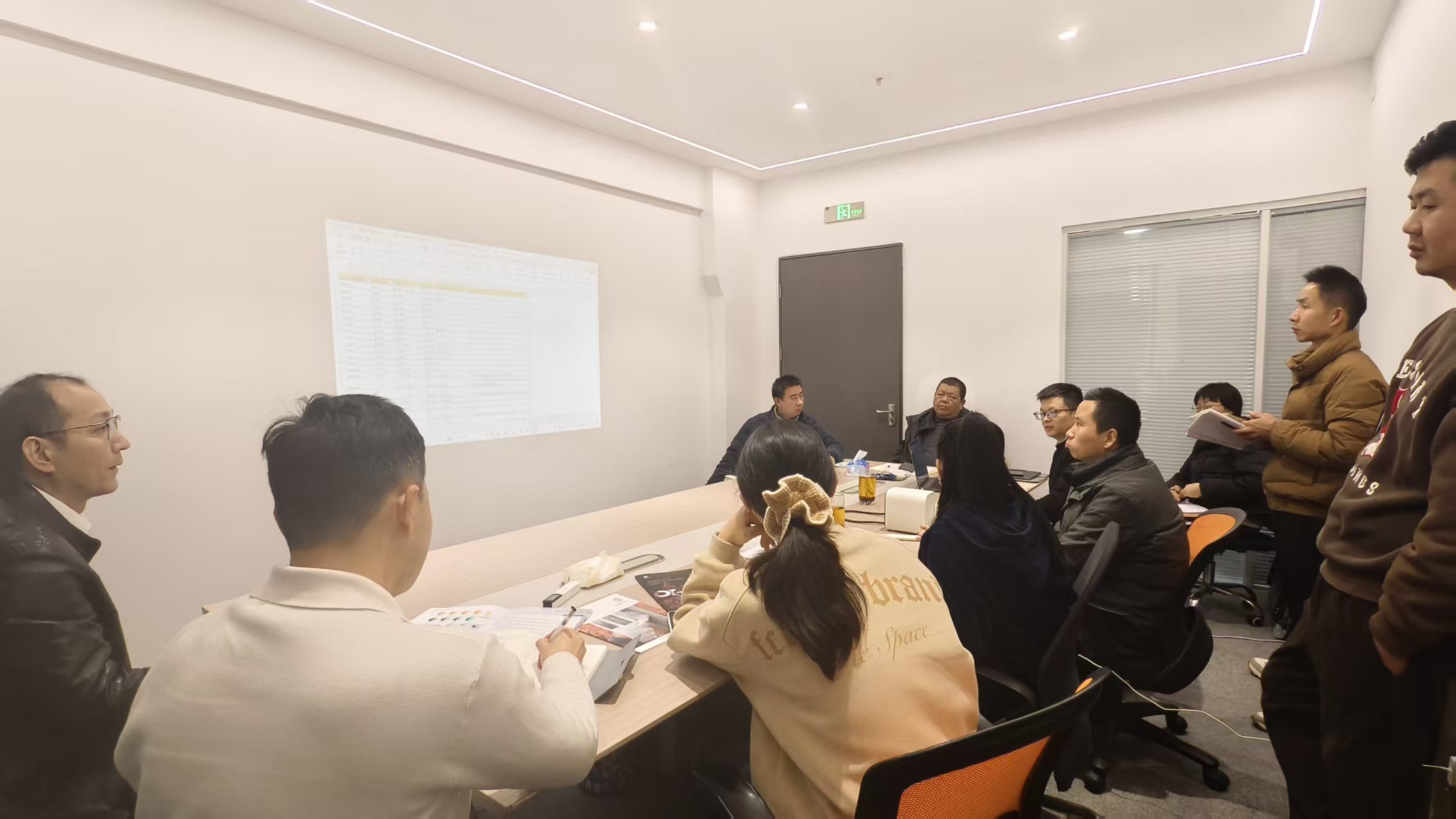
On December 16, 2025, Fineland Chem welcomed one of China’s leading inorganic pigment manufacturers to our Hangzhou office for a professional technical training session focused on MMO (Mixed Metal Oxide) pigments.
The training aimed to deepen our technical understanding of MMO pigments and their real-world applications, enabling our team to provide more accurate recommendations and better technical support to customers.
Overview of MMO Pigments
MMO pigments, short for Mixed Metal Oxide pigments, are produced by precisely blending two or more metal oxides, followed by high-temperature calcination at 900–1200°C and specialized post-treatment processes. This structure gives MMO pigments exceptional stability and durability under extreme conditions.
Key Performance Advantages of MMO Pigments
During the training, the guest manufacturer highlighted the core performance advantages of MMO pigments, including:
-
Environmental compliance, meeting FDA and EU LFGB food-contact standards
-
Outstanding weather resistance, with proven outdoor durability of up to 20 years without fading
-
Excellent high-temperature resistance, suitable for applications such as non-stick cookware and high-heat industrial equipment
-
Infrared reflective properties, widely used in infrared camouflage and energy-saving materials
These characteristics make MMO pigments ideal for applications requiring long-term stability and performance.
Dry Process vs. Wet Process: Production Technology Comparison
A detailed comparison between dry-process and wet-process production routes was an important part of the training, helping our team better understand how manufacturing methods influence pigment performance.
Dry Process – Advantages
-
Short production cycle with high output capacity
-
Relatively environment-friendly, with no wastewater generation
-
Good pigment dispersibility
Dry Process – Disadvantages
-
Lower coloring strength
-
Limited production flexibility
-
Pigments may float more easily in coatings during application
Wet Process – Advantages
-
Higher coloring strength
-
Better control of heavy metal content
-
Allows customized surface treatment based on different application requirements
Wet Process – Disadvantages
-
Slightly lower dispersibility compared to dry-process pigments
-
Longer production cycle with relatively lower output
-
Wastewater is generated during production and must be properly treated
This comparison helped clarify why wet-process MMO pigments are often preferred for high-end and performance-critical applications.
MMO Pigments in Coatings Applications
MMO pigments are widely used in high-performance coatings where durability and stability are essential. Typical applications include fluorocarbon coatings, high-temperature glass inks, solar selective absorption coatings, ultra-high-temperature paints and powders, non-stick coatings, and engineering machinery coatings.
These pigments provide excellent weather resistance, heat stability, chemical resistance, and long-term color retention, making them suitable for both indoor and outdoor environments.
MMO Pigments in Plastics Applications
In plastics, MMO pigments are mainly used in masterbatches and polymer compounds that require long-term heat and weather resistance. Common applications include grass yarn masterbatches, PVC profiles and decorative films, engineering plastics, fluoroplastics, automotive plastic components, and high-performance polymers.
MMO pigments offer strong resistance to heat, light, and migration, ensuring consistent color performance throughout the product’s service life.
Enhancing Technical Support for Our Customers
This professional training significantly strengthened Fineland Chem’s understanding of MMO pigment technology, production processes, and application performance. It enables our team to provide more accurate material selection advice and more reliable technical support, helping customers achieve better long-term results in demanding applications.

Related Products
PY53 – ColorCor®1153 ⬇️TDS
Greenish yellow shade with high opacity, good dispersion, and excellent lightfastness, suitable for coatings, plastics, and printing inks.
PB24 – ColorCor®1224 ⬇️TDS
A versatile brown pigment with excellent lightfastness and weather resistance, ideal for coatings, inks, and plastics, providing a rich, warm color for various applications.
PG17 – ColorCor®1717R ⬇️TDS
A high-performance green pigment for coatings and plastics, offering excellent color strength, lightfastness, and superior weather resistance for durable applications.
PB28 – ColorCor®1628 ⬇️TDS
Bright cobalt blue shade with outstanding thermal stability, excellent lightfastness and weather resistance, suitable for high-temperature plastics, coatings, and ceramic applications.
PB36 – ColorCor®1636 ⬇️TDS
A durable Pigment Blue 36 offering strong chroma, excellent lightfastness, and outstanding heat stability for coatings and plastics.
PY119 – ColorCor®1119 ⬇️TDS
A zinc ferrite yellow pigment offering excellent heat resistance up to 600 °C, outstanding light and weather fastness, and superior chemical stability for coatings and plastic applications.
PBr43 – ColorCor®1243 ⬇️TDS
A manganese ferrite brown pigment with excellent heat resistance up to 800 °C, outstanding light and weather fastness, and superb chemical stability for coatings, plastics, and ceramic applications.
Technical Notes for Selecting the Right MMO Pigment
To ensure accurate color matching and stable performance, buyers are encouraged to provide sufficient technical information when selecting MMO pigments. As MMO pigments are typically composed of two or more metal oxides, even minor variations in formulation may result in noticeable differences in shade and properties.
For optimal evaluation and to avoid unnecessary trial-and-error, customers are advised to share the following details in advance:
-
Target color requirements, either by visual color reference or CI. number;
-
Current pigment grade or supplier reference, such as existing codes from BASF, Shepherd, or other manufacturers, which helps establish a comparable benchmark;
-
Colorimetric data, including ΔL*, Δa*, and Δb* values. Providing a TDS or internal test report will further improve matching accuracy;
-
Physical samples, which remain the most reliable method for precise color and performance evaluation.
Supplying the above information enables manufacturers to conduct targeted formulation adjustments, reduce development cycles, and minimize the risk of color deviation or performance mismatch in end-use applications.